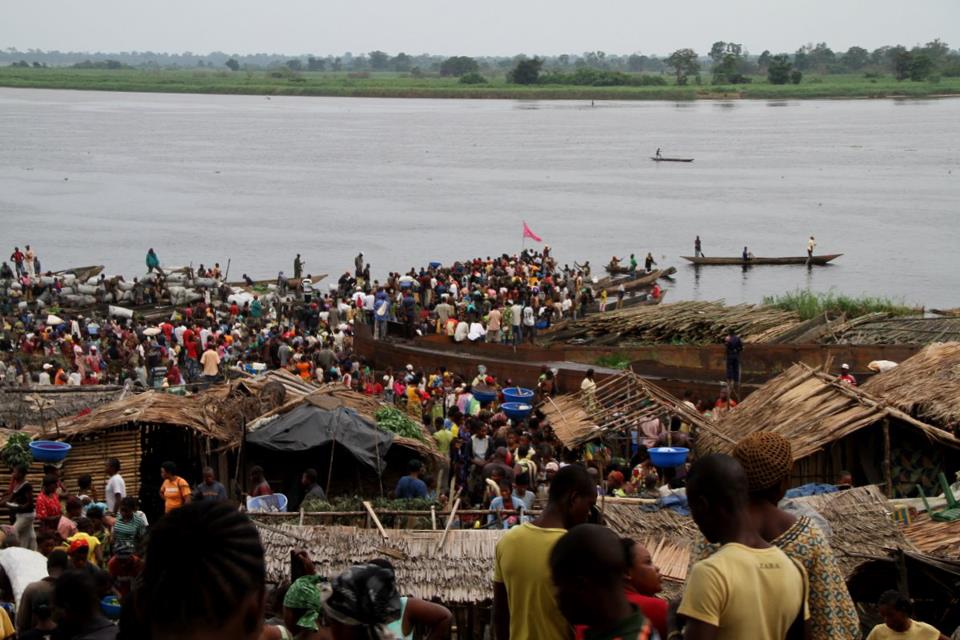
Evening in Mbandaka settles over the Congo River and the unpaved streets at much the same hour year-round, since the city sits close to the equator and the sun sets early. Lights come on where they can: much of the city has no electricity or running water, so an evening out is shaped by generators, candles, river breezes and the company you keep rather than by a strip of brightly lit venues.
Nightlife here is quiet and informal. People of the Mongo ethnic group make up most of the population, alongside residents from many other tribes and regions, and Lingala, French and Mongo are the languages you will hear. There is no dense bar district and no clubbing scene described in the sources; what exists is a handful of hotels and the general life of the streets and riverbank. This suits a visitor who wants a low-key evening, conversation and a sense of the city as it is, not a programmed night out.
Where to go out in Mbandaka
1. Hotel bars and terraces
The sources name two hotels with drinking facilities: Hotel Mosika and Hotel Benghazi. These are the only specific venues identified, and they are the most straightforward option for an evening drink. Treat them as places to sit rather than as entertainment venues.
This kind of night suits anyone wanting a settled, early evening with a drink and company. Because the sources do not describe opening hours, prices or current condition, confirm locally before setting out.
2. The riverbank and the Congo River frontage
Mbandaka lies on the east bank of the Congo River below the mouth of the Ruki. The river is the defining feature of the city, and the bank is where you feel the scale of it. The Equator Stone placed by Henry Morton Stanley stands near the riverbank south of the city and remains there.
An evening walk along the water suits a slow night and gives you the city's geography directly. Streets and avenues are largely unpaved dirt roads, so plan footwear and transport accordingly, and be back before full dark if you are unsure of the route.
3. Streets and avenues of the town centre
Most of the city's streets and avenues are unpaved dirt roads, and large areas have no electricity or running water. That makes the centre an informal place to be out in the evening rather than a route between fixed destinations.
This suits a visitor who is content to move at the city's pace and see how people gather. Keep expectations modest and arrange how you will get back before you go.
4. Hotel restaurants and evening meals
The hotels named in the sources are the obvious places to eat an evening meal, since no standalone restaurants are identified. Meals are likely to be simple and taken where you are staying or nearby.
This suits a night that begins and ends in one place. Because no timings are given in the sources, ask at your accommodation when food is served.
5. The road toward Bamanya and Eala
East of the city lie the Catholic mission station of Bamanya, with its Central African history research centre, and the Eala Botanical Garden. These are daytime destinations rather than nightlife, and the sources describe the garden as neglected, unfenced and subject to illegal logging.
If you spend the day out this way, plan to be back in Mbandaka well before evening. Do not treat these sites as evening options.
How a night out unfolds
The sources give no timings for meals, going out or how late anything runs in Mbandaka. What can be said is that the city sits close to the equator, so darkness falls early and at a consistent hour through the year, and that infrastructure is limited, with much of the city without electricity. An evening is therefore likely to start and finish earlier than in a large city, and to be organised around your accommodation. Confirm locally what is open and when.
Frequently asked questions
Is there a bar or club scene in Mbandaka?
The sources name only two places to drink, Hotel Mosika and Hotel Benghazi. No clubs, bar streets or entertainment districts are described, so plan for a quiet evening rather than a night out in the usual sense.
What languages will I need in the evening?
Lingala, French and Mongo are the main languages spoken in Mbandaka. French is the most useful starting point for a visitor.
How do I get around at night?
The sources do not describe night transport in Mbandaka, and most streets and avenues are unpaved dirt roads. Arrange your transport in advance through your accommodation rather than expecting to find it on the street.
Is there anything to see in the evening?
The Equator Stone near the riverbank south of the city remains in place, and the river itself is the city's defining feature. Beyond that, the sources describe no evening attractions, so treat the evening as time for a meal and company.
Decide where you will eat and how you will get back before the light goes, and your evening in Mbandaka will be simple to arrange.