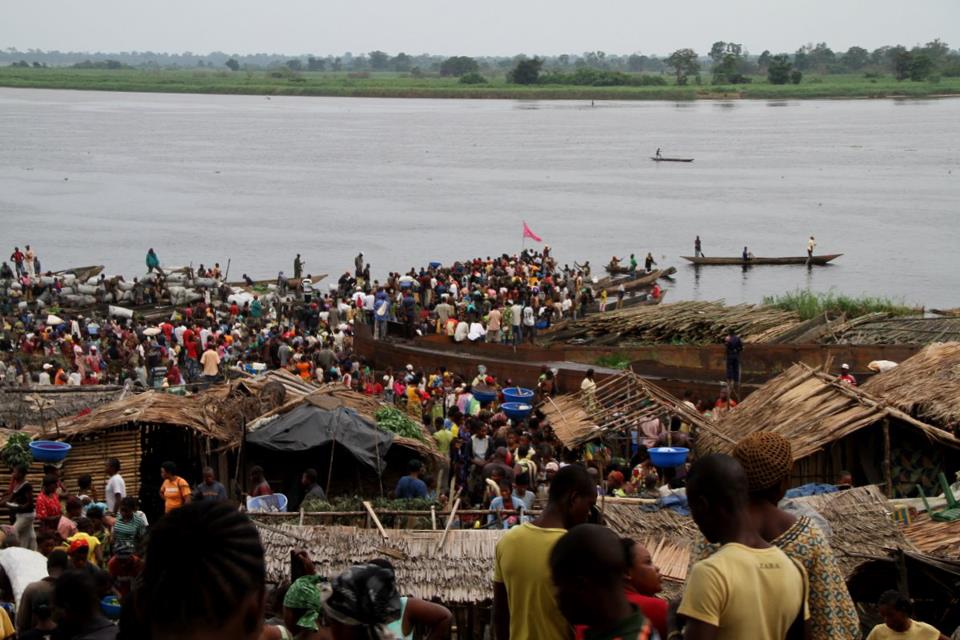
Mbandaka
Introduction
Mbandaka sits in the Democratic Republic of Congo, close to the point where the Congo and Ruki rivers meet. It serves as the capital of Équateur Province, which makes it a natural starting point if you are travelling through this part of the country.
Before you go
Mbandaka sits where the Congo River meets the Ruki, and that riverside position shapes what you should know before arriving: the city serves as the headquarters of the Fourth Naval Region of the Navy of the Democratic Republic of the Congo. The majority of people living here belong to the Mongo ethnic group.
You will find that residents mostly speak several languages, so Lingala, French and the local Mongo language are all useful to have at hand. French and Lingala will carry you through most everyday exchanges, while a few words of Mongo will be appreciated in a city where that language is part of daily life.
Getting there
You can reach Mbandaka by air, arriving at Mbandaka Airport. Alternatively, the city is linked by boat along the river to both Kinshasa and Boende, making river travel a practical option for getting in.
Getting around
Getting around Mbandaka is slow and ground-level. There is no rail, metro or tram network, no scheduled city bus system, and no app-based ride-hailing or formal taxi service to rely on. Most streets and avenues are unpaved dirt roads, and large areas of the city have no electricity or running water, so don't expect bus stops, timetables or transit passes. Arrange your movements through your accommodation, a local contact, or a hired vehicle, and agree on your destination and fare before you set off.
Walking is the most dependable way to reach the parts of the city you are likely to visit, but plan your walks for daylight and keep to routes you know or that a local contact has recommended. The landmarks are spread out: the town hall stands about 4 km north of the equator, the Equator Stone placed by Henry Morton Stanley near the riverbank lies south of the city, and the Eala Botanical Garden and the Bamanya mission research centre are both some distance east of the centre, so those outlying sights are better reached by vehicle. Mbandaka Airport has no documented public transit link, shuttle or rail connection into town, so arrange a pickup in advance or negotiate a private vehicle on arrival, allow generous time for the transfer on dirt roads, and avoid arriving after dark if you can. The city has a tropical rainforest climate with no dry season, so rain can affect travel on dirt roads at any time of year. French will serve you in most visitor situations, alongside Lingala and Mongo.
Where to stay
Mbandaka's accommodation is limited, so plan ahead and confirm your arrangements before you arrive. The Nina River Hotel sits on Avenue Bolenge and offers a riverside setting with a pool. Other options include Hotel Wimpey, Hotel Samanta, Mputu Palace, Centre d'Accueil Vatican, Puits M'Bandaka-1 and Centre Tomodja Onakoy.
Food & drink
In Mbandaka you will find eating options centred on Restaurant de la Bralima, a spot tied to the city's brewery and a straightforward place to take a meal. For drinks, the bars and terraces of Hotel Mosika and Hotel Benghazi are the named places to head for, whether you are after a beer or a cold soft drink in the evening.What to see and do
East of the town centre, along the road toward Bamanya, you'll find the Catholic mission station, home to a large research centre for Central African history. The Botanic Garden of Eala lies nearby, one of the finest botanical gardens in central Africa, founded at the turn of the twentieth century and holding thousands of species across its forest, marsh, savanna and special collections. Note that the garden is neglected and unfenced, and suffers from illegal logging, so expect an overgrown, unmanicured landscape rather than a manicured one. Mbandaka is also the site of the world's first Habitat for Humanity International housing project, begun in the early 1970s. For a simple outing, head to the Ligne de l'equateur, a tourist attraction marking the equator.When to go
Mbandaka has a tropical rainforest climate, so there is no dry season to plan around. Temperatures stay warm and steady throughout the year, and rain can fall at any time. If you want the least wet conditions, aim for January, the driest month — though it still sees regular rainfall, so pack for wet weather regardless.
- January: the driest month, but rain remains possible and temperatures stay warm.
- September: the wettest month, with frequent and heavy downpours and continued warm conditions.
- All other months: rainfall varies considerably, but wet conditions can be expected at any time, with temperatures remaining relatively constant.
Three days in Mbandaka
Day one: Start in the centre of Mbandaka and get your bearings on foot, since most of the city is manageable this way. Walk to the Equator Stone, the marker associated with Henry Morton Stanley, and take in the Congo River, which shapes daily life here. In the evening, settle into a meal of Congolese cooking at one of the local restaurants, and listen for the mix of Lingala and French that fills the streets.
Day two: Head out to Eala Botanical Garden and Bamanya, both within reach of the city, and spend the morning among the planted collections. Back in Mbandaka, visit the Centre Accueil Vatican and Puits Bandaka, then the Centre Tomodja Onakoy. For dinner, choose between the Nina River Hotel on Avenue Bolenge, Hotel Wimpey, Hotel Samanta, or Mputu Palace.
Day three: Give the morning to the river and the city's naval presence at the Fourth Naval Region, then round off your stay with a last walk through the streets. If you are continuing on, Mbandaka Airport connects to Kinshasa and Boende; alternatively, arrange onward travel by river. Most visitors find three days enough to see the main sights, so plan your departure accordingly.