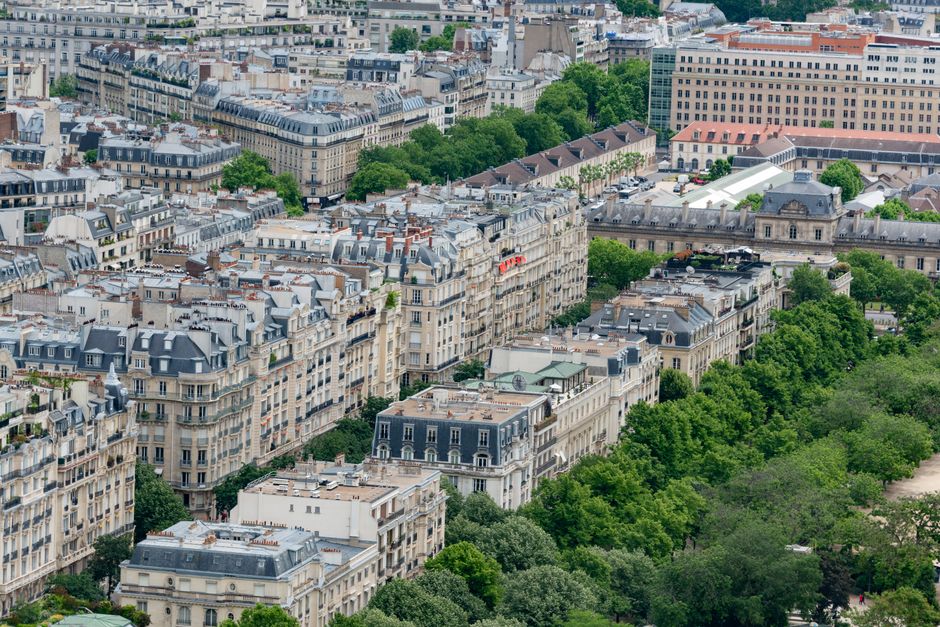
The Panthéon stands on the Place du Panthéon in Paris's 5th arrondissement, on the highest point of the Left Bank. Commissioned by Louis XV in the mid-1700s as a church to St. Genevieve and completed in 1790, it became a secular temple and mausoleum for notable French citizens.
Why it is worth the trip
Inside, the nave rises in lofty arches, columns and frescoes, with the Foucault pendulum swinging where an altar would have been. Below, more than 70 people are interred in the crypt, among them Voltaire, Rousseau, Victor Hugo, Marie Curie, Louis Braille and Simone Veil. Above, a climb of more than 270 steps opens onto a panoramic view of Paris, and the crowd thins as you go higher. The marble sculptures and paintings blend secular and religious themes, and rotating exhibits run alongside the permanent collection.
The best time to go
Go early in the day, since the dome climb is the busiest part and crowds build as the hours pass. Free first Sundays between November and March draw heavy crowds, so a weekday outside peak periods such as Easter week is quieter. Check the seasonal opening hours before setting out, and note the closures on January 1, May 1, November 1, November 11 and December 25.
How long to allow
Give yourself a half-day rather than an hour, because the dome and the crypt both reward unhurried attention. Check what temporary exhibit is showing before you go so you can plan around it.
Getting there
The Panthéon sits at the centre of the Place du Panthéon in the 5th arrondissement. Metro line 10, RER B and several bus lines serve the area.
What to book ahead
Book a time slot in advance, as monuments that take online bookings require one. Leave large bags at your hotel, since they are not allowed inside, and consider an audio guide in English or the free downloadable activity book for children.
Nearby
The Luxembourg Gardens and the Cluny Museum are both close by, so you can pair the visit with a walk through the gardens or a look at the medieval collections.