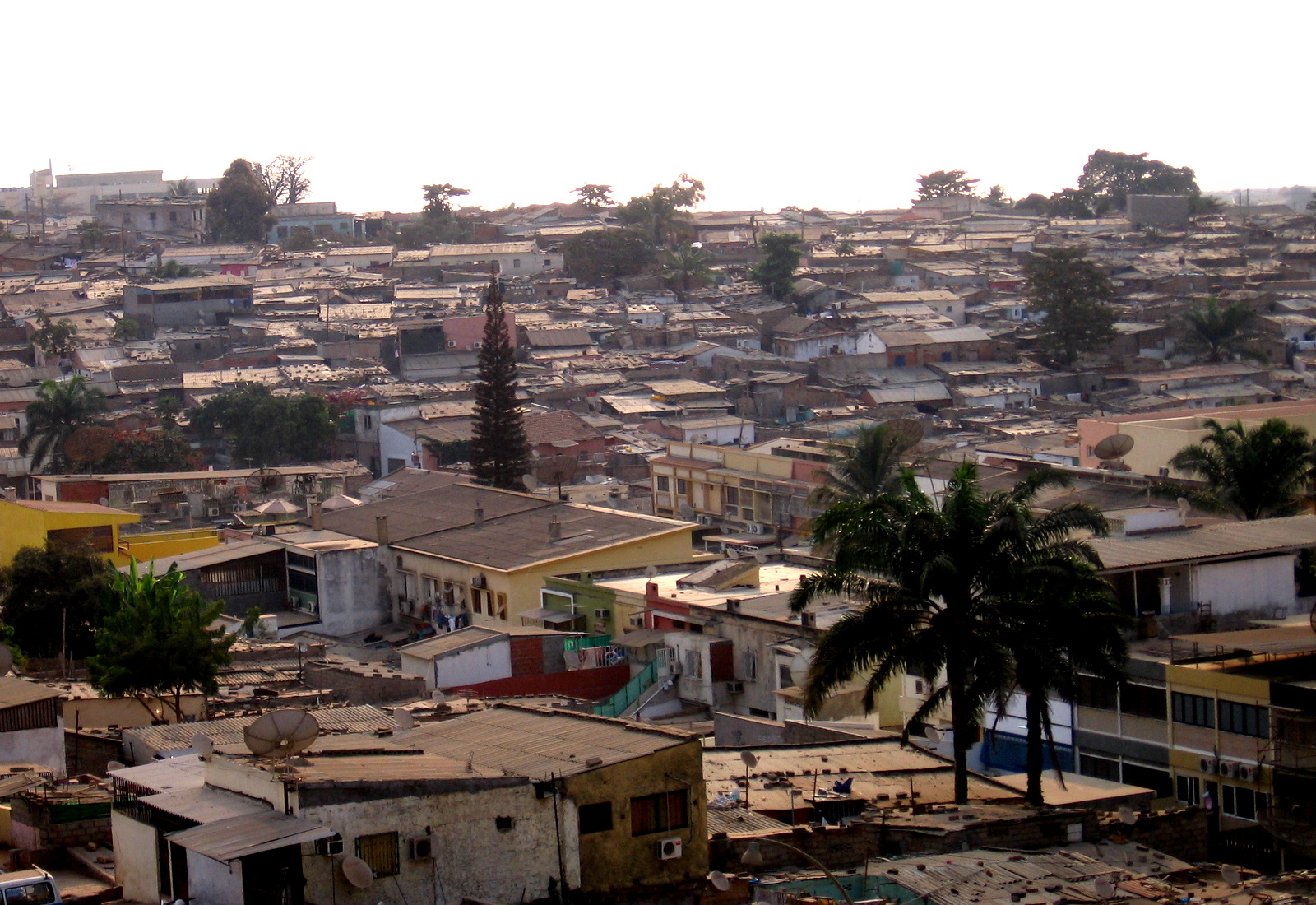
Getting Your Bearings in Maianga
Maianga is one of the six urban districts of Luanda, sitting on the southern edge of the city centre. It is an old, historic quarter, established before independence, and it is best known for two things: Quatro de Fevereiro Airport, which lies within the district, and a strong musical culture. For a visitor, that location matters — the airport is not out on the fringe but well inside the built-up city, and the district borders Ingombota and Rangel to the north, Samba to the south and Quilamba Quiaxi to the east.
The district is not uniform. Its northern part is an extension of the old colonial centre, with formal buildings, paved streets and city services. The neighbourhoods along Avenue Revolução de Outubro and south of the airport are densely populated, informally built and set on dirt roads with limited access to fresh water and electricity. The southern and eastern borders are loosely defined because of this informal layout. Expect the quality of streets, lighting and services to change noticeably as you move through the district.
How Visitors Get Around Luanda
Luanda is a car-oriented city. Inner-city traffic is congested, roads are often poorly maintained, traffic lights are frequently absent even at intersections, and where signals do exist drivers often ignore them. Motorcyclists and pedestrians squeeze through gaps in traffic, and breakdowns in the middle of the road are common. Plan your movements with this in mind: short trips can take far longer than the map suggests, and the safest and most comfortable option for most visitors is a private vehicle with a driver.
Safety advice for the city is straightforward. Luanda is considered moderately safe in daylight provided car doors are locked and valuables are covered, but city streets should be avoided after dark. Road travel in Angola more generally can be dangerous during periods of political tension, and certain areas should be avoided entirely, especially at night.
Rail, Metro and Trams
There is no metro or tram network serving Maianga or Luanda that a visitor can use to get around the city, and no urban rail system is described in the available information. For practical purposes, you should not plan your trip around rail-based city transport. Getting around Maianga and the wider city means road transport.
Buses and Public Transport
Public transport options in Angola are limited, and Luanda is no exception. The main form of public transportation is the candongueiro — a small blue-and-white minibus. These are the workhorse of local movement, but they come with real drawbacks: the vehicles are shoddy and crowded, drivers are often unlicensed, and they are driven at speed, sometimes causing accidents, including fatal ones.
- What they are: small blue-and-white minibuses, the primary form of public transport.
- What to expect: crowded, poorly maintained vehicles and fast, sometimes reckless driving.
- Practical advice: if you use them, do so in daylight, keep valuables out of sight, and treat them as a local necessity rather than a comfortable option.
Beyond the candongueiros, there are few public transport alternatives that let you avoid travelling by vehicle. If you are not comfortable with crowded minibuses, arrange private transport instead.
Taxis and Ride-Hailing
Taxis in Luanda are scarce. The available guidance is clear that travellers arriving at Luanda airport should pre-book a car service to their accommodation rather than relying on finding a taxi on arrival. Pre-booking also means you know who is meeting you and what you are paying, which matters at an airport where informal operators may approach you.
If you are staying in Maianga and want to move around the district or into the centre, the most reliable approach is to arrange a car and driver through your accommodation or a reputable service, and to keep that arrangement for evening trips, when city streets should be avoided.
Walkability
Walking in Maianga is possible in the northern, formally built part of the district, where streets are paved and city services reach the neighbourhoods. But it is not a district to explore on foot without care:
- The southern and eastern portions are informally built, with dirt lanes and limited services, and their borders are loosely defined.
- Inner-city roads are often poorly maintained, and traffic behaviour is unpredictable, with motorcyclists and pedestrians weaving through gaps.
- City streets should be avoided after dark.
In practice, walk during daylight, stick to the better-built northern streets where possible, and use a vehicle for anything longer or for travel after dark.
Getting from the Airport into the City
Quatro de Fevereiro Airport sits inside Maianga, on Avenue Revolução de Outubro, which connects it to Ingombota and the city centre. Because the airport was built in 1951 when the area was farmland and informal settlement, and Luanda has since grown explosively around it, the airport now lies well within the urban centre rather than on its outskirts.
That has two consequences for a visitor. First, the airport is close to the city in geographic terms, so the transfer is not a long intercity journey. Second, it sits in the middle of congested urban traffic, so the drive can still take time.
- Pre-book a car service. This is the explicit recommendation for travellers arriving at Luanda airport — arrange your transfer to your accommodation in advance rather than sorting it out on arrival.
- Expect a city transfer, not a rural one. The airport is embedded in the urban fabric, connected to Ingombota by Avenue Revolução de Outubro.
- Note the coming change. Angola International Airport, located to the southwest of the centre of Luanda, is intended to replace Quatro de Fevereiro as the primary point of entry for international flights, because of space constraints and outdated facilities at the existing airport. If your trip is some way off, confirm which airport you will actually be flying into.
Documents, Checkpoints and Driving
Whatever mode you choose, carry your passport and visa when travelling through the provinces. A copy of the passport must be notarized by the Angolan Notary Public. Police and military checkpoints can appear on any highway, particularly around Luanda.
If you plan to drive yourself, you legally need permission to drive plus proof of insurance and registration, and travel into Angola's interior requires an internal travel document. Police may cite motorists for traffic violations or solicit bribes; asking for a written ticket avoids on-the-spot payment, and requesting an officer's name and badge ID often stops bribe solicitation.
Seasonal and Road Hazards
The rainy season runs from October to March, bringing potholes, roadway erosion and slippery conditions; unpaved roads often become impassable. Many highways are paved, but roughly equal numbers are dirt roads that can be treacherous. In rural areas, watch for broken-down cars, pedestrians in the road and roving livestock. Landmines are more common on secondary roads in rural areas and near the Zambia border, though they can also appear near primary roads; suspected spots are marked with red-and-white HALO Trust posts or red stones. Within Maianga itself, the practical hazards are the ones you would expect in a dense, congested city: heavy traffic, poor road surfaces and unpredictable driving.
Quick Practical Summary
- Best option for visitors: a pre-booked private car and driver.
- Public transport: candongueiro minibuses — cheap, crowded and sometimes recklessly driven.
- Taxis: scarce; pre-book rather than hail, especially at the airport.
- Rail, metro, trams: not a practical option for getting around the city.
- Walking: fine in daylight in the formally built northern streets; avoid after dark.
- Airport: Quatro de Fevereiro lies within Maianga, connected to Ingombota by Avenue Revolução de Outubro; pre-book your transfer.
- Always carry: passport and visa, with a notarized copy of the passport.