Umarkot
Introduction
Umerkot is a city in the Thar Region of Sindh province, Pakistan. It is notable as the birthplace of the Mughal emperor Akbar, who was born in Amarkot in 1542.
Before you go
Umerkot takes its name from its fort — "Umerkot lit" means the fort of Umer — and the town's story is woven through the wider history of Greater Sindh, which once stretched into parts of present-day Rajasthan. It rose to prominence under the Mughals and later under the British Raj, and it was here that the Mughal emperor Akbar was born, after his father Humayun fled military defeat at the hands of Sher Shah Suri and was given refuge by Rana Prasad, a Hindu Sodha Rajput ruler of Amarkot. Knowing this background will make the fort and the town's monuments read very differently when you arrive.
Local memory here is carried as much by folklore as by dynastic history. The tale of Umar Marvi — a young girl abducted by Umer, the ruler credited with founding the town, who imprisoned her in the fort for years after she refused to marry him — is central to how people in Umerkot see themselves, and Marvi is regarded locally as an idol for her courage. Expect to hear her name often, and treat the story as a point of local pride rather than a footnote.
Getting there
Most travellers reach Umerkot through Mirpur Khas, the nearest major city, which is connected by the 75-km-long Umerkot–Mirpur Khas Road. By car the journey can take less than an hour. Buses and vans, both air-conditioned and non-air-conditioned, run easily to Umerkot from Mirpur Khas and from other major cities of Sindh throughout the daytime; a bus ticket from Mirpur Khas costs about Rs 150 and the trip may take between an hour and an hour and a half.
From Karachi, Anas Brothers bus service departs at 3pm (cell# 0349-9013245), and Sitara Hilal bus service is based in Saddar near Student Biryani house.
Getting around
Within Umarkot itself, shared motorcycle rickshaws are the most practical way to get around: they are cheap and quick, fine for a tour of the town, and well suited to short hops between sights. Agree on the fare before you set off, and carry cash. Self-driven cars and private taxis are the other main options for reaching different parts of town. Taxis are generally private cars run by taxi companies, usually air-conditioned, modern and clean, which makes them the most comfortable choice in the blistering heat of summer. Hail one from a taxi stand rather than the street, since telling a taxi from an ordinary private car can be difficult, or ask at your hotel to arrange one. Ride-hailing apps are not part of the transport picture here, so do not count on booking a car that way.
Umarkot is compact and its sites of historical significance, including Akbar's birthplace, Umerkot Fort and Momal Ji Mari, sit within the town, so walking between nearby points is feasible, though the Thar heat makes long walks uncomfortable. For anything beyond a short stroll, take a rickshaw or taxi. There is no metro, tram or urban rail, and no airport of its own; you reach town by road, most commonly via Mirpur Khas, the nearest major city, from where buses and vans run through the daytime. Buy bus and van tickets on board or at the point of departure, and confirm departure times with the operator in advance, as schedules can change.
Where to stay
Umarkot's sleeping options are all guest houses rather than large hotels, and they cluster around the town centre. Marvi Rest House on Akbar Azam Road, opposite the DC House, is a small, clean place with single and double rooms; some have attached baths and air-conditioning, others don't, so it's worth stating your preference when you book and they'll match you to a suitable room. VIP Guest House in Thar Bazaar, near Super Mustafa Medical Store, is basic but brightly decorated, with single and double rooms in both air-conditioned and non-air-conditioned versions, free Wi-Fi and attached baths, plus a restaurant next door that serves good pizzas.
For more comfort, Ghosia Guest House is a large property with around thirty air-conditioned rooms, all with attached baths, free Wi-Fi, fridges and cable TV, and it offers basic, deluxe and super deluxe categories. It's considered the best accommodation in town, has a restaurant serving excellent food, and its big lawns and small on-site zoo make it a pleasant place to unwind; it's also female friendly and well guarded. Syed Guest House is another option, with a restaurant serving good-quality food.
Food & drink
Umerkot has plenty of basic restaurants scattered across town, all serving Pakistani food, though the plainer places aren't always the most hygienic. Wherever you eat, expect to pay a minimum of Rs 200 for a single dish.
- City Heart on College Road serves Pakistani, Continental and Chinese dishes, with some Bar B Q and fast food, fresh juices and plenty of desserts. It's a good place to dine in, with an air-conditioned lounge.
- Chandar Foods in Thar Bazaar is worth seeking out for what may be the town's best sweets, cakes, ice creams, faloodahs and rose-milk.
What to see and do
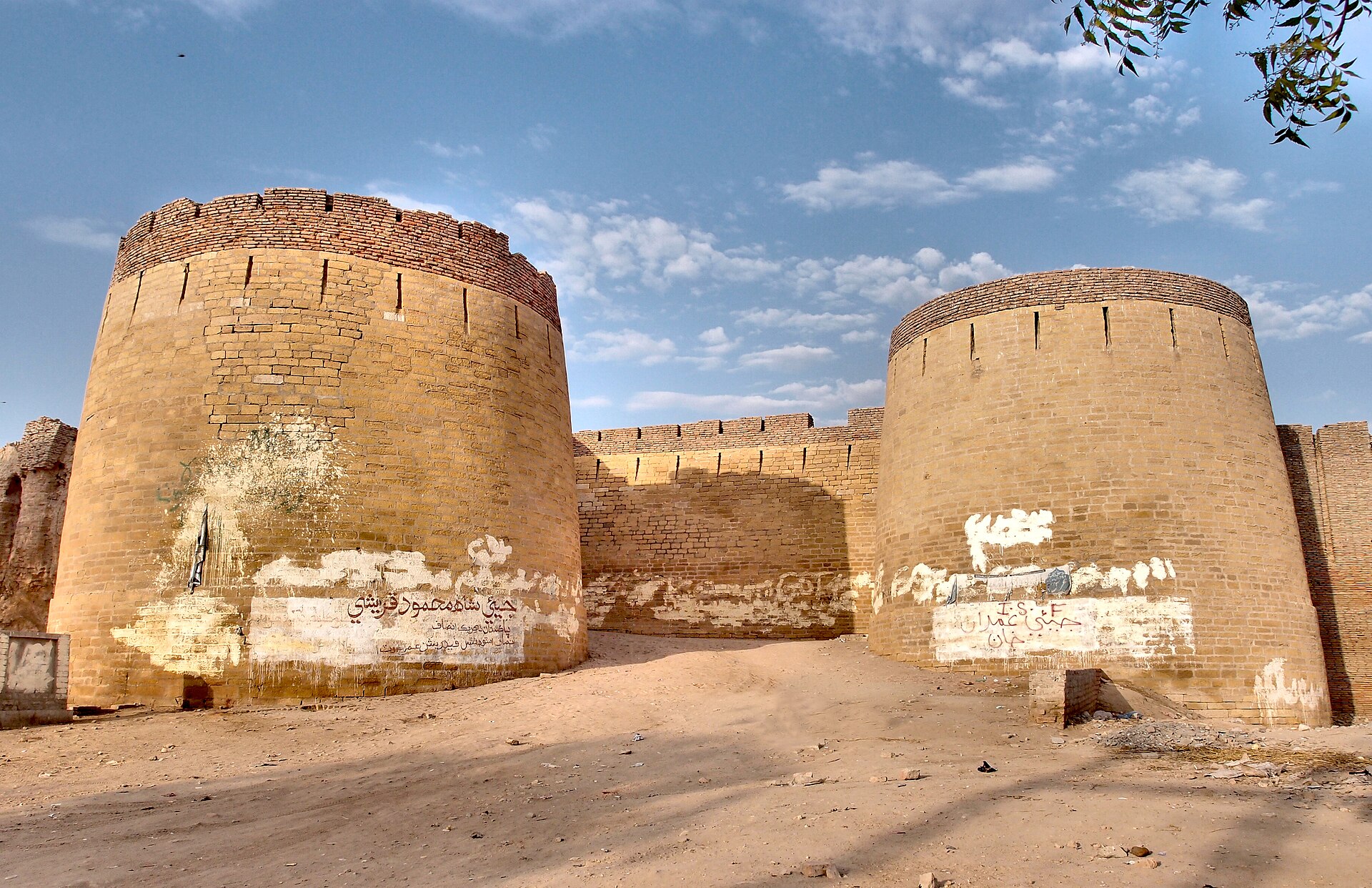
Umerkot Fort is the obvious place to start, an imposing structure whose origins are dated by some to the 11th century and by others to the 13th, when Soomra rulers built it; later dynasties, from the Kalhoras and Talpurs to the Rajputs, Mughals and the British, held it in turn. Its wide walls are made of dried bricks filled with mud plaster, and the rectangular plan has large circular bastions at each corner. Two big bastions flank the main gate, the Shahi Darwaza, which leads through a twisted entrance into the fort and remains well preserved. Inside you can find the remains of old structures and a large watch tower in the middle, reached by a stairway and mounted with cannons that lack proper carriages. Within the fort, the Archaeological Museum occupies some small halls and displays paintings of Mughal emperors, royal documents, armoury, manuscripts, specimens of calligraphy, jewellery reflecting the culture of the Thar Desert, and Jain and Hindu sculptures. Elsewhere in the town, the Akbar Birthplace is a small, beautiful monument of four arches built in pink Jodhpur-style brick, its dome marking the spot where the third Mughal emperor was born in 1542 while his parents, Emperor Humayun and Hamida Banu Begum, were taking refuge in the garrison.Three days in Umarkot
Day one: Settle into Umerkot, the town at the heart of the Thar Region in Sindh, and take your bearings on foot. Expect most of the historic interest to be clustered around the fort associated with Amarkot, where the Mughal emperor Akbar was born and where Humayun found refuge with Rana Prasad of the Hindu Sodha Rajput line. Knowing the story of Umar Marvi, the local heroine whose tale is bound up with the town, gives the fort and its surroundings their meaning. In the evening, eat where locals eat and keep the day slow.
- Walk the fort area and the old town around it
- Ask locally about the Marvi story before you go, so the sites make sense
Day two: Give the day to the Thar Region around Umarkot. The desert here is not empty scenery but a settled landscape of villages and grazing, and the rhythm of travel is slow. Arrange a self-drive vehicle or agree a taxi for the day rather than relying on hailing rides within Umarkot. Carry water and expect heat; the desert is warm by day and can turn cool at night. Return to town for a quiet evening.
- Self-drive or agree a taxi in advance for desert travel
- Keep the pace gentle and start early
Day three: Look outward. Buses run from Karachi via Mirpur Khas Road, and Mirpur Khas is the nearest larger town for a change of scene and a meal. If you are heading onward, Anas Brothers, Sitara Hilal and Student Biryani in Saddar are names you may hear for food and provisions. Before leaving, revisit the fort at a different hour, when the light and the company change. The Mughal and later British Raj layers of Umerkot's story sit lightly on a town that still feels like itself.
- Use Mirpur Khas Road for connections toward Karachi
- Revisit the fort in the late afternoon before departing