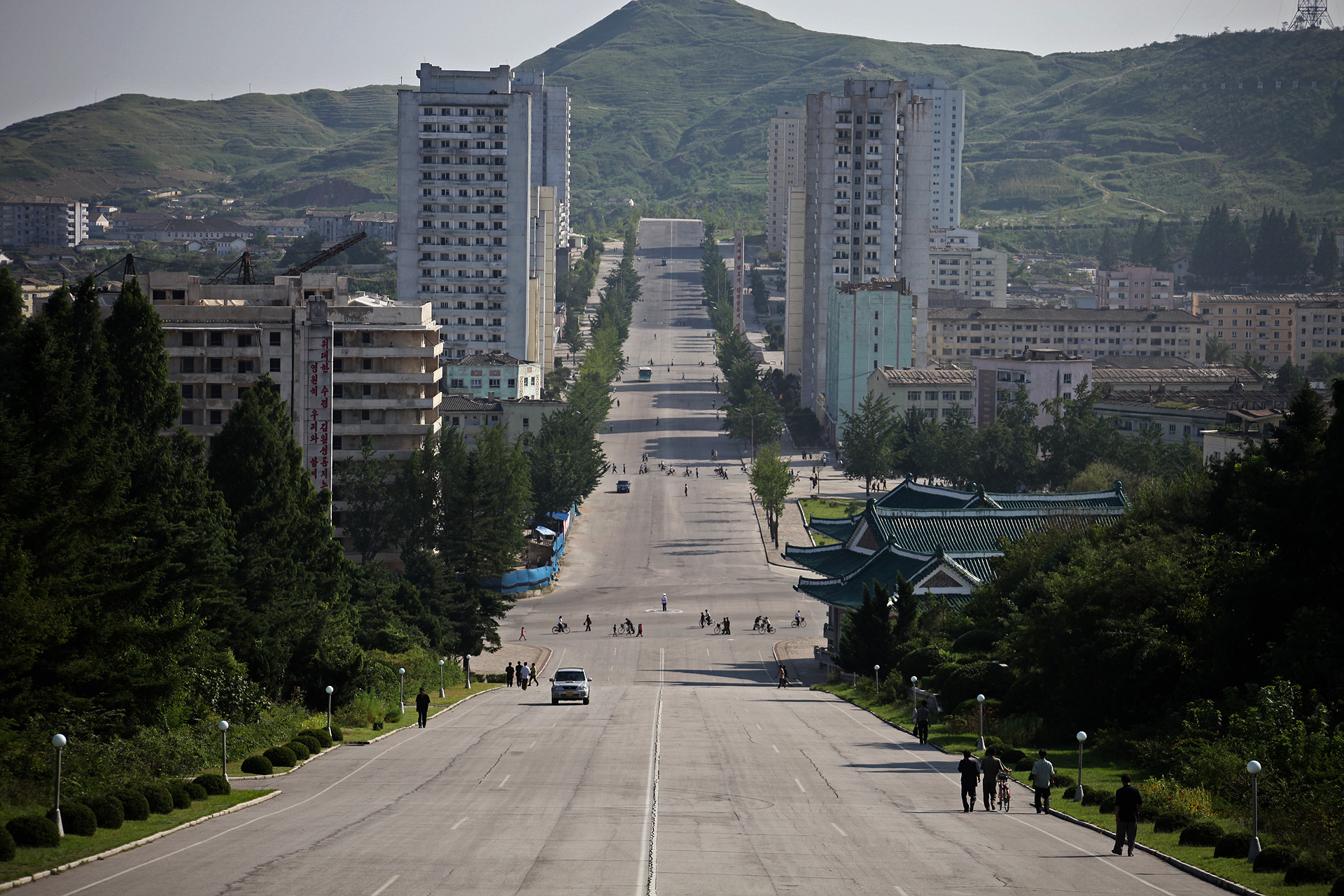
Kaesong
Introduction
Kaesong is a special city in the southern part of North Korea, close to the border with South Korea and near the Kaesong Industrial Region. It served as the capital of Korea during the Taebong kingdom and the Goryeo dynasty that followed, and was known as Songdo in the days when it was the ancient Goryeo capital. During that era it prospered as a trade centre that produced Korean ginseng.
Today the city functions as North Korea's light industry centre. Among its historic remains is the Manwoldae palace, and the city's identity is still bound up with its past as a dynastic seat and trading hub.
Before you go
Kaesong is a small historical city that served as a capital of the Koryo Dynasty for several hundred years, and it was the only major city to change hands between North and South Korea during the Korean War. It later became known for the Kaesong Industrial Complex, a special economic zone developed with South Korean involvement, where North Korean workers were employed in factories operated by South Korean companies. That project ceased operations in 2016 amid disagreements over North Korean nuclear tests, and it has since been almost completely abandoned as a project by both sides. Before you go, keep in mind that this is a place whose draw is its history and its position between two Koreas rather than any tourist infrastructure. Expect to encounter a city shaped by its Koryo-era past and by the rise and fall of the industrial zone, not a destination set up for independent leisure travel. Plan around the fact that the industrial complex is no longer operating, so any interest in it is historical rather than current.Getting there
Kaesong is not a place you can simply turn up to; the only realistic way in is from Pyongyang, roughly two and a half hours away by highway. Most visitors reach Pyongyang as part of an organised tour, which can itself be arranged from Beijing, and the trip to Kaesong is often combined with a visit to the North Korean side of the DMZ.
- By road and rail from the south: connections to South Korea run through the DMZ, but these routes are heavily restricted and limited to business and diplomatic traffic only.
- By tour bus from Seoul: group tour buses once ran daily from Seoul, taking about two hours, but North Korea stopped the service some years ago and it is unclear when it might resume.
- By rail: Kaesong Station was built with South Korean funds, but it appears not to be in use.
Getting around
Getting around Kaesong is unlike getting around almost anywhere else, because independent travel is not an option: visitors must be accompanied by a tour guide, and all travel is arranged for you. In practice, your itinerary, transport and pace are set in advance, and your guide is your constant companion. Rather than planning routes yourself, expect to be moved between sites in a private vehicle with your guide, with stops determined by the tour programme rather than by public timetables. Your guide handles the logistics, so ask them about timing and what is feasible rather than trying to improvise.
Do not plan on public transport. Kaesong has a railway station, but it appears not to be in use, and the historical rail connections to South Korea through the Demilitarized Zone are heavily restricted and limited to business and diplomatic traffic only. There is no metro or tram network described, no public bus network a visitor can use independently, and no mention of taxis or ride-hailing, so any vehicle you use will be arranged through your tour. Older advice about daily group tour buses from Seoul should be ignored: that service was stopped some years ago and it is unclear when it might resume. Walking is possible only within the confines of your guided itinerary, though many of Kaesong's sights are best appreciated slowly and on foot once you are at them, so bring comfortable shoes suited to the season — the climate is humid continental, with cold, dry winters and hot, humid summers with abundant rainfall. The realistic way to reach the city is from Pyongyang by highway, a journey of about two and a half hours, typically as part of an organized tour you can join from Beijing and often combined with a visit to the North Korean side of the DMZ.
Where to stay
Most visitors to Kaesong are placed at the Kaesong Folk Hotel, a collection of traditional Korean houses and courtyards converted into a hotel. It has a small souvenir shop and a restaurant, and sits just a few blocks from the Nam Gate. If you are not part of a tour group, you might have the hotel all to yourself.
The Janamsan Hotel is the other option noted for overnight stays in the city.
Food & drink
For meals, you can eat at the restaurant in the Kaesong Folk Hotel. Two other hotels also have restaurants: the Foreigner Hotel at Puk Gate by the Pakyon Falls, and the Janamsan Hotel near the Sonjuk Bridge.What to see and do
Nam Gate is the last survivor of the walled city's seven gates, built in the late 14th century alongside the inner citadel, badly damaged during the Korean War and rebuilt in the mid-1950s; the 14-tonne Yŏnbok bell, cast in 1346, still hangs inside. The Sonjuk Bridge is a small stone crossing from 1216, barely seven metres long, where Jong Mong Ju was executed in 1392, and it takes its name from the bamboo that grew beside it. The Koryo Museum occupies the former Songgyungwan Confucian Academy, and the coffin of King Kongmin is displayed there. A Students and Children's Palace offers a smaller counterpart to the one in Pyongyang, and the Kaesong Chomsongdae Observatory is another point of interest in the city. Outside Kaesong, the Tomb of King Kongmin and his queen sits on a hill roughly 13 km away, with a good view of the surrounding scenery and, unusually, little reconstruction. The Tomb of King Wanggon, founder of the Goryeo Dynasty, who died in 943, was badly damaged by the end of the Japanese occupation and has largely been rebuilt. Pakyon Falls is a natural sight worth seeking out. The Kaesong Old Town is among the best preserved in Korea, with traditional Joseon-period buildings still standing, though it is typically left off most itineraries; guides who trust their groups sometimes lead a short walk through it. The Kaesong Industrial Area, the only example of inter-Korean cooperation, where South Korean companies run factories with North Korean workers, is usually limited to South Korean business people investing there.When to go
Kaesong has a humid continental climate, and the seasons contrast sharply, so when you visit makes a real difference to what you pack and what you can comfortably do. Winters are cold and dry, with freezing temperatures and snow shaping the season; if you travel then, bundle up against the chill and expect generally clear skies with little precipitation. Summers swing to the opposite extreme: hot and humid, with abundant rainfall and muggy days. This is the wettest stretch of the year, so frequent rain is likely during a visit.Three days in Kaesong
Day one: Base yourself in Kaesong, the city that served as the capital of Taebong and later Goryeo, and whose old core is the reason most travellers come. Begin with the Koryo Dynasty remains, including Manwoldae, and take in the wider historic fabric of the city before it was divided between North and South. Expect a place shaped as much by the Korean War and the Demilitarized Zone as by its medieval past, and plan your time around the sites rather than around nightlife.
Day two: Look toward the Kaesong Industrial Region and the Kaesong Industrial Complex, where South Korean and North Korean operations once met. This is the contemporary face of Kaesong, and it sits oddly beside the dynastic tombs and old walls. Getting there is not a matter of simply turning up; rather, your movements will be arranged, and you should treat the day as a structured one.
Day three: Use Kaesong Station and the onward links toward Pyongyang, Seoul, Beijing and the DMZ to understand how the city sits between the Koreas. Among the practicalities, note that most journeys are organised rather than independent, and that Kaesong is not a place you wander into alone. Do leave time for the older quarters before you go; that contrast between Koryo and Korean War is what stays with you.