Getting Around Gweru: A Practical Guide for Visitors
Gweru sits at the centre of Zimbabwe, on the corridor between Harare and Bulawayo, and its position makes it a natural stopping point for travellers moving across the Midlands. The city is compact enough that a short stay does not demand complicated logistics, but transport here works differently from larger cities, so it helps to know what actually exists before you arrive.
How Tourists Move Around the City
Gweru has no metro, tram or light rail system for getting around town. Day-to-day movement relies on road transport: taxis, kombis (shared minibuses), arranged drivers and, to a lesser extent, app-based rides. The city is built alongside the Bulawayo–Harare railway, but that line is a long-distance corridor rather than a local transit network.
For a first arrival, or if you are carrying luggage, arriving at night, or heading to an outlying address, a taxi or a pre-arranged driver is the sensible choice. Kombis are cheap and widely used, but they reward local knowledge: routes, ranks and stopping points are not always obvious to a newcomer, and it helps enormously if a local contact explains which rank serves your destination and where to get off.
Where you stay shapes how easily you move. Accommodation in the city centre puts you close to buses and taxis; the railway and bus-station side, the university side, and the lodge or Antelope Park route side each suit a different onward itinerary. Pick your base according to where you are going next.
Rail: Long-Distance, Not Local
Gweru Railway Station is operated by the National Railways of Zimbabwe (NRZ) on the Harare–Bulawayo corridor. The city's rail importance is historic and freight-related: the country's largest marshalling yard, Dabuka, lies on the south side of Gweru and acts as the central hub of rail links toward Mozambique, South Africa, Botswana and Namibia.
For visitors, the practical caveat is that NRZ passenger services were suspended during the Covid-19 pandemic and remained suspended as of mid-2024. Schedules and service levels can change, so confirm current NRZ notices before you plan any journey around a train. For time-sensitive travel, buses and private road transport are more controllable than rail.
Note also that Gweru once hosted the Gwelo & District Light Railway, a narrow-gauge steam line run for pleasure. It is a piece of local history, not a service you can use today.
Buses and Other Public Transport
Road transport is the main long-distance layer in and out of Gweru. Intercity and long-distance buses connect the city with Harare, Bulawayo, Kwekwe, Kadoma, Chegutu, Masvingo, Zvishavane and other Midlands routes. Buses to and from Bulawayo take roughly two to three hours.
One thing to plan for: not all operators use the same departure point. Some stop at central termini, while others use operator-specific offices or roadside pickup points. When you book, record the operator's name, the exact departure point, the reporting time, the arrival terminal and the luggage rules. This is the single most useful habit for bus travel here.
Within the city, kombis form the backbone of public transport. They are useful once you understand the route, the rank and the stop — again, easiest with a local's help.
Taxis and Ride-Hailing
Taxis operate in Gweru, and app-based rides such as inDrive and Vaya are available too, though app supply is lighter than in Harare. That means you should not assume a car will appear quickly at any hour, particularly outside the centre.
Taxis and arranged drivers are recommended for first arrival, for trips with luggage, for movement after dark, and for outlying addresses. Known local drivers are a valuable contact to keep. For lodge and outskirt trips — Antelope Park, for example — agree a route package in advance that includes waiting time and the return leg, rather than expecting to flag something down on the spot.
Walkability
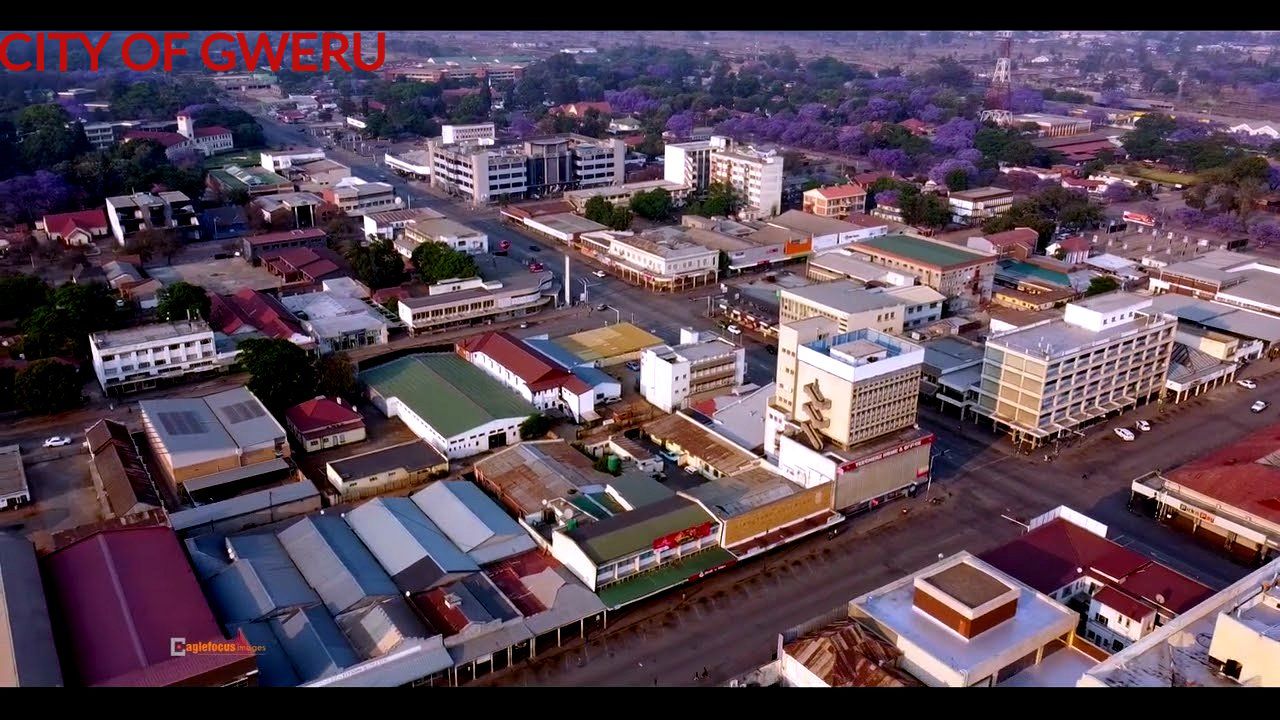
Gweru is a modest-sized city with a walkable downtown, and the central landmarks sit close together — the Boggie clock tower, for instance, stands at the intersection of Main Street and Robert Mugabe Way. Walking is a reasonable way to cover the immediate centre during the day.
For outlying districts, lodges and attractions outside town, plan on a vehicle rather than a walk.
Getting from the Airport into the City
Gweru is not served by scheduled commercial passenger flights. Local aviation at Thornhill/Gweru — the site of the air force training section at Gweru-Thornhill Air Base — is not a standard commercial arrival option, so you cannot simply fly into Gweru.
Your realistic gateways are:
- Joshua Mqabuko Nkomo International Airport (BUQ) in Bulawayo — the nearest major airport gateway, lying to the south-west of Gweru. This is the most practical arrival point for reaching the city by road.
- Robert Gabriel Mugabe International Airport (HRE) in Harare — farther away, but commonly used for international arrivals.
From either airport, the onward leg to Gweru is by road: a private car, an arranged transfer, or a long-distance bus where the timings line up. A private car from BUQ to central Gweru, or from Bulawayo city to Gweru, is the straightforward option; the Harare airport run is longer and costs more. If your flight lands late in the day, consider overnighting in Harare or Bulawayo rather than driving on to Gweru at night.
Car Rental and Driver Hire
Hiring a car, or better still a car with a driver, opens up the wider Midlands: lodges, Shurugwi, Zvishavane, Kwekwe, farms, mines and multi-stop itineraries. A car with driver is often preferable for visitors unfamiliar with local roads.
Before you commit, confirm what the quote covers: fuel, waiting time, access to gravel or lodge roads, night driving, parking, and whether the return leg is included.
Practical Notes on Fares and Payment
Fares are commonly quoted in ZiG equivalent, and the range varies by distance and type of trip. Short central taxi rides sit at the low end; cross-city and outskirt taxi trips cost more; long-distance buses to Bulawayo or Harare more again; and private car transfers from the airports are the most expensive option. Treat any figure you are given as indicative and confirm the price before you set off.
For lodge and outskirt trips, ask for a route package rather than a one-way price — that way waiting time and the return journey are built in.
Quick Orientation
- In town: walk the centre by day; use taxis or kombis for anything farther.
- Across the city: taxis, arranged drivers, or kombis with local guidance.
- To other cities: long-distance buses — confirm operator, departure point and reporting time.
- By rail: confirm NRZ service status first; passenger trains have been suspended.
- From the airport: fly into Bulawayo (BUQ) or Harare (HRE), then continue by road.
- For lodges and the wider region: hire a car with a driver and agree the package in advance.