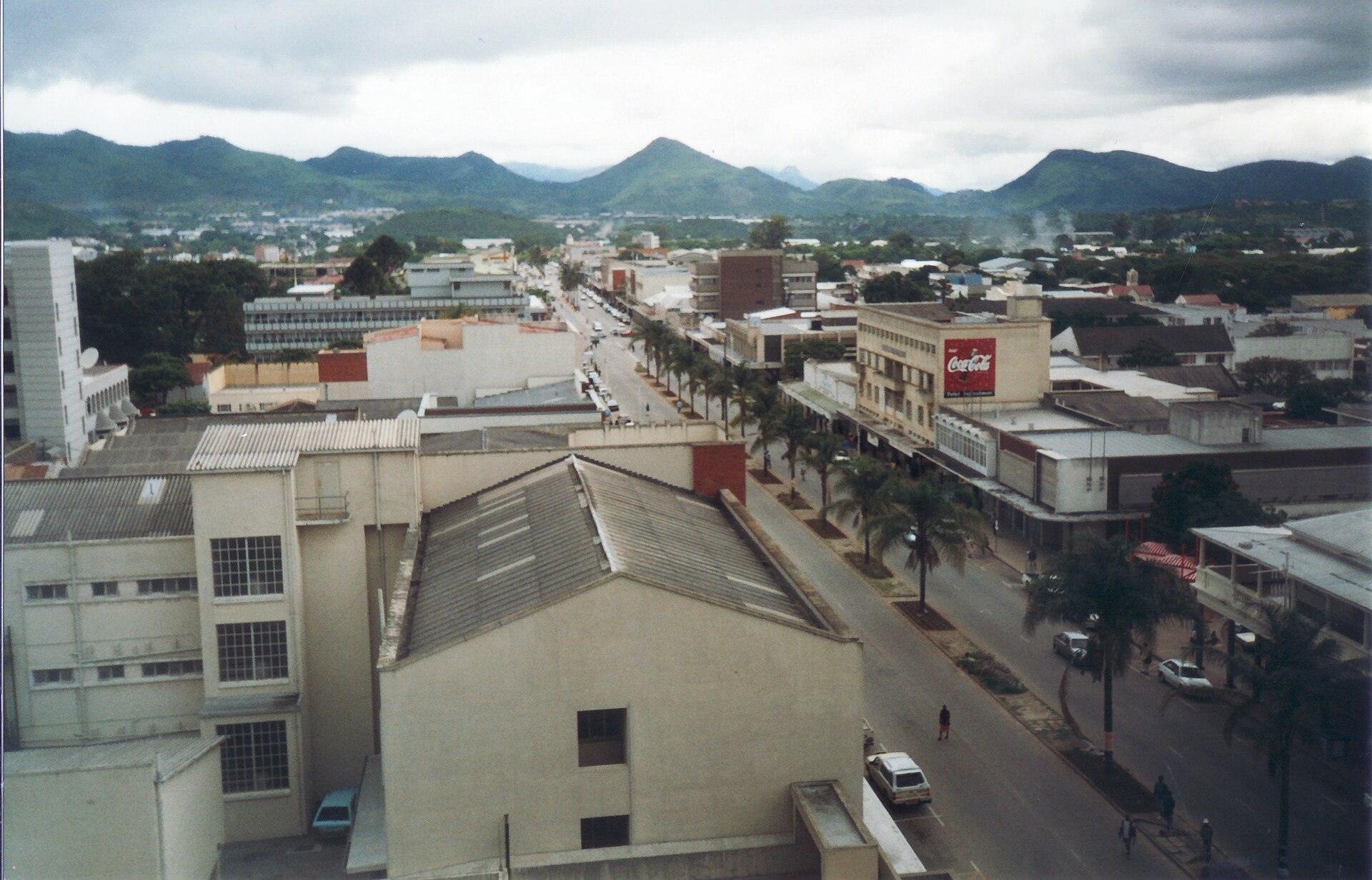
Getting Around Mutare
Mutare is a compact city, and much of it can be covered on foot. For longer hops across town or trips out to the surrounding area, minibus combis, shared taxis and intercity buses fill the gaps. Note that Mutare's historic tramway, which once carried passengers from the railway station up to the Mutare Club, ceased operation in 1921, so trams are not part of the modern transport picture.
Walking
The town is small and walkable, so visitors staying near the centre will find many destinations reachable on foot. The city sits below the Bvumba Mountains and above the Imbeza Valley, and the approach from the west comes over Christmas Pass, a winding dual-carriageway with views of the Eastern Highlands. Expect some hilly terrain as you move around.
Minibus Combis
Minibus combis are the mainstay of short-distance travel in and around Mutare, and a ride costs around US$0.50. The minibus rank is on 'E' Avenue at the corner with 2nd Street, in front of Choppies. Combis are also the practical way to cover the gap between the city centre and the Sakubva bus terminus, which lies outside the centre to the southwest.
Shared Taxis
Shared taxis are the best option for day trips into the surrounding countryside, and they depart when full rather than on a timetable. For the Bvumba Mountains, head to 'E' Avenue on the opposite side of the main A9 road, behind Choppies; the journey takes about 45 minutes and costs around US$5. Arrive early in the morning to make the most of a day trip. For Nyanga National Park, shared taxis leave from 2nd Street at the corner with 'B' Avenue, in front of the CBZ bank, reaching Nyanga town in about 2 hours for around US$5.
Buses
The main intercity bus terminal is the Sakubva bus terminus, located outside the city centre to the southwest. Buses run from Harare and Masvingo (roughly US$8 and 4–5 hours each) as well as from Johannesburg in South Africa. A combi between the terminus and the city centre costs about US$0.50.
Rail
Mutare is served by rail, with daily passenger and freight links to Nyazura, Rusape and Harare, and the city has long been a terminus on the route toward the Mozambican port of Beira. The railway station sits southwest of the city centre. Be aware that the overnight passenger service from Harare was suspended during the Covid-19 pandemic and remained suspended as of July 2024, so check the current status before planning to travel by train.
Taxis and Ride-Hailing
No ride-hailing operators are documented for Mutare in the available sources, so plan around combis and shared taxis instead.
Airport and Arrival
Mutare has no regular scheduled air services. The city has a small airstrip, and air taxis or small private planes may land, but the nearest international gateway is in the capital, Harare. In practice, most visitors reach Mutare overland from Harare, whether by intercity bus or by car.
Arriving by Car
Roads into and around Mutare are decent and asphalted, though potholes are common. Highway A3 leads inland toward Harare, while A9 turns southwards. Across the border to the east, Mozambique's EN9 connects onward to the coastal city of Beira. Traffic can be heavy, since this is one of Zimbabwe's main routes to the ocean, and there is considerable cross-border traffic with people visiting the nearby Mozambican cities of Manica and Chimoio.