Getting Around Sumbawanga
Sumbawanga is the capital of Tanzania's Rukwa Region and the municipal seat of Sumbawanga Urban District. It sits on the Fipa plateau in the country's west and serves as a supply and commercial centre for the surrounding region. For a visitor, that means the town is compact and functional rather than a major transport hub: you should expect to move around on foot, by local transport, or by taxi, and to plan longer journeys by road or air rather than by rail.
Rail, Metro and Tram
There is no rail, metro or tram network in Sumbawanga itself. The nearest rail connections lie beyond the town: Mbeya, to the south, has train links onward to Kapiri Mposhi in Zambia and to Dar es Salaam, while rail can also be reached through Tabora from Mpanda in the north. If rail travel is part of your itinerary, you will need to cover the first leg of the journey from Sumbawanga by road or air.
Buses and Other Public Transport
Long-distance buses are the mainstay of travel into and out of Sumbawanga. Services run to Mpanda in the north, a journey of roughly seven hours, and to Mbeya in the south via the Zambian border town of Tunduma, which takes around five hours. From Tunduma you can connect to a night train onward to Kapiri Mposhi in Zambia. There is also a road from Sumbawanga to Mbala in Zambia.
Road conditions have improved considerably in recent years, which matters for anyone planning overland travel. The road to Mbeya is sealed, giving reliable all-weather access year round, and its continuation north towards Mpanda and on to Tabora or Kigoma is now passable throughout the year. The Tanzanian government has had contracts in place for upgrading large sections of these roads. Even so, fuel supply in town can be erratic because of the difficulties of transporting goods from the coast, so it is wise not to leave refuelling to the last moment if you are driving.
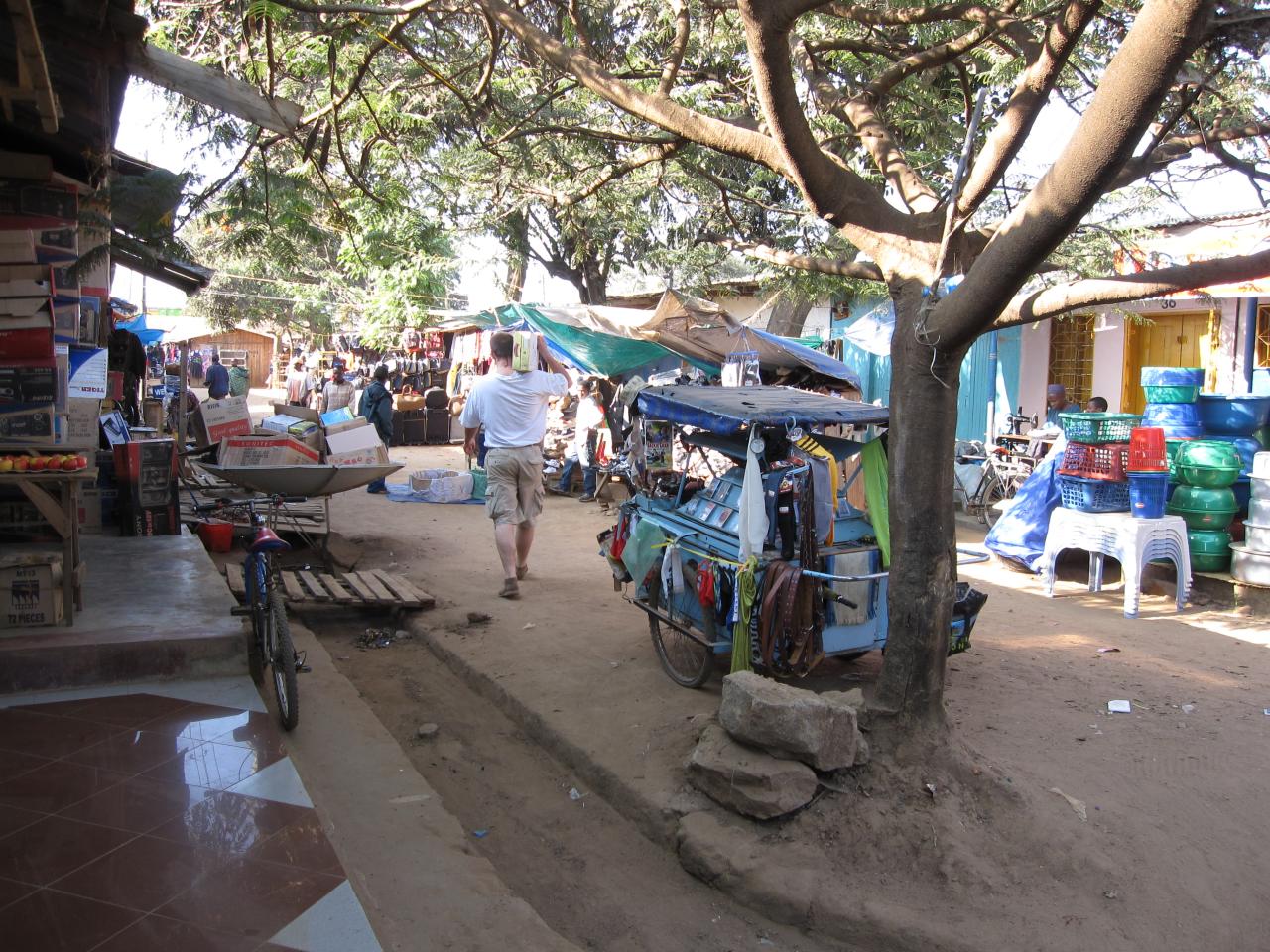
Within the town, the market in the town centre is the practical anchor for local produce and goods, and much of the everyday movement around it happens on foot or by the informal local transport that serves a town of this size.
Taxis and Ride-Hailing
Sumbawanga is a modest regional town rather than a large city, so do not expect an extensive formal taxi fleet or app-based ride-hailing coverage of the kind found in Tanzania's biggest cities. In practice, visitors arrange lifts through their hotel, guesthouse or local contacts, or pick up a taxi on the spot. Because the town is small and its landmarks few, agreeing your destination and fare before you set off is the simplest approach.
Walking
Sumbawanga is a walkable town for the essentials. The town centre holds a modest market where local produce is sold, including maize, rice, fruit, poultry and fish from Lake Tanganyika and Lake Rukwa, alongside imported plastic goods, electronics, bicycles and spares. Government offices, including the regional transport department, and the town's conference centres are also within the built-up area, as are the region's main hospital, Rukwa General Hospital, and the smaller Dr. Atiman Hospital run by the Catholic Diocese of Sumbawanga. Distances between these central points are manageable on foot, though you should allow for the plateau setting and take local advice on which routes are comfortable after dark.
Arriving by Air
Sumbawanga can be reached by flights operated by Auric Air. If your plans involve flying onward within the region, note that Mpanda, to the north, also has an airport with a sealed runway. Once you land, the practical way into town is by pre-arranged transfer or taxi, so it is worth confirming your pickup with your accommodation before you travel.
Practical Notes
- Kiswahili is the most widely used language in Tanzania and will serve you well; many people in and around Sumbawanga also speak Kifipa, the language of the local Wafipa people.
- The town's name translates literally as "throw away your witchcraft", a phrase traditionally understood as a warning to visitors bringing in outside spiritual practices.
- Fuel supplies can be erratic, so plan refuelling carefully if you are driving yourself.
- For onward travel, buses to Mpanda take around seven hours and buses to Mbeya via Tunduma around five hours.