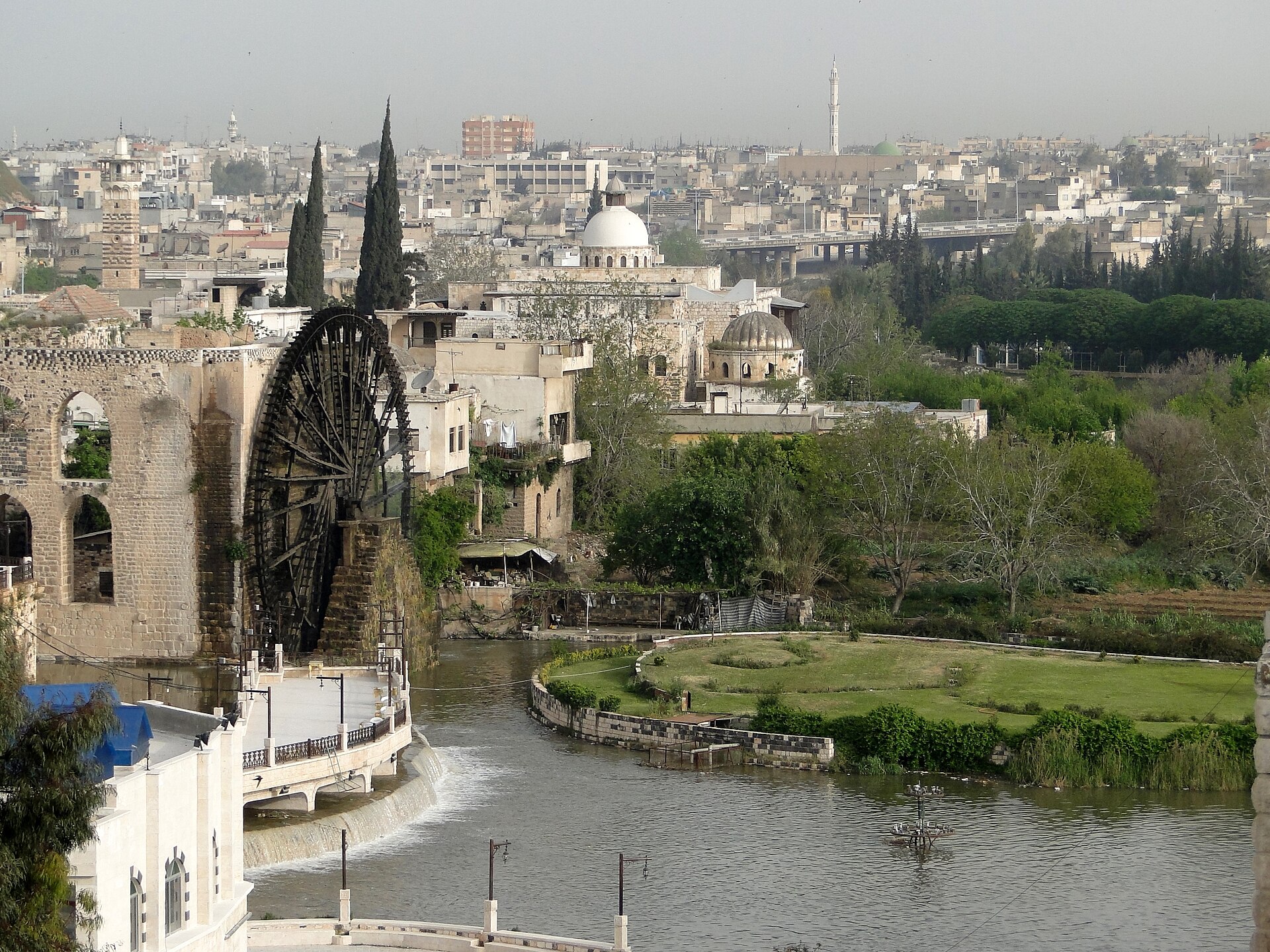
Orientation: A Compact City on the Orontes
Hama sits on the banks of the Orontes River in west-central Syria, roughly midway between Homs to the south and Aleppo to the north. It is the provincial capital of the Hama Governorate and one of the country's four largest cities. For a visitor, the practical upshot is that the city is compact and its main sights — above all the famous norias, the great water wheels that still turn along the river — are clustered close enough together that much of your sightseeing can be done on foot.
Transport across Syria is gradually recovering but remains uneven, and service patterns can change quickly. The single most useful habit you can adopt is to confirm your route on the morning you plan to travel, either with local contacts or with station and garage staff. Local drivers and station staff are generally the most reliable source of current information.
Getting Around the City
Within Hama itself, the practical options are walking, city minibuses, and taxis or shared "service" cars. There is no metro or tram network to rely on, so plan around the street-level options described below.
- Walking: The riverside and central areas are the most rewarding on foot, and the norias are used purely for show today, functioning as a tourist attraction and a symbol of the city. Walking lets you take these in at your own pace.
- City minibuses: Smaller white minibuses cover intra-city travel. They tend to leave when full or on a loose schedule rather than to a fixed timetable.
- Shared taxis ("service"/microbus): These cover both intra-city and intercity travel. You find the local "service" garage, check the destination shown on the windscreen, and pay the driver or conductor on boarding.
- Taxis: Official taxis are recommended over informal options, and official guidance suggests avoiding travel after dark where possible.
Rail: Syrian Railways (Syar)
Syria's rail network is state-owned and operated by Syrian Railways (Syar). Rehabilitation work and trial runs have restarted on some lines, and limited services on the Aleppo–Hama corridor have been reported, alongside renewed freight movements as part of the wider rail rehabilitation effort. Trains do not yet offer pre-2011 levels of reliability or coverage, so treat rail as an option to verify rather than a certainty.
- Tickets: Buy at the station where possible, and keep your ticket with you — it may be checked at checkpoints.
- ID: Your passport or ID may be requested, so keep it handy.
- On board: Older rolling stock is common, so bring water and snacks and allow extra time for delays.
- Before you go: Service frequency, ticketing, and safety vary by route and change quickly. Verify official announcements before travelling.
Buses, Coaches and Shared Taxis
Long-distance air-conditioned coaches serve the open main routes, including the Damascus–Homs–Hama–Aleppo corridor and coastal links. Smaller white minibuses and shared taxis fill in the gaps on both intercity and intra-city journeys.
- Long-distance coaches: Buy tickets at the main garage or coach station. Schedules are informal, so arrive early and expect changes.
- Shared taxis and microbuses: Go to the local "service" garage, check the destination on the windscreen, and pay the driver or conductor on boarding.
- Fares: Agree fares in advance wherever there is no meter or fixed ticket.
- Cash: Keep small denominations of Syrian pounds or USD, since change may be limited. Cash is dominant and ATM access is limited outside major cities.
Checkpoints and Practical Safety
Security checkpoints are common on intercity roads, and many governments advise against travel to Syria because of unpredictable security risks. Plan your movements with that in mind.
- Keep your passport or ID handy and carry document copies.
- Follow local authority instructions and avoid travel at night.
- Use official taxis or public transport where possible.
- Travel during daylight and allow extra time for your journey.
- Bring water, snacks, a charged phone, and a portable charger.
- Carry photocopies of your passport and visa plus an emergency contact list.
- Check the latest government travel advisories before departure.
Money and Communications
- Cash is dominant for transport payments; carry small notes for microbuses and roadside purchases.
- ATM access is limited outside major cities, so plan your cash needs accordingly.
- A local SIM card gives the best access to real-time updates and driver contact numbers; buy one in a major city or at an airport.
Reaching Hama from the Airport
- By coach: Long-distance air-conditioned coaches run on the main corridors, including the Damascus–Homs–Hama–Aleppo route. Buy your ticket at the main garage or coach station, arrive early, and expect schedules to shift.
- By shared taxi or microbus: Head to the relevant "service" garage, confirm the destination on the windscreen, and pay on boarding. Agree the fare in advance if there is no meter or fixed ticket.
- By rail: Where a service is running, Syrian Railways (Syar) is an option, but coverage and reliability remain below pre-2011 levels — verify before you commit.
- Before you set out: Confirm the route with local contacts or station staff on the morning of departure, travel during daylight, and keep your passport or ID accessible for checkpoints.
A Final Word on Planning
Timetables in Syria are less dependable than in stable countries, and checkpoints or route closures may force changes to your plans. Build slack into your schedule, carry cash in small denominations, and treat every journey as one to confirm rather than assume. Done that way, Hama's compact centre and riverside sights are well within reach on foot once you arrive.