Getting your bearings
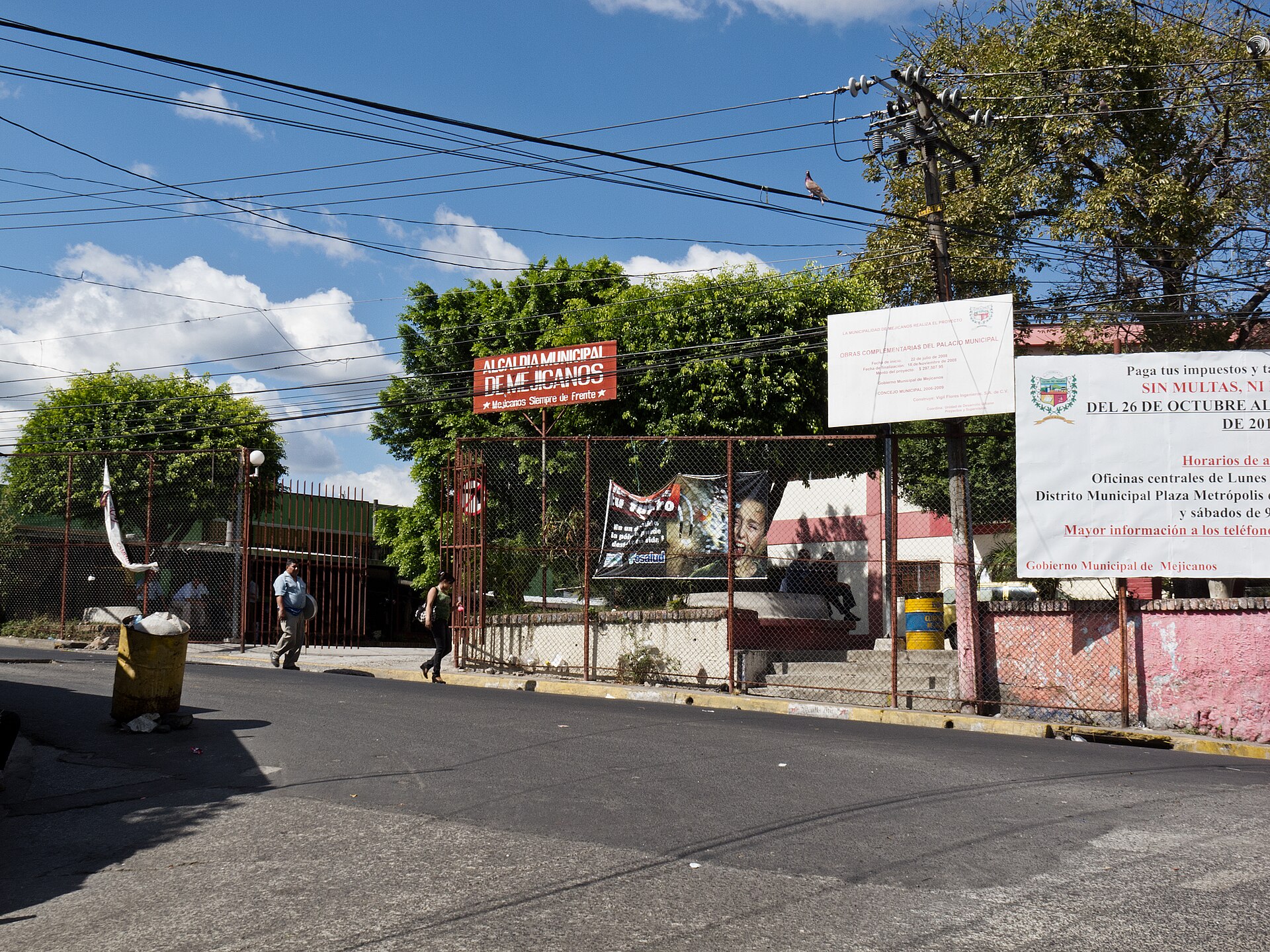
Mejicanos is a city in the San Salvador department and part of the San Salvador metropolitan area, sitting just north of the capital. It occupies a strategic spot on the main route to neighbouring towns and municipalities such as Cuscatancingo, Mariona, San Ramón and San Salvador itself, which makes it a busy pass-through place rather than a quiet suburb. Be prepared for congestion: the city's roads are single-lane in places, which accounts for the frequent traffic jams in the centre. The centre is also informally organised, with street vendors selling alongside the municipal market, so movement through the middle of town can be slow on foot as well as in vehicles.
No rail, metro or tram network
El Salvador has no passenger rail, metro or tram system serving Mejicanos or the wider San Salvador metropolitan area, so you should not plan on trains of any kind. Ground transport here means buses, taxis and walking. A bus rapid transit line linking Mejicanos with San Salvador's historic centre has been under construction, with stations planned along the route, but it is not something a visitor can rely on yet. The earlier SITRAMSS bus rapid transit line, which ran in segregated lanes between Soyapango and central San Salvador, stopped running in 2020 and its stations are being dismantled; it never provided a service you could use today, and its removal does not take away any bus service.
Buses: the backbone of local travel
Buses are how most people get in and out of Mejicanos. Several routes run through the city, and the most useful ones for a visitor connect Mejicanos with San Salvador's downtown (El Centro). From the capital's centre you can pick up buses heading to La Montreal, San Ramón, Mariona, Cuscatancingo and the El Pito area (Delicias Norte and Cantón San Roque). In practice, this means you can base yourself in central San Salvador and reach Mejicanos on a direct bus, or use Mejicanos as a stepping stone to those neighbouring communities.
- Buses to and from San Salvador's El Centro are the simplest option for most trips.
- Routes continue beyond Mejicanos to surrounding towns and villages, so check the destination board before boarding.
- The bus network is run by private route owners authorised by the Vice-Ministry of Transport; many vehicles are old and in poor condition, so expect basic comfort and allow extra time.
Paying for transport
Fares on the traditional bus routes are paid to the driver, and there is no citywide ticket or travelcard a visitor can buy. A prepaid card scheme (SIPAGO) was piloted for bus riders in Santa Tecla, with cards bought and topped up at local businesses so drivers would not have to handle money while driving, but this is not described as a system in general use across the metropolitan area. Carry small notes and coins for fares and keep your payment ready before you board.
Taxis and ride-hailing
Given the traffic jams in the centre and the informal street trading, a taxi or app-based car can be a sensible choice for trips at night or with luggage, but agree the fare or confirm the app price before you set off.
Walking
Walking works well for short errands in the centre, where the municipal market and street vendors are clustered together. The market is where locals buy groceries, vegetables, dairy products, meat and pupusas, and much of the produce comes from surrounding villages. Do bear in mind that pavements and streets are shared with vendors and heavy traffic, and that the single-lane roads make the centre congested; allow more time than you would expect for a short walk, and take care along busy stretches.
From the airport into the city
The reference material does not cover the airport or airport transfers, so no specific airport bus, shuttle or taxi arrangement can be confirmed here. The practical approach is to arrange your onward transport before you fly, or to ask at the airport information desk on arrival for the current options into San Salvador, and then connect to Mejicanos by one of the downtown bus routes described above. Because Mejicanos sits on the main route north of the capital, once you are in central San Salvador the final leg is straightforward by bus.
Practical tips
- Plan journeys around the downtown bus routes rather than expecting any rail alternative.
- Build in extra time for traffic in the centre, especially during busy periods.
- Keep small change for bus fares and avoid relying on cards.
- Use the municipal market as a landmark for the centre, and combine a visit with a walk around the surrounding streets.
- Expect warm weather: the city sits at an average altitude of around 600 metres, and the climate is typically warm.