Getting Around Petržalka: A Visitor's Guide
Petržalka is the largest borough of Bratislava, Slovakia's capital, and it sits on the right bank of the Danube, sharing a land border with Austria. It is primarily a residential area, built up largely of concrete-panel blocks of flats known as paneláks, and it has no single clearly defined centre. For a visitor, that means getting around is mostly about connecting the borough's scattered parts to each other and, above all, to the historic centre of Bratislava on the opposite bank of the river. The good news is that the city's public transport network does this job well, and the recent arrival of the tram in Petržalka has made the connection faster and simpler.
How Tourists Move Around the City
Bratislava's public transport is the backbone of visitor movement. The network is integrated, meaning trams, buses and trolleybuses share the same ticketing system, so a single ticket or pass covers you across modes. For a visitor based in Petržalka, the practical rhythm is straightforward: use the tram or a bus to cross the Danube into the centre, then switch to whatever tram, bus or trolleybus line takes you onward to your specific destination.
Because Petržalka is a residential borough rather than a sightseeing district, most of your trips will be point-to-point — from your accommodation to a bridge, a station, or a specific stop — rather than leisurely wandering between attractions. Planning around the tram line and the main bus corridors will serve you best.
Trams, Rail and the Metro Question
Bratislava does not have a metro system, so trams, buses and trolleybuses do the heavy lifting. The most significant recent development for Petržalka is the tram extension, which opened in late July 2025 and finally brought tram service into the borough. The new line runs through Petržalka from Janíkov Dvor and continues across the city to its terminus in Rača, and it is served by tram line 3.
Line 3 runs frequently — at peak times trams come every few minutes, and even on weekends and holidays the interval stays short, so you rarely need to consult a timetable in advance. This is the line to remember if you are staying in Petržalka and heading into the city.
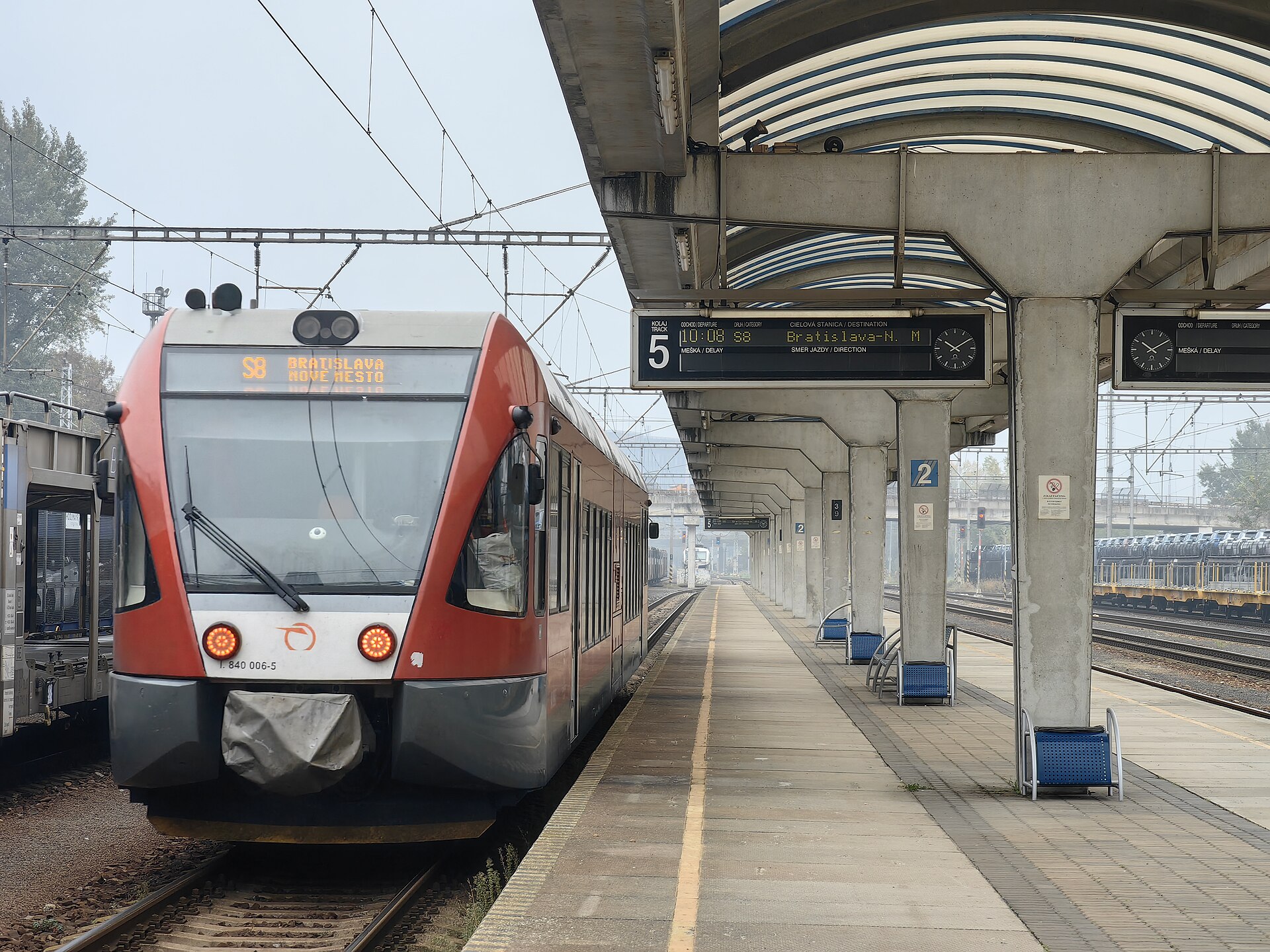
On the rail side, Petržalka has its own railway station, which is one of the borough's notable institutions. Note that the tram extension replaced some older bus connections rather than adding to them: bus lines 95 and 59 were discontinued because they largely duplicated the new tram route. Tram line 7, which ran between Rača and the Main Railway Station, was also discontinued; passengers now change at Račianske Mýto to bus lines 61 or 71, or to trolleybus line 40.
Buses and Other Public Transport
Buses remain essential for reaching parts of Petržalka that the tram does not serve, and for local trips within the borough. One example of how the network is being tuned around the tram: bus line 192, which connects Petržalka with Patrónka, was shortened within the borough so that it now terminates at the Jungmannova stop instead of continuing to the depot at the far end of Petržalka.
Further adjustments to Petržalka's bus lines are expected to be based on real ridership data evaluated after the tram becomes fully operational, so it is worth checking current routes when you arrive rather than relying on older information. Trolleybuses also form part of the network and can be useful when you change in the city centre or at interchange points such as Račianske Mýto.
On tickets and passes: because the network is integrated, you buy a ticket or pass once and use it across trams, buses and trolleybuses. Short single tickets suit one-off crossings into the centre, while a day or multi-day pass makes sense if you plan to move around repeatedly. Tickets are available through the usual city transport channels — ticket machines, mobile apps and points of sale — so it is worth sorting out a pass early in your stay rather than buying singles each time.
Taxis and Ride-Hailing
Taxis and ride-hailing apps are a reasonable fallback in Petržalka, particularly late at night or when you are carrying luggage between the tram line and accommodation set deep within the housing blocks. Because the borough is large and its parts are spread out, a taxi can save a long walk at the end of a tram or bus journey. As with any city, agree on the fare or confirm the app price before setting off.
Walkability
Petržalka is a lowland area with no hills or mountains, which makes walking physically easy. The borough is also home to Sad Janka Kráľa, one of the oldest municipal parks in Europe, and to two lakes, Malý and Veľký Draždiak, which are used for swimming, fishing and leisure — pleasant places to walk or relax. The Arena Theatre, established in 1828 and one of the oldest theatres in Bratislava, is another local landmark worth seeking out on foot.
The catch is scale and layout. Petržalka is the most densely populated residential district in Central Europe, and because it was built primarily as a residential area with no clearly defined centre, walking between one part and another can be long and repetitive rather than scenic. The borough is divided into official parts — Dvory, Lúky and Háje — plus unofficial areas such as Ovsište, Janíkov dvor, Kopčany, Zrkadlový háj, Starý háj and Kapitulský dvor. Distances between these areas make the tram and bus network the sensible default, with walking best reserved for local errands, park visits and the final stretch to your door.
Getting from the Airport into the City
Bratislava's main airport lies outside Petržalka, on the far side of the city from the borough. The practical route into the city — and onward to Petržalka — is to take public transport or a taxi from the airport into the centre, then connect to the tram or bus network for the crossing of the Danube into Petržalka. Because the network is integrated, a single ticket or pass can cover the whole journey if you buy the appropriate zone coverage.
If you are heading straight to Petržalka, the smoothest approach is to aim for the tram line 3 corridor, which links the borough to the rest of the city, or for one of the bus lines that still serve the areas the tram does not reach. Taxis and ride-hailing from the airport are the simplest option if you have heavy luggage, and they will take you directly to your accommodation rather than to a tram stop.
Practical Summary
- Default to public transport. Trams, buses and trolleybuses share one integrated ticket and pass system, so one purchase covers your whole journey.
- Remember tram line 3. It runs through Petržalka from Janíkov Dvor to Rača and is the fastest link between the borough and the city, with frequent service throughout the day and week.
- Use buses for the gaps. Buses still serve parts of Petržalka the tram does not reach, though some routes have been shortened or discontinued as the tram took over their corridors.
- Check routes on arrival. Line adjustments in Petržalka are being made based on real data after the tram opened, so current information beats old maps.
- Walk locally, ride between districts. The terrain is flat and the parks and lakes are lovely, but the borough is large and spread out, so save your walking for short local trips.
- From the airport, connect via the centre. Take public transport or a taxi into the city, then switch to the tram or bus network to cross into Petržalka.