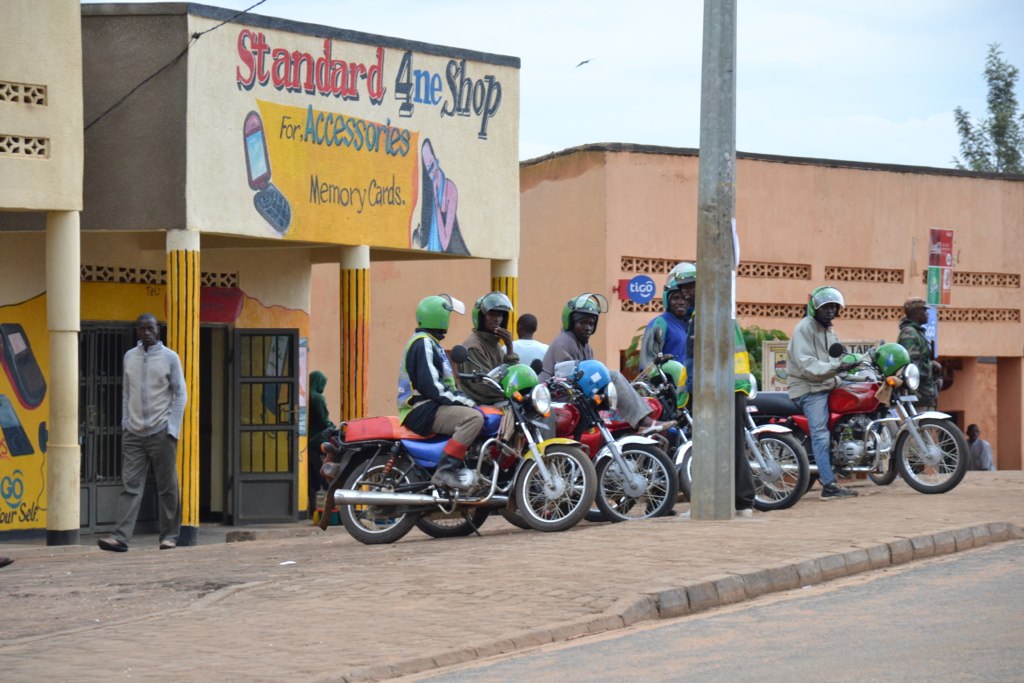
Getting Around Nyagatare
Nyagatare is the largest metropolitan area and the capital of Nyagatare District, in Rwanda's Eastern Province, and sits close to the country's international borders with both Tanzania and Uganda. It is one of the most populous settlements in the Eastern Province, alongside Rwamagana and Kibungo. For a visitor, the practical reality is that Nyagatare is a compact, low-rise town best navigated on foot and by road-based transport, with long-distance connections to the rest of Rwanda provided mainly by intercity bus services.
How Tourists Move Around the City
Nyagatare has no rail, metro or tram network, so movement within and between towns happens on the road. The town functions as a regional hub at the centre of a cattle farming region and is a point of milk collection for producers such as Inyange Industries Ltd., with milk from Nyagatare exported to other parts of Rwanda. That means much of the traffic you will see is commercial and agricultural rather than tourist-oriented, and your own movement will rely on walking, shared transport and hired vehicles.
Rail, Metro and Trams
There is no rail, metro or tram service in Nyagatare. Visitors should not plan on any form of fixed-track public transport; all practical journeys are made by road.
Buses and Other Public Transport
Nyagatare is served by long-distance intercity bus services. BasiGo Rwanda, an electric bus operator, runs intercity coaches connecting Kigali with a set of key destinations that includes Nyagatare, alongside Musanze, Rubavu, Huye and Rusizi. These services use the i8 Intercity Coach, which runs on CATL battery systems with a range of up to 350 km. As an indication of what that range allows, one i8 coach completed a Kigali–Rusizi round trip on a single charge, and Rusizi is Rwanda's furthest district.
For a visitor, this means the intercity coach is the realistic way to arrive in or leave Nyagatare without a private vehicle. The operator SU Direct, whose managing director is Cyprien Sibomana, has reported reduced fuel and maintenance costs since adding BasiGo electric buses to its fleet. Kigali is targeting a fully electric public bus fleet by the end of 2026, and BasiGo aims to deploy 1,000 electric buses across East Africa, with operations also in Kenya — so the electric intercity option is likely to become more common over time.
Taxis and Ride-Hailing
Visitors should not assume that app-based ride-hailing is available, and should arrange local transport through their accommodation or by asking locally on arrival.
Walkability
Nyagatare is a town rather than a dense metropolis, and walking is a reasonable way to cover the centre. Be aware of the local context: infrastructure in the area is limited, with only a small share of the population having access to electricity and a substantial share of households relying on water from public stand posts. These are general living conditions rather than tourist facilities, but they are worth knowing so you can plan accordingly — carry water, and do not expect the level of street infrastructure you might find in a larger, more heavily developed city.
Getting from the Airport into the City
The practical route for most visitors is to fly into Kigali and then continue to Nyagatare by intercity bus, since Kigali is the origin point for the BasiGo intercity coach services that include Nyagatare among their destinations. Confirm current schedules and connections with the operator before you set out.