Getting Around Tambov: An Overview
Tambov is the administrative centre of Tambov Oblast and the largest city in its region, sitting at the confluence of the Tsna and Studenets rivers. For a visitor, the good news is that the city is compact enough to combine walking with a small number of public transport options. The main modes you will encounter are buses, trolleybuses, marshrutkas (shared minibuses) and taxis. There is no metro or tram network in Tambov, so plan around buses, trolleybuses and road transport instead.
Walking
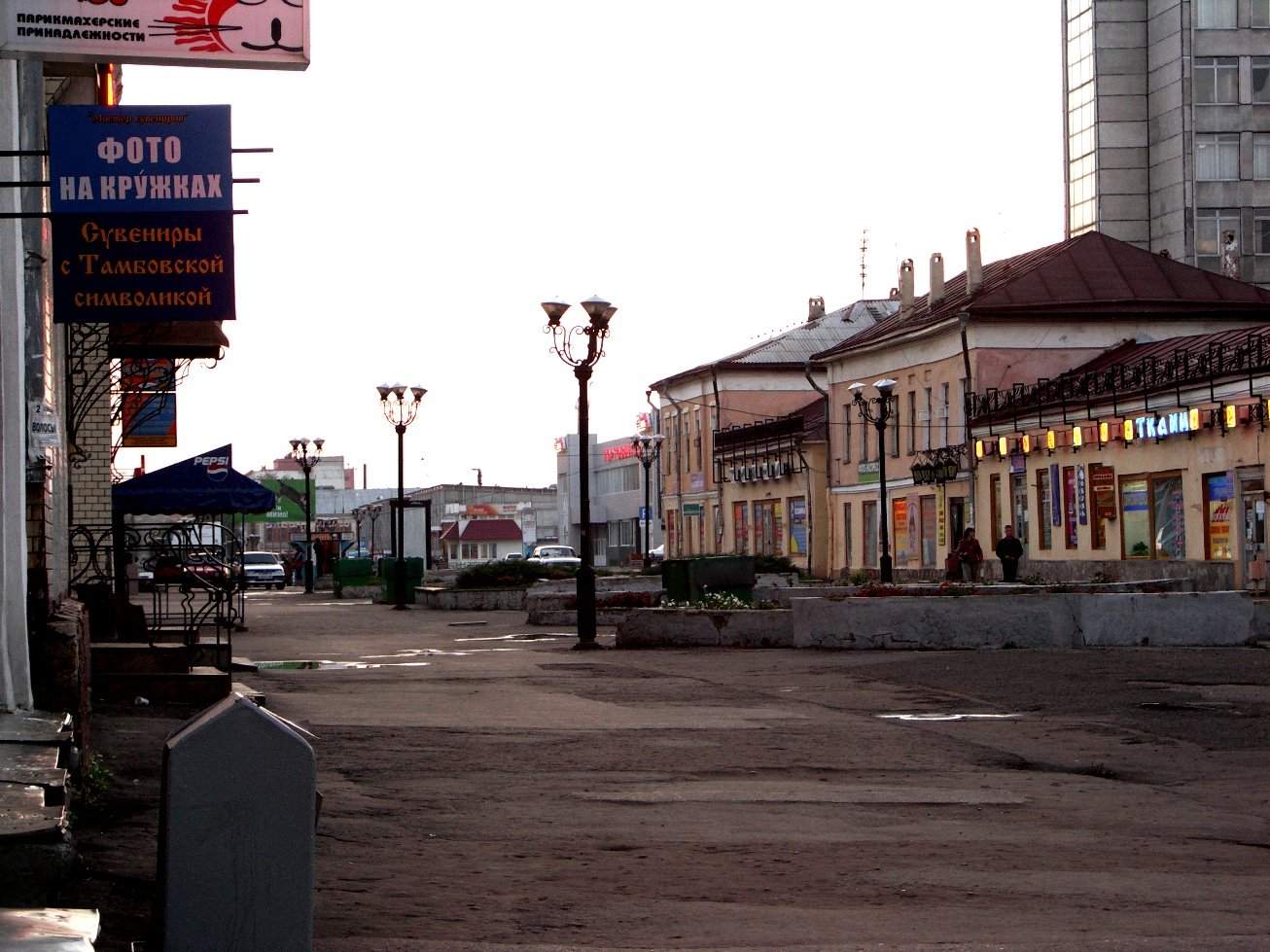
Tambov's central streets follow a regular grid laid out under Catherine II's general plan of 1781, which replaced the older, more haphazard layout with straight streets and geometrically ordered blocks. That legacy makes the centre reasonably easy to navigate on foot, and the central part of the city is where the former Kremlin and posad once stood.
Practical points for walkers:
- The city centre is considered safe for evening walking, though more caution is advised in remote residential areas after dark.
- Wear warm footwear and a down jacket in winter — the climate is temperate continental with cold frosts — and expect warm summers.
- English is limited mainly to staff at major hotels and younger people, so an offline translator is worth having on your phone.
- Politeness and calmness are valued; greeting people is customary when entering small shops or addressing passers-by.
Rail: Tambov-1 and Beyond
Tambov has no metro and no tram system. Its rail network is oriented around long-distance and suburban trains rather than urban transit. The main station, Tambov-1, sits almost in the city centre at the end of Ulitsa Internatsionala, a short street roughly a kilometre and a half long, at 1 Privokzalnaya Ploschad. Because the station is so central, arriving by train puts you within easy reach of the heart of the city.
Tambov-1 handles long-distance and suburban services. Selected destinations include Moscow (Paveletsky Station), St Petersburg (Moskovsky Station), Saratov, Arkhangelsk, Ryazan, Novosibirsk, Belgorod, Omsk, Penza, Michurinsk, Astrakhan, Stary Oskol, Nizhny Tagil and Novorossiysk. Direct trains also arrive from Volgograd and Novorossiysk.
For regional trips, suburban elektrichkas run to places such as Michurinsk, and there are also services toward Oblovka station (for Uvarovo village), from where a taxi covers the remaining stretch to Ivanovka.
Buses, Trolleybuses and Marshrutkas
Local public transport in Tambov consists of trolleybus, bus, marshrutka and taxi. This is the practical backbone of getting around the city.
Useful routes and connections:
- Buses No. 18C, 18KOM and 44, plus trolleybus No. 5, run along Ulitsa Internatsionala and central Ulitsa Sovetskaya — handy if you are moving between the railway station and the central streets.
- Bus No. 144 runs from the railway station to the airport via Ulitsa Internatsionalnaya and Ulitsa Sovetskaya.
- To reach the city centre or the railway station from the New (Novy) Bus Station, take buses No. 41 or 45, or minibus No. 45.
- Between the Northern (Severny) and New bus stations, use buses No. 7, 14A, 14П, 60 and 61, trolleybus No. 6, or minibuses No. 16 and 30.
Carry some cash: bank cards are widely accepted in shops, cafes and museums, but cash is advisable for small kiosks and markets.
The Two Bus Stations
Tambov has two bus stations, and knowing which one you need matters for regional travel.
- New (Novy) Bus Station — located far from the centre, on the western entrance to the city. It serves regional and interregional routes, including buses to and from Moscow.
- Northern (Severny) Bus Station — about two and a half kilometres from the railway station, serving only regional routes.
Intercity buses connect Tambov with many Central Russian cities on daily services, so the bus stations are your departure points for onward travel within the region and beyond.
Taxis and Ride-Hailing
Taxis are a straightforward option in Tambov, and taxi apps are described as reliable and affordable. They are especially recommended for evening trips or when you are carrying luggage. Intercity taxis are also available if you need to cover longer distances by road. For trips where public transport would mean a long walk or a transfer, a taxi is a sensible fallback.
Getting from the Airport into the City
Tambov's airport, Donskoye Airport, is located north of the city and serves regular flights, including from Moscow and Sochi. It sits a few kilometres from the city centre.
Your main public transport option is:
- Bus No. 144 — runs from the railway station to the airport via Ulitsa Internatsionalnaya and Ulitsa Sovetskaya, linking the airport with both the central streets and Tambov-1.
If you prefer not to wait for the bus, a taxi or ride-hailing app is a practical alternative, particularly with luggage. Note that alternative arrival airports exist if Tambov's own flights do not suit your plans: Lipetsk and Voronezh are sometimes used as alternative gateways, and Penza occasionally as well. From those cities you would continue to Tambov by train or bus, with Lipetsk and Voronezh also serving as transfer hubs for cities without direct connections.
Practical Tips for Visitors
- The currency is the Russian ruble; bank cards are widely accepted, but keep some cash for small kiosks and markets.
- Do not drink tap water without boiling or filtering it.
- Pharmacies and medical centres are plentiful if you need them.
- If you want a souvenir, the "Tambov Wolf" is the region's main brand and is available in souvenir shops.
- Plan around buses, trolleybuses, marshrutkas and taxis rather than rail for movement within the city — the rail network here is for longer journeys, not urban transit.