Getting Your Bearings
Shikarpur is a city in Sindh Province, Pakistan, and the seat of Shikarpur District. For a visitor, the practical geography is simple: the historic core, with its compact bazaars, sits at the centre, while the main road hubs that connect the city to the rest of Sindh lie further out. Almost everything you need for getting around starts from those two facts.
How Tourists Move Around the City
Within Shikarpur itself, movement is dominated by small vehicles rather than a formal urban transit system. The two workhorses are auto-rickshaws and cycle rickshaws.
- Auto-rickshaws are the main option for short and medium trips around town. There is no metering culture, so agree on the fare before you board.
- Cycle rickshaws are common for very short hops and for the narrow lanes, especially in the old city and the bazaars. They are slow, but they can reach places too tight for motor vehicles.
- Walking is genuinely useful in the historic bazaars, such as Katcheri and Shahi Bazar, which are compact and walkable.
Bargaining is customary in the bazaars, and that applies to rickshaw fares as much as to shopping. Dress conservatively, and ask before photographing people or private courtyards.
Rail Network
Shikarpur has its own railway station, Shikarpur Junction, served by Pakistan Railways. It is your rail gateway to the region rather than a stop on a dense urban network.
- Regional routes connect Shikarpur toward Sukkur and Rohri, and onward to Karachi and points north.
- Sukkur is a short regional hop by train; Karachi is a long-distance journey, commonly an overnight one.
- Fares vary by class, from economy seating on short trips up to reserved AC sleeper classes on long-distance services.
There is no metro or tram network in Shikarpur, so rail here means intercity trains, not city transit.
Buses and Other Public Transport
Public transport in Shikarpur has historically meant privately operated Hiace vans, which suffered from overcrowding, poor maintenance, no air conditioning, no fixed timetable and no organised stopping points. That picture has been changing.
The Government of Sindh launched the People's Bus Service in Shikarpur, operated under the province's Transport and Mass Transit Department and the Sindh Mass Transit Authority, as part of provincial transport reforms extending services beyond major urban centres. For a visitor, the practical features are what matter:
- Fixed routes and designated bus stops, so you know where to wait and where a bus is going.
- Regular operating schedules, with synchronised operation — a bus arrives shortly after another leaves.
- Air-conditioned buses at affordable fares.
- Reserved seating for senior citizens and persons with disabilities, dedicated spaces for women, and improved boarding facilities for elderly and mobility-impaired passengers.
For travel beyond the city, shared vans, coasters and minibuses connect Shikarpur with Sukkur, Jacobabad and other Sindh towns. These are the cheapest regional option and run frequently from the main road hubs. Intercity buses go further, linking Shikarpur to Sukkur, Larkana, Jacobabad and Karachi; the Karachi run is a long road journey. Fares depend on distance and operator, and you generally pay on board or to the operator at the departure point rather than buying an advance pass.
Taxis and Ride-Hailing
Shikarpur does not have a metered taxi culture. The realistic options are:
- Hired cars and taxis, which are the choice for comfort and speed between cities, and for airport transfers.
- Auto-rickshaws, which function as the local taxi for in-town trips — again, fix the price first.
Ride-hailing apps are not part of the transport picture described for Shikarpur, so plan on negotiating directly with a driver or rickshaw operator rather than summoning a car to your phone.
Walkability
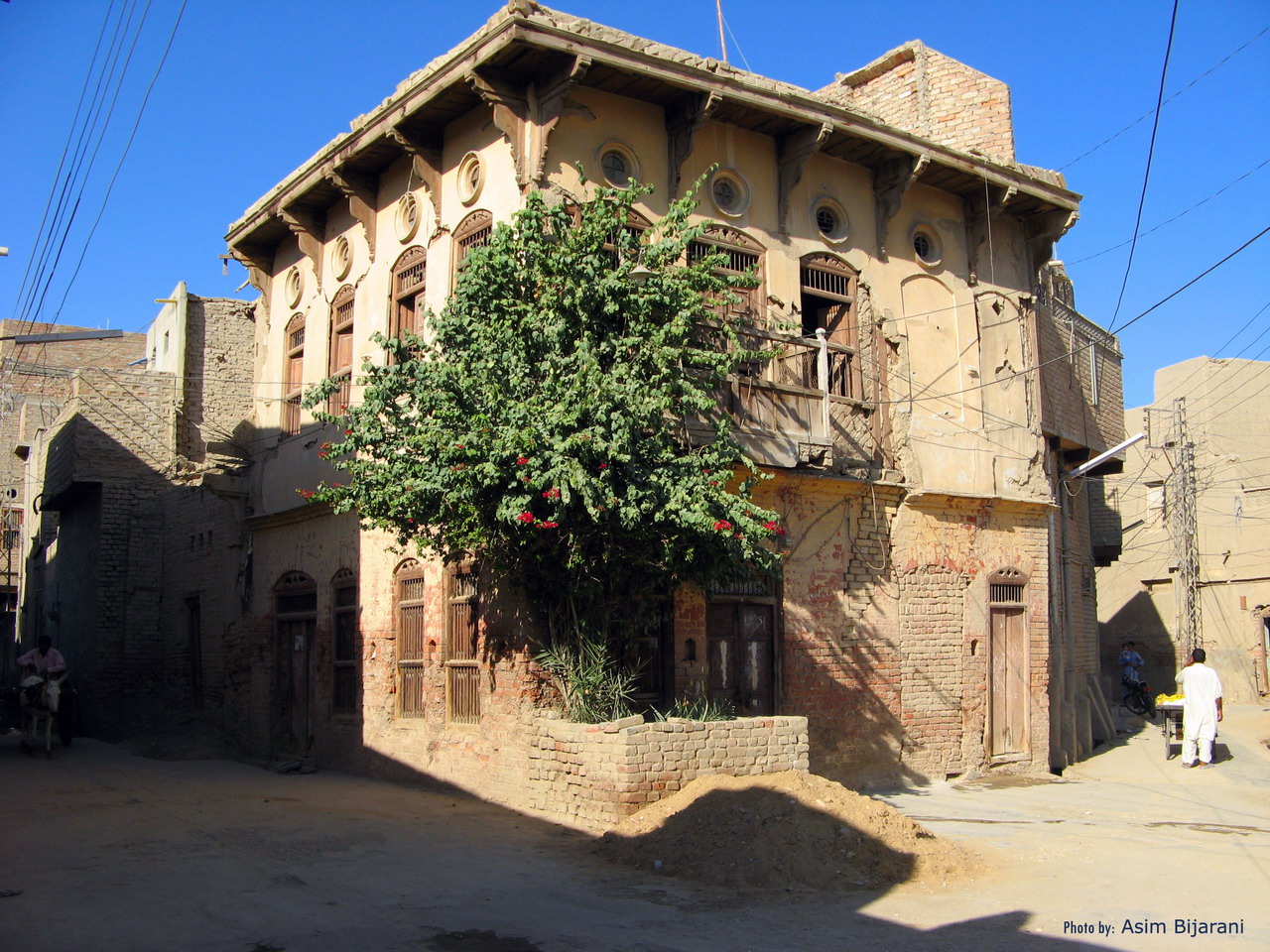
Walking works well in a defined area rather than across the whole city. The historic bazaars — Katcheri and Shahi Bazar — are compact and walkable, and the narrow lanes of the old city are often best covered on foot or by cycle rickshaw. Outside that core, distances open up and you will want a rickshaw or a car.
Getting From the Airport Into the City
Shikarpur has no airport of its own, so arrivals come through one of two gateways.
- Sukkur Airport (SKZ) is the nearest domestic airport. From there, a taxi or hired car will bring you into Shikarpur directly. Alternatively, take a taxi or rickshaw into Sukkur city first, then continue by local bus or shared van.
- Jinnah International Airport, Karachi (KHI) is the main international gateway. From Karachi you can continue by domestic flight to Sukkur when those services are operating, by road on an intercity bus or by car, or by rail — overnight trains make the journey longer but avoid the road.
Practical Notes for Visitors
- The best time to visit is November to February, when conditions are cool and dry. Summers are brutally hot, and the monsoon from July to September brings humidity, sporadic storms and possible power outages.
- Larger medical services are found in Sukkur; basic shops, bakeries and pharmacies are available locally in Shikarpur.
- Carry small cash for rickshaws, vans and buses, and settle fares before departure.