Orientation
Sahiwal is a city in central Punjab, Pakistan, and serves as the administrative capital of both Sahiwal District and Sahiwal Division. It sits in a densely populated region between the Sutlej and Ravi rivers, roughly between Lahore and Multan. The modern city grew up around its railway station, which was built in 1865 on the Karachi–Lahore line — so the railway has shaped Sahiwal's layout from the beginning, and the station remains a useful anchor for orienting yourself.
For a visitor, the practical takeaway is that Sahiwal is a compact, largely flat city where local movement is simple, while longer journeys in and out are best handled by rail or road. The city's climate is hot semi-arid, with summers reaching around 47 °C and winters dropping to about 5 °C, so plan your walking and waiting-around time accordingly.
Getting around the city
Sahiwal does not have a metro or tram network. Getting around within the city relies on the same mix of road transport found in most Punjabi cities: buses and minibuses, taxis, auto-rickshaws, and, increasingly, ride-hailing apps. The city is not especially large or spread out, so short trips are manageable, but the heat for much of the year makes air-conditioned or shaded transport worth paying a little extra for.
Because the city is overwhelmingly Punjabi-speaking, with Urdu as the main minority language, you will find that Urdu is widely understood and is the most practical language for giving directions or negotiating with drivers.
Rail
Sahiwal's railway station is the city's main long-distance gateway and the reason the modern city exists. It sits on the main Lahore–Karachi railway, and there are direct train connections to Lahore, Karachi, Rawalpindi, Sialkot, Peshawar, Quetta, Multan, Samasata and Madina-tul-Hajjaj. If you are arriving from or heading to any of these places, the train is the most straightforward option.
Buying tickets is done at the station in the usual way for Pakistan Railways — over the counter, with the option of reserved classes on longer routes. For a visitor, the practical advice is to book longer journeys in advance where possible, and to confirm departure times at the station rather than relying on a schedule you found elsewhere.
Buses and other public transport
Bus connections are frequent and run to and from most larger towns in Punjab, including Lahore and Bahawalpur. This makes the bus a flexible alternative to the train, particularly for shorter hops between nearby towns where rail service may be less convenient.
Within the city, local buses and minibuses cover the main routes. Fares are typically paid in cash to the conductor on board, and there is generally no advance ticketing or pass system for local services — you simply board and pay. For a visitor, this means keeping small change handy and being prepared to ask which vehicle is heading your way, since route signage can be limited.
Taxis and ride-hailing
Taxis and auto-rickshaws are available in the city and are the simplest way to make a direct point-to-point trip without needing to know local routes. Ride-hailing apps are also an option and are often the easiest choice for a visitor, since the fare is agreed in the app and you avoid having to negotiate. As a rule, agree on the fare before setting off if you are hailing a taxi or rickshaw on the street.
Walkability
Sahiwal is a flat, low-lying city at roughly 152 metres above sea level, which in principle makes walking easy. In practice, walkability is limited by the climate: with summer temperatures climbing towards 47 °C and rainfall concentrated in the summer monsoon, walking is most comfortable in the cooler hours of the morning and evening, and during the milder winter months. Pavements and crossings are not consistently maintained, so pedestrians should expect to share space with traffic. For most visitors, walking works well for short stretches — around a market, a neighbourhood, or between nearby stops — rather than as a primary way of crossing the city.
Getting from the airport into the city
Sahiwal does not have its own commercial airport, so visitors arrive via one of three nearby international airports and continue overland. Each approach has a different character:
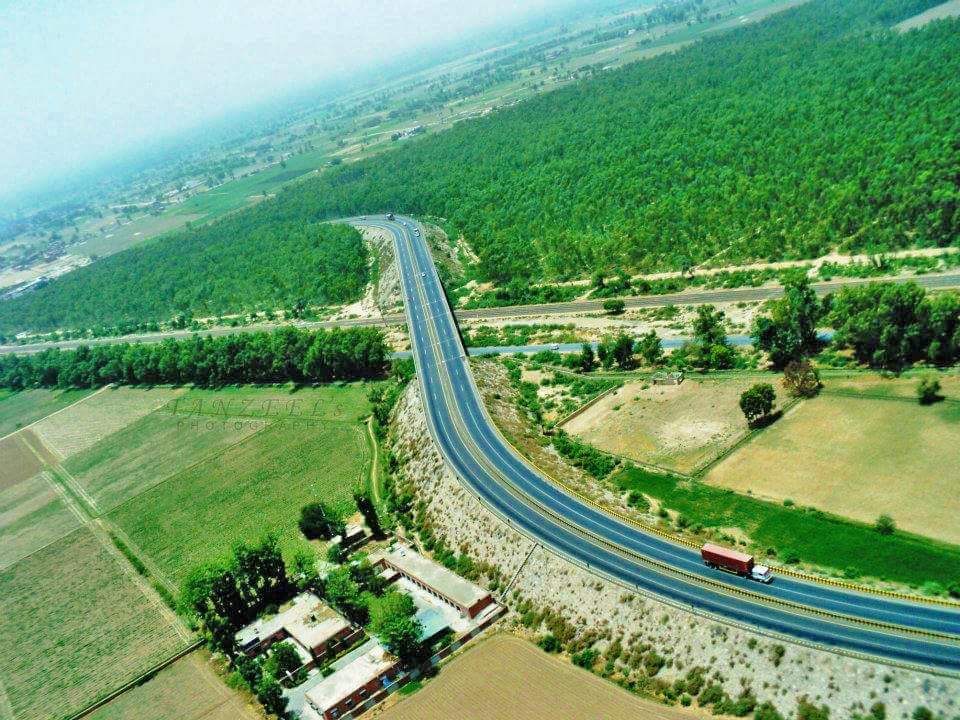
- From Lahore (Allama Iqbal International Airport): Sahiwal lies roughly 170 km from Lahore. After landing, you can continue by bus or by train. The road from Lahore to Sahiwal is a dual carriageway with two lanes in each direction and a central barrier, which makes it the safer of the road approaches.
- From Multan (Multan International Airport): Sahiwal is about 177 km from Multan. From the airport, the onward leg is by bus. As with Lahore, the road from Multan to Sahiwal is a dual carriageway with two lanes in each direction and a central barrier, so it is also a relatively safe approach.
- From Faisalabad (Faisalabad International Airport): Sahiwal is about 94 km from Faisalabad, and the onward journey is by bus. Note that this road is a single carriageway with two lanes and no central barrier, so it is not as safe as the roads from Lahore and Multan.
In short: if you have a choice of arrival airport, Lahore and Multan offer the more comfortable and safer road connections, while Faisalabad is the closest but comes with a less protected road. Whichever you choose, the final leg into Sahiwal is by bus or train rather than by air.
Practical tips
- Use the railway station as your reference point — it is central to the city and connects to the widest range of destinations.
- Keep small cash on hand for local buses, minibuses and rickshaws, since local services generally do not use passes or cards.
- For longer journeys, trains are the most comfortable option; for nearby towns, buses are frequent and convenient.
- Plan outdoor activity around the heat, especially in summer, and around the summer monsoon rains.
- Urdu will serve you well in everyday interactions, even though Punjabi is the dominant everyday language of the city.