Getting Around Sikasso
Sikasso is a major trading city in southern Mali and a crossroads between the coast and the landlocked interior. For a visitor, the practical reality is that the city has no rail, metro, or tram network to rely on, and no ride-hailing apps are documented here. Getting around means using the road-based options that exist locally, plus the intercity buses that connect Sikasso to the rest of the region.
Rail, Metro, and Tram
There is no metro or tram system in Sikasso, and no rail network serving the city is described in the source material. Visitors should not plan on trains or urban rail as a way to move around. Any long-distance travel into or out of the region is handled by road.
Buses and Public Transport
Bus services are the main documented form of public transport connecting Sikasso with other cities. There are plenty of bus services from the capital, Bamako, and SONEF is the largest operator. If you are arriving from Bamako or heading back there, this is the option to look for.
- Intercity buses link Sikasso with Bamako, with SONEF being the largest operator.
- Because Sikasso sits close to the borders with Côte d'Ivoire and Burkina Faso, it functions as a crossroads for travel between the coastal countries and the landlocked interior.
The source material does not describe an urban bus network, ticketing systems, or travel passes within the city itself, so plan on arranging intercity seats directly with the operators rather than expecting a citywide pass.
Taxis and Ride-Hailing
No taxi or ride-hailing services are documented in the source material for Sikasso. Visitors should treat this as an area to confirm locally on arrival rather than assuming an app-based option will be available.
Walking
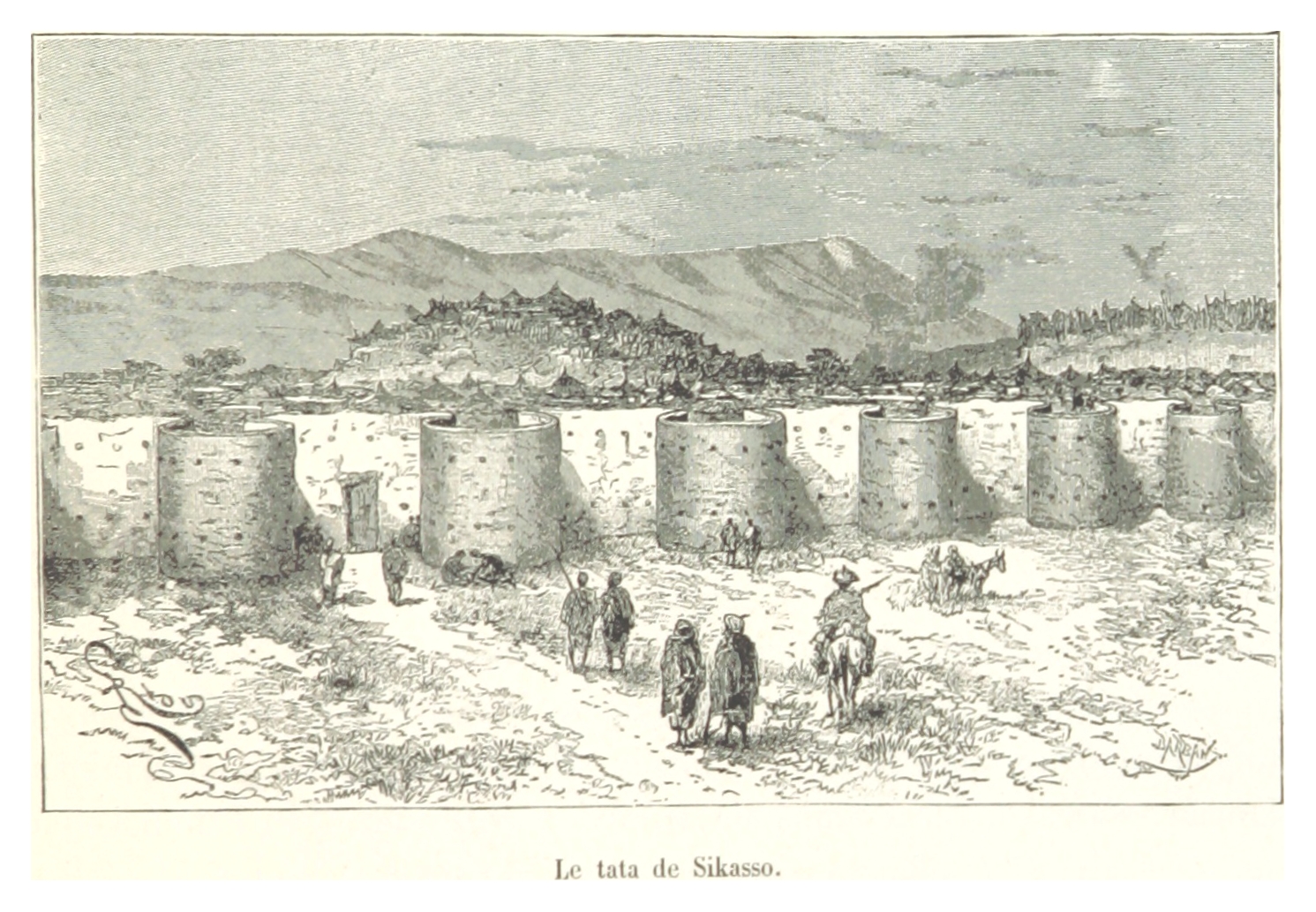
Walking is a reasonable way to reach Sikasso's main attractions, which are clustered in and around the city. These include the large market, Mamelon hill, the remains of Tieba Traoré's tata, and the nearby Missirikoro Grotto.
- The large market is a central draw and a natural anchor for a walk through the city.
- Mamelon hill, the sacred hill where Tieba Traoré established his palace (now home to a water tower), is another landmark worth walking to.
- The remains of the tata — the massive fortification that once made Sikasso the largest fortified city ever built in West Africa — are among the historic sites in the city.
- The Missirikoro Grotto lies nearby, outside the immediate centre.
Be mindful of the climate when planning walks. Sikasso has a tropical wet and dry climate, with most rain falling between May and October and August the wettest month. The hottest conditions come at the end of the dry season in March and April, when average daily maximum temperatures rise just above 37 °C. Early mornings and evenings are more comfortable for walking during those hot months.
Getting from the Airport into the City
The source material does not describe an airport serving Sikasso or any airport transfer options. Visitors should not expect a documented airport-to-city transfer service here. The reliable, documented way to reach Sikasso from elsewhere is by intercity bus, particularly from Bamako, where plenty of services operate and SONEF is the largest operator.
Practical Tips
- Base your long-distance travel on buses rather than rail, since no rail service is described.
- Ask locally about taxis and any current transport options once you arrive, as these are not covered in the available sources.
- Time your walking and outdoor sightseeing around the rains (May–October) and the hottest stretch (March–April).
- If you are visiting in June, the Triangle du balafon festival celebrates the traditional Malian instrument and is a good reason to be in the city.