Getting Around Semey: An Overview
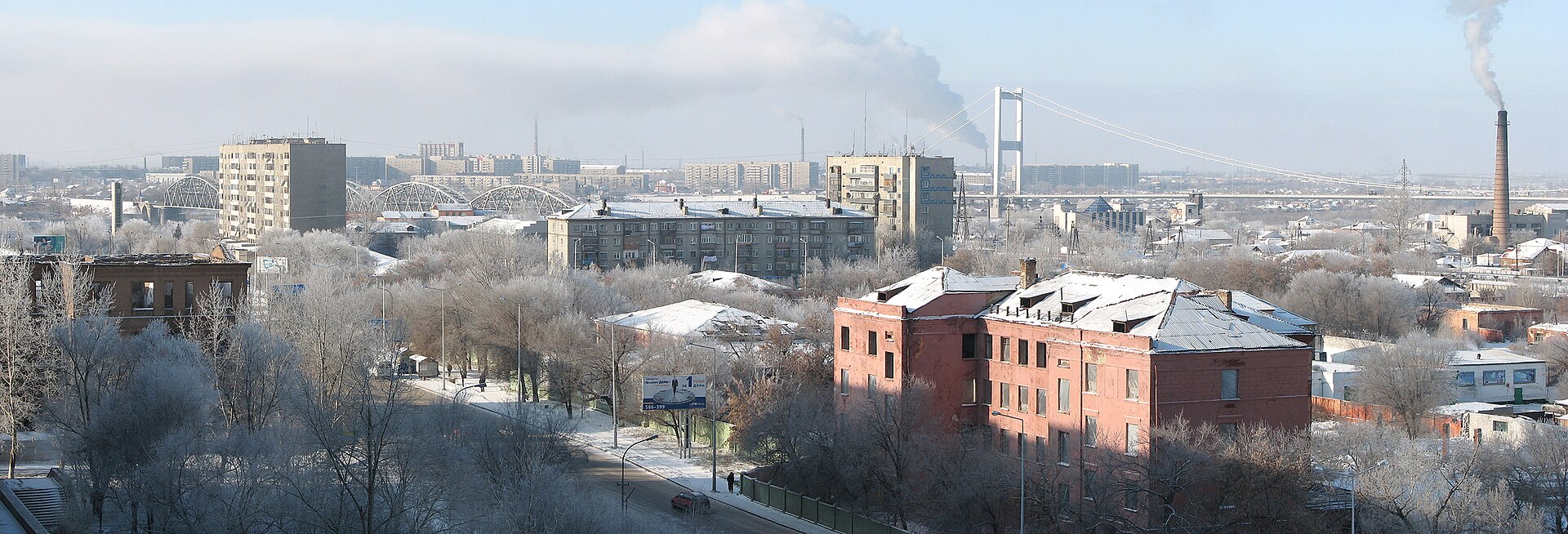
Semey is a mid-sized city on the Irtysh River in north-eastern Kazakhstan, and it serves as the administrative centre of Abai Region. For a visitor, the practical reality is that the city is served mainly by buses, with taxis and ride-hailing filling in the gaps, and walking working well in the central areas. There is no metro or tram network here. The city's layout is shaped by the Irtysh, and the Semey Bridge, a suspension bridge, connects the two major parts of the city, so knowing which side you need is useful when planning a trip across town.
Rail Connections
Semey sits on the Turkestan–Siberia Railway, which has historically made the city a transit point between Central Asia and Siberia. For visitors, this means the city is reachable by train from a number of regional destinations. Train connections include Almaty, Astana via Pavlodar, and Novosibirsk, among others. If you are arriving or leaving by rail, this is the main long-distance option, and it is worth booking ahead for longer routes.
Buses and Public Transport
The core of urban transport in Semey, as in most Kazakh cities, is the city bus. Buses typically run from around 6 AM until roughly 10 to 11:30 PM, with crowded rush hours in the morning and late afternoon. Fares across Kazakhstan are low, generally in the range of 80–150 tenge per ride, and paying by card is usually cheaper than paying cash.
Semey is one of the cities where the Avtobys electronic ticketing system operates. Avtobys functions as an electronic wallet and validation system, and a card registered with Avtobys can be used in all the cities where the system is deployed, not just Semey. This is useful if you are travelling onward within Kazakhstan.
- Buying and topping up: The practical approach for a foreign visitor is to buy a physical transport card and top up with cash at a terminal. Terminals such as Kassa24, Yurta, and Qiwi are commonly used for this.
- Watch the balance: App balance and physical card balance are separate. When topping up via terminals or online banking, check which medium is being credited.
- Keep some change: Cash payment situations still exist, so carrying small notes and coins is sensible.
- If you lose your card: A registered Avtobys card can be blocked via support, and the balance transferred to a new card if it was registered in your name.
Be aware that many transport apps require a Kazakh phone number, and sometimes a local bank account and ID number, and interfaces are rarely translated. Buying a physical card and topping up with cash avoids most of these hurdles.
Marshrutkas and Minibuses
Private minibuses, known as marshrutkas, complement the official bus network. They typically have 15–30 seats and are used in smaller towns, suburbs, and on medium-distance intercity routes. They depart from bus stations (avtovokzal) or can be hailed at the roadside. Their operation is informal: some follow approximate schedules, while others leave only when full. Fares are low, often similar to regular buses, but service quality is inconsistent, with little legroom, variable heating, driver-chosen music, and no real passenger information. They can be a useful fallback when trains are full or infrequent.
Taxis and Ride-Hailing
Taxis are a practical way to cover distances that buses do not serve well, particularly across the river or to outlying areas. Ride-hailing apps are widely used in Kazakhstan's cities, and they are generally the easiest option for a visitor who does not speak Russian or Kazakh, since you can set your destination in the app. As with public transport apps, some services may require a local phone number, so it is worth setting this up early in your trip if you plan to rely on it.
Walkability
Walking is a reasonable way to explore Semey's central areas, but it is not a reliable way to cross the whole city. Across Kazakhstan generally, walking is often impractical due to urban sprawl, uneven sidewalks, and a continental climate with very cold winters and hot summers. Semey's climate fits this pattern: it has a cold semi-arid climate with warm summers and very cold winters, and snow is common in winter. Accessibility is also a weak point for people with reduced mobility, with poorly adapted sidewalks and buildings. If you are visiting in winter, plan to rely on buses or taxis rather than long walks.
Getting from the Airport into the City
Semey Airport (IATA code PLX) has flights from Almaty and Astana. For reaching the city from the airport, the options are the same as those for getting around town: taxis and ride-hailing are the most straightforward for a visitor with luggage, while buses serve the city more broadly. Because the airport is outside the centre, a taxi or ride-hailing trip is the simplest way to reach your accommodation, especially on arrival when you may not yet have a local transport card.
Practical Tips for Visitors
- Get an Avtobys card early if you plan to use buses regularly, and top it up with cash at a terminal.
- Keep small change for the occasional cash fare.
- Expect buses to be crowded during the morning and late-afternoon rush hours.
- Use taxis or ride-hailing for airport transfers and for crossing between the two parts of the city via the Semey Bridge.
- In winter, dress for severe cold and plan shorter outdoor stretches between indoor stops.
- If you have reduced mobility, be prepared for limited accessibility on buses and uneven sidewalks.