Getting Around Gunpo
Gunpo is a compact city in Gyeonggi Province, just south of Seoul, and it is well connected to the capital and to its neighbours by rail and bus. For most visitors, the practical approach is to base yourself near a subway station — Sanbon New Town, the city's downtown core, sits right next to Sanbon Station — and use public transport for everything beyond the immediate neighbourhood.
Rail and Subway
Gunpo is served by the Seoul Metropolitan Subway, specifically Line 1 and Line 4, which together link the city to Seoul and to neighbouring communities. The two lines share one station, and the city's stations are spread across both lines, so which station you use depends on where you are staying and where you are headed.
Several stations are useful anchors for a visit:
- Geumjeong — a transfer station between Line 1 and Line 4, and the most flexible starting point if your journey involves either line.
- Sanbon — on Line 4, immediately adjacent to Sanbon New Town and its pedestrian "street of culture," making it the most convenient stop for the downtown core.
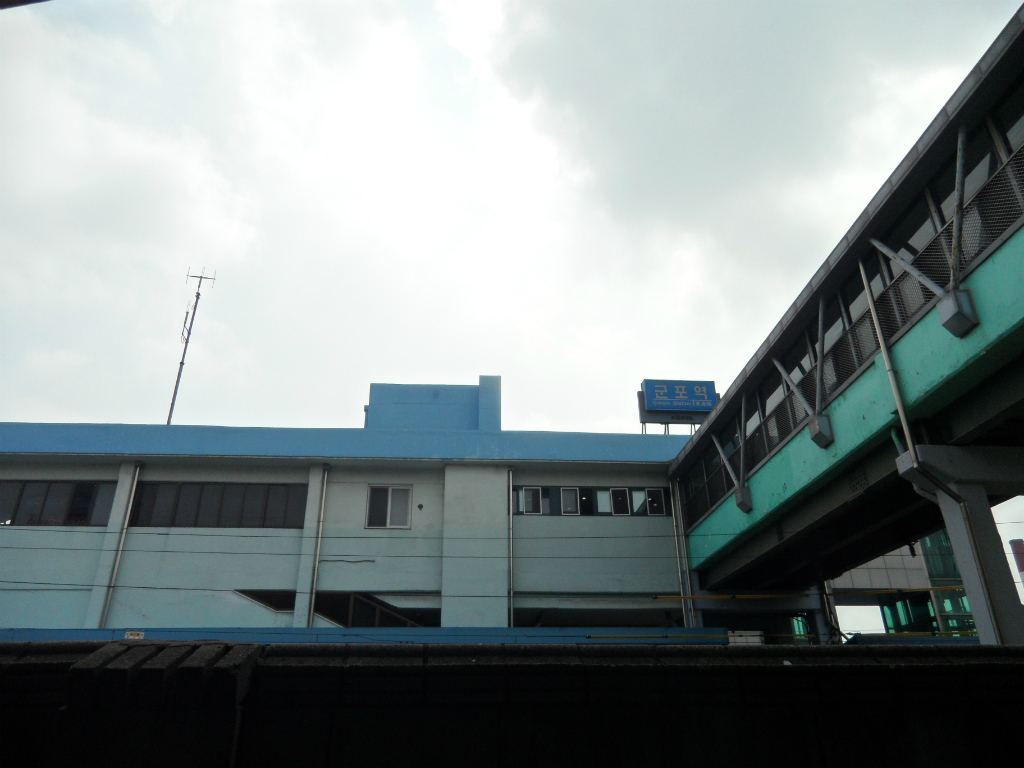
- Gunpo — on Line 1, also served by the national Gyeongbu Line railway, which connects the city to the rest of the country.
- Surisan, Dangjeong, Daeyami, and Banwol — further stops along the lines, useful for reaching the city's outer neighbourhoods and the areas around Surisan.
Trains generally run from early morning until around midnight, with intervals that vary depending on the time of day. Because the network is integrated with the wider Seoul metropolitan system, you can travel directly between Gunpo and central Seoul without changing to a separate regional service. Journeys into Seoul take on the order of an hour or so depending on your starting station, and connections are also available toward Incheon and Suwon.
Ticketing works the same way as the rest of the Seoul metropolitan subway: single-journey tickets are available at station machines, but most visitors find a rechargeable transit card far more convenient, since it covers both subway and bus fares and avoids buying a ticket for every trip. Many stations and bus stops have English signage or announcements, which makes navigating the system manageable even without Korean.
Buses
Gunpo has a bus network that covers most of the city and connects it to neighbouring towns. Services include regular city buses, express buses, and intercity buses, and there is also a community shuttle bus serving residential areas. Buses run on set schedules with frequent departures, and real-time schedule updates are available through mobile apps, which is the easiest way to check when your next bus is due.
For longer trips, several bus routes link Gunpo directly with Seoul — for example, route 3030 runs from Sanbon Station to Seoul, offering a convenient direct connection without needing to transfer. Other routes serve the Gangnam area of Seoul.
Fares are affordable, with discounted rates for students and seniors, and buses have priority seating for elderly and disabled passengers. As with the subway, a rechargeable transit card is the simplest way to pay.
Taxis and Ride-Hailing
Taxis are readily available in Gunpo, either from taxi stands or by hailing one on the street, and they are a practical option for short trips or for reaching places that are a long walk from a station. Fares start at a modest base rate, with extra charges applying for tolls and for rides at night.
For booking, the Kakao T app is the standard ride-hailing option and lets you request a taxi directly. If you plan to use it, it is worth setting it up before you arrive, since it is the most common way locals call a car.
Walking and Cycling
Walking is genuinely pleasant in the right parts of Gunpo. Sanbon New Town is built around a pedestrian "street of culture," also known as Rodeo Street, which is a walkable commercial district full of restaurants, bars, clothing boutiques, noraebangs, and other typical fixtures of a Korean city. A large fountain sits in the middle of the street, and a stage nearby often hosts small concerts and performances on weekends and during festivals. The wider downtown area stretches from Sanbon Station to Geumjeong Station and includes Sanbon Market and the Cherevil apartment towers.
Beyond the centre, Gunpo is largely greenspace, with Surisan and smaller mountains accounting for most of the city's area, so walking is also the natural way to enjoy the hiking destinations around the city, including Surisan itself, the Banwol reservoir, and the Royal Azaleas Hill.
Cycling is an option too. Dedicated bike lanes exist on some major streets, either painted or physically separated, and there are paved trails as well — though not every busy road has a lane, so it pays to plan a route. Bike rental services are available in the city. If you do ride, note the local rules: bikes need working brakes and lights, with reflectors on the front, back, pedals, and wheels; you must obey traffic signals and ride on designated paths or lanes rather than on sidewalks or pedestrian areas unless a cycling lane exists; you should yield to pedestrians; helmets are mandatory for children under 13; cycling under the influence is prohibited; and using headphones or a mobile phone while riding is not allowed. Unauthorized parking may result in impoundment, and violations can incur fines.
Getting There from the Airport
Incheon International Airport is the main international gateway for Gunpo. The most straightforward public transport option is the express bus, which takes roughly an hour and a half to reach Gunpo. By car, the same journey takes under an hour in normal conditions.
Gimpo Airport is the closer of the two airports but is served less directly by bus from Gunpo — the bus journey takes around two hours — while driving takes roughly an hour. If you are arriving at Gimpo, it is worth comparing the bus against taking the subway into the Seoul network and connecting onward to Gunpo, since Gunpo's Line 1 and Line 4 stations link directly into the metropolitan system.
If you are coming from elsewhere in Korea, Gunpo's stations on Line 1 and Line 4 connect the city to Seoul Station and onward to the wider network, so a rail-and-subway combination is often the simplest way in.
Practical Tips
- Pick accommodation near Sanbon or Geumjeong if you want the easiest access to both the downtown core and the subway network.
- Get a rechargeable transit card on arrival — it works across subways and buses and saves you from buying individual tickets.
- Use mobile apps for real-time bus schedules; they are the most reliable way to time your departures.
- Set up Kakao T if you expect to use taxis, especially in the evening or for trips beyond walking distance from a station.
- You can rely entirely on public transport to get around Gunpo and to nearby cities, though a car gives more direct access to some outlying areas.
- Expect heavier traffic on weekday peak hours; weekends can still be congested near popular shopping areas and attractions.