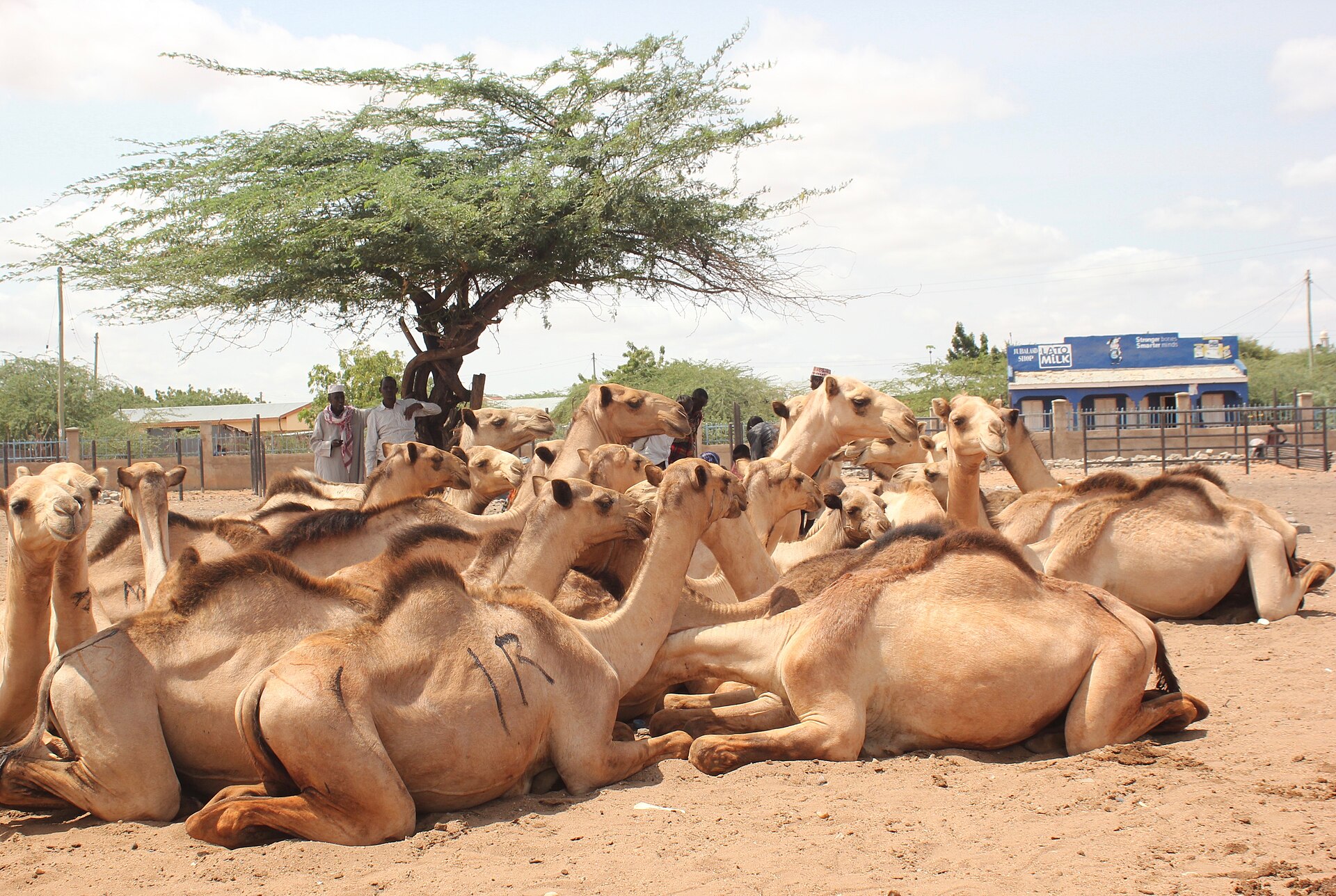
Getting Around Garissa
Garissa is the capital of Garissa County, set on the Tana River in the arid landscape of north-eastern Kenya. It is a market town and the commercial hub of the county, and for a visitor it is a compact, manageable place to move around. The practical reality is simple: within the town you can walk or take a boda boda or taxi, and for onward travel you rely on buses and matatus. There is no rail, metro or tram network to speak of, so plan your journeys around road transport.
Walking Around Town
Garissa town is small enough to navigate on foot, which makes walking a genuinely practical option for getting between the centre, the market area and nearby amenities. The town's flat riverside setting and hot, arid climate mean you should plan walks for the cooler early morning or evening hours, since daytime temperatures typically rise above 33 °C and only cool down at night. Carry water and expect strong sun.
- Walking is best for short hops within the town centre.
- Time your walks for early morning or after sunset to avoid the worst heat.
- Beyond the town, the terrain is unsurfaced and not suited to walking any distance.
Boda Bodas and Taxis
For anything beyond a short walk, boda bodas (motorcycle taxis) and taxis can easily be hired in Garissa. These are the main ways to get around town quickly and to reach places that are a bit too far or too hot to walk. Taxis are readily available for hire, and boda bodas are a common, flexible choice for short trips.
- Boda bodas and taxis are the go-to options for trips across town.
- Agree on the fare before you set off, as is customary for these services.
- They are also the practical way to reach the airfield and outlying spots.
Buses and Public Transport
Garissa's long-distance connections are by road. There are daily bus services from Nairobi to Garissa, and the road between the two is hard-surfaced and in good condition. By car, that journey takes roughly five to seven hours. Transport out of Garissa toward Nairobi is generally good, so this is the most straightforward route for a visitor arriving or leaving.
Travel toward the coast is a different matter. If you are trying to reach coastal towns such as Malindi or Mombasa, be aware that transport is very limited, with buses only leaving at around 5am. The Garissa–Mombasa road has an unsurfaced gap of around 60 km, on which travel is fairly difficult without a 4-wheel-drive vehicle, so you should allow at least a full day for this route.
- Daily buses run between Nairobi and Garissa on a good, hard-surfaced road.
- Heading to the coast, buses depart only around 5am — plan accordingly.
- The Garissa–Mombasa road includes an unsurfaced gap of about 60 km; a 4-wheel-drive vehicle is advisable, and the trip can take a full day.
- Outside Garissa, roads are unsurfaced and frequently become impassable, even for 4-wheel-drive vehicles, during the rains.
Rail, Metro and Trams
Garissa has no rail, metro or tram network. Getting around the town and reaching it from elsewhere is entirely a matter of road transport, supplemented by the local airfield. Visitors should not expect any train or light-rail service here.
Arriving by Air
Garissa has an airfield, and as of October 2024 the only scheduled flights are with Freedom Airline. If you arrive by air, you will land at this airfield rather than a large international airport. From there, the practical way into town is by taxi or boda boda, both of which can easily be hired. Because the town itself is small and walkable, the transfer from the airfield into the centre is short and straightforward.
- Garissa's airfield is served by scheduled flights with Freedom Airline (as of October 2024).
- On arrival, hire a taxi or boda boda for the transfer into town.
- Once in the centre, you can continue on foot for many local trips.
Practical Tips
- Base yourself centrally so that walking covers most of your day-to-day needs.
- Keep boda boda and taxi numbers handy for when the heat or distance makes walking impractical.
- If you plan to leave Garissa, confirm departure times in advance — especially for coastal routes, where services are limited and leave very early.
- During the rains, avoid attempting unsurfaced roads outside town; they can become impassable even in a 4-wheel-drive vehicle.
- For the most reliable onward connection, head for Nairobi, where daily buses run on a good road.