Orientation
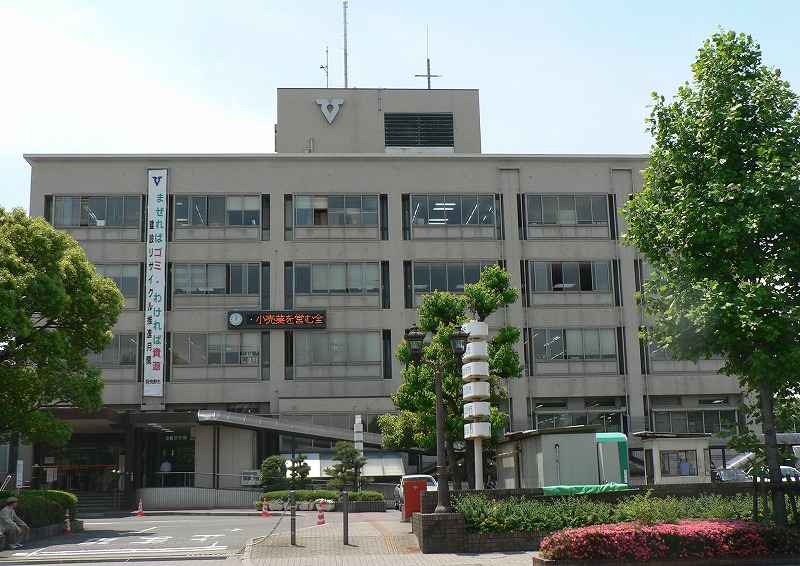
Habikino sits in the southeastern corner of Osaka Prefecture, on the Kawachi Plain, within roughly twenty kilometres of central Osaka. It is a residential city, and visitors are most likely to come for its Kofun-period heritage—notably the Furuichi Kofun Cluster, which is recorded as a World Heritage Site—along with other historic sites such as the Kannonzuka Kofun and the Tsūhō-ji and Yachū-ji temple ruins. Because the city is a working suburban community rather than a tourist hub, getting around is straightforward but rewards a little planning: the rail network does the heavy lifting, buses fill in the gaps, and the airport connection always involves at least one change.
How visitors move around
Public transport is the practical backbone for a visitor. Habikino has no airport of its own and no direct rail or bus link to Kansai Airport, so the pattern of travel here is one of connections: a mainline train into the Osaka area, then a transfer onto the local line that serves the city. Within Habikino itself, trains and buses cover the main movements, with taxis useful for short hops or when carrying luggage.
Rail network
The key rail link for Habikino is the Kintetsu Minami-Osaka Line, which serves the city—Fujiidera Station is the stop identified for Habikino. Trains on this line are frequent, running roughly every fifteen minutes, and the ride from Osaka-Abenobashi takes only a short time, making the line a convenient way to reach the city from central Osaka. Kintetsu Railway can be contacted on 050-3536-3957 or via kintetsu.co.jp.
For longer journeys, JR West's network connects Habikino's wider region to the rest of Kansai. Tennōji is the major interchange where the airport rapid service meets the city, and from there you continue to Osaka-Abenobashi for the Kintetsu line. JR West can be reached on 0570-00-2486 or via jr-odekake.net.
- Kintetsu Minami-Osaka Line — the local line serving Habikino (Fujiidera Station); frequent trains from Osaka-Abenobashi.
- JR West — mainline services, including the Kansai Airport Rapid Service, with Tennōji as the key interchange.
Buses and other public transport
Buses complement the rail network, and the most relevant service for visitors is the airport limousine bus. Kansai Airport Transportation Enterprise (KATE) runs a limousine bus from Kansai Airport Terminal 1 to Namba OCAT (Osaka city air terminal) roughly hourly, taking about an hour. From Namba you then need onward transport to Habikino, so the bus route is a viable but transfer-heavy alternative to the train. KATE can be contacted on 072-461-1374 or via kate.co.jp.
Note that no direct bus connects Kansai Airport to Habikino itself—every public-transport option requires at least one transfer.
Taxis and ride-hailing
Taxis are available and are the most expensive way to cover longer distances; a taxi from Kansai Airport to Habikino is estimated at roughly $110–140, and driving the route takes around forty minutes. Ride-hailing services (for example via Mozio) are quoted at around $45–60 for the same journey. For local trips within the city, taxis are a convenient fallback when bus or train timings don't suit, particularly with luggage or after a long day of sightseeing.
Walkability
Habikino is a low-density suburban city spread across the Kawachi Plain, so walking is best suited to short local trips—between a station and nearby sights or shops—rather than as a way to cross the city. For the kofun and temple sites scattered around the area, plan on combining a train or bus ride with a walk at each end.
Getting from the airport into the city
Kansai Airport (KIX) is the main gateway, and there is no direct train or bus to Habikino—you will always change at least once. Two practical options stand out:
- By train (fastest public transport): Take the JR West Kansai Airport Rapid Service from Kansai-Airport Station to Tennōji (roughly an hour, trains about hourly), then transfer to the Kintetsu Minami-Osaka Line from Osaka-Abenobashi to Fujiidera Station in Habikino (a short ride, trains every fifteen minutes or so). Estimated total cost is around $8–10.
- By bus: Take the KATE airport limousine bus from Terminal 1 to Namba OCAT (roughly hourly, about an hour), then continue onward to Habikino by local transport. Estimated total cost is around $10–15.
Fares and journey times above are estimates from a travel aggregator and should be checked against current operator timetables before you travel. If you prefer door-to-door convenience, a taxi or pre-booked ride-hailing transfer is the simplest option, at correspondingly higher cost.
Practical tips
- Buy tickets at station machines as you go; for the Kintetsu and JR segments, separate tickets are typically needed because they are different operators.
- Allow extra time for the airport journey—every route involves a transfer, and the JR airport rapid does not run constantly.
- Keep operator contact details handy: JR West (0570-00-2486), Kintetsu Railway (050-3536-3957), KATE bus (072-461-1374).
- Check timetables in advance, especially for the airport bus and the JR rapid service, which run roughly hourly.