Orientation
Tomakomai is a port city in Iburi Subprefecture and the largest city in that subprefecture, sitting on the coast of Hokkaido. For a visitor, the practical geography is simple: JR Tomakomai Station anchors the city centre, the ferry terminals sit out by the port, and New Chitose Airport lies within easy reach by rail. Mount Tarumae rises to the northwest within Shikotsu-Tōya National Park, so the city works well as a base for both urban errands and trips into the surrounding countryside.
Getting around the city
Tomakomai is not a city with a metro or tram system. Getting around relies on a combination of trains, an extensive local bus network, taxis, and your own two feet in the central area. Because the city covers a wide area and its sights and transport hubs are spread out, buses do most of the heavy lifting for local movement.
Rail
Tomakomai is a genuine rail junction. The JR Muroran Main Line, Hidaka Main Line and Chitose Line all meet here, which means the station is the natural starting point for almost any rail journey in the region. The Muroran Main Line serves stations within the city itself, including Nishikioka, Itoi, Aoba, Tomakomai and Numanohata, while the Chitose Line and Hidaka Main Line branch off from Numanohata toward Uenae and Yūfutsu respectively. In practice, this makes the train a good option for reaching the airport and for day trips along the coast, and a less useful option for short hops within the city, where the stations are spaced for longer-distance travel rather than local circulation.
Buses
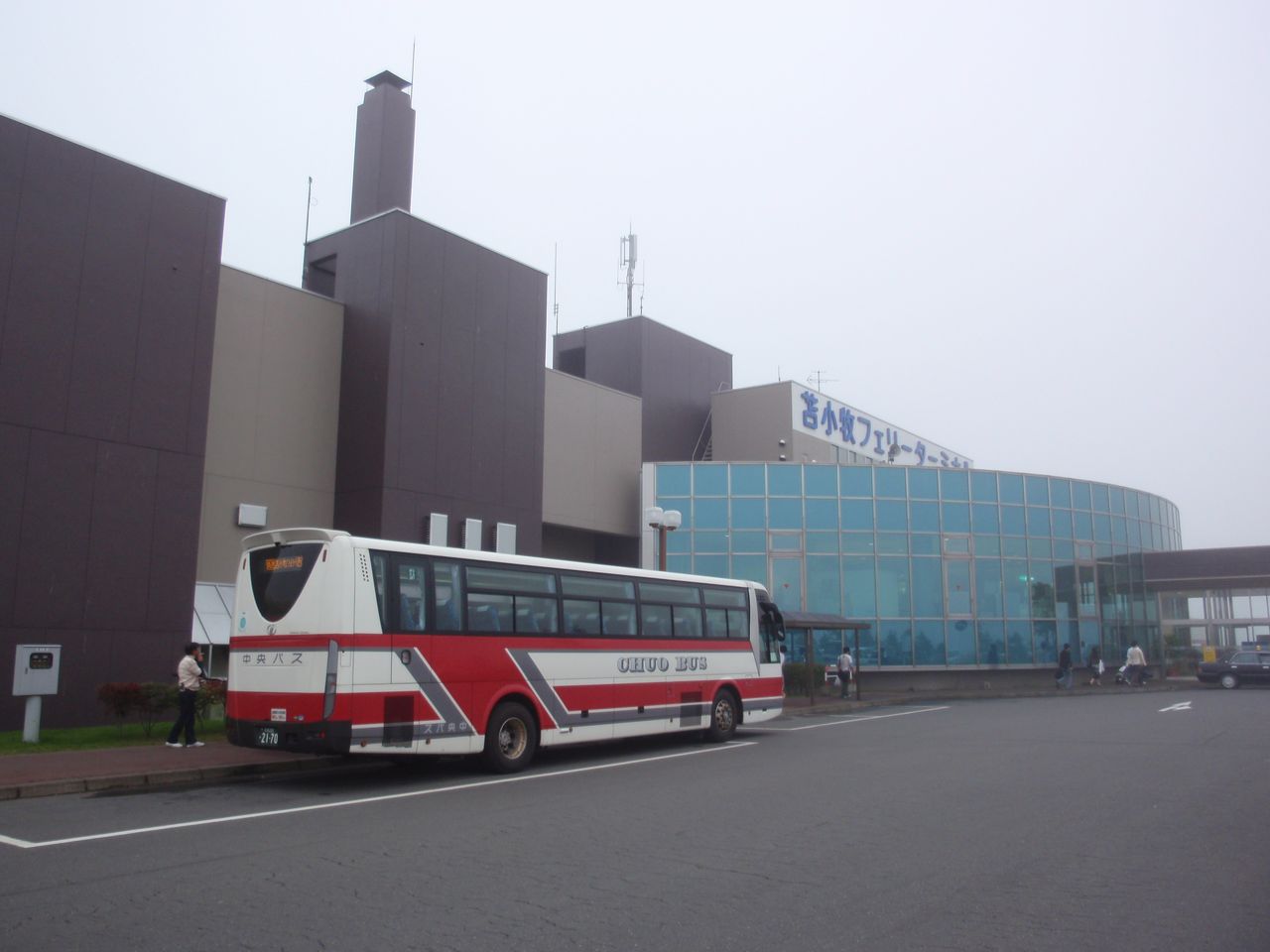
The bus network is the backbone of local public transport in Tomakomai. Services are operated by several companies, including Hokkaido Chuo Bus, Donan Bus and Atsuma Bus, and together they run a large web of routes across the city. Buses are also what connect the pieces that the railway does not: the ferry terminals, for example, are each served by local buses from JR Tomakomai Station, with a journey of roughly twenty minutes to either terminal.
For a visitor, the practical approach is to treat the bus as your default way of crossing town. Board at the station or at stops along the main arteries, and pay attention to which operator runs your route, since ticketing and boarding arrangements can differ between companies. If you plan to ride frequently, ask at the station or tourist information point about day passes or stored-value cards that cover the local operators; fares are typically paid on board, and having small change or a rechargeable card makes this much smoother.
Taxis and ride-hailing
Taxis are readily available and are the simplest solution for short trips, late arrivals, or reaching the ferry terminals with luggage when a bus connection does not line up with your schedule. Ride-hailing apps are far less established in regional Hokkaido than in major Japanese cities, so it is wise to assume you will be flagging a taxi or asking staff to call one for you rather than summoning a car through an app.
Walkability
The central area around JR Tomakomai Station is compact enough to explore on foot, with shops, restaurants and the station itself within a comfortable stroll of one another. Beyond the centre, however, the city spreads out considerably, and the port, the ferry terminals and the outlying districts are not realistically walkable from the station. Plan to walk for the centre and switch to buses or taxis for everything else.
Getting in from the airport
New Chitose Airport is Tomakomai's nearest airport and the main gateway for visitors arriving by air. The most straightforward connection into the city is by train: Tomakomai sits on the Chitose Line, and the trip from Sapporo via Chitose airport takes roughly 45 to 60 minutes. This makes the rail link a convenient, direct way to reach JR Tomakomai Station without a transfer into a bus.
Arriving by ferry
Tomakomai is best known as a major port, with shipping services to points throughout Honshu, and it has two separate ferry terminals. Both are served by local buses from JR Tomakomai Station, taking about twenty minutes to either, and both are also reachable by long-distance buses running direct from Sapporo in around ninety minutes.
- Tomakomai-ko Ferry Terminal — served by Kawasaki Kinkai Kisen's "Silver Ferry" to Hachinohe, Shosen Mitsui Ferry's "Sunflower" to Oarai, and Taiheiyo Ferry to Sendai and Nagoya.
- Tomakomai-ko East Ferry Terminal — home to Shin-Nihonkai Ferry, with services connecting to Tsuruga, Akita and Niigata.
If you are arriving or departing by ship, check which terminal your service uses before you set out, since the two are in different locations and you will need to allow time to reach the correct one.
Practical summary
- Use the train for the airport, Sapporo and longer regional journeys; Tomakomai is a junction for the Muroran, Hidaka and Chitose lines.
- Use buses for local movement around the city and for reaching the ferry terminals.
- Use taxis for short, direct trips and when carrying luggage.
- Walk in the station-centred downtown; take transport for the port and outer districts.
- From the airport, the Chitose Line train is the simplest way into the city.