Getting Around Imabari
Imabari is a city on the Seto Inland Sea coast of Ehime Prefecture, and its geography shapes how you move around it. The urban core sits on the Takanawa Peninsula, while the city also takes in islands out in the sea, including Ōmishima, Ōshima and Hakatajima. That means your options range from trains and buses on the mainland to ferries and the island-spanning Shimanami Kaidō when you want to reach the islands or cross toward Honshu.
Rail
The main rail corridor through Imabari is the JR Yosan Line, operated by Shikoku Railway Company. It is the backbone of car-free travel in the region: it links Imabari with Matsuyama and Uwajima to the southwest, and with Takamatsu to the east. Stations along the Imabari stretch include Iyo-Sakurai, Iyo-Tomita, Imabari, Hashihama, Namikata, Ōnishi, Iyo-Kameoka and Kikuma.
- Use the Yosan Line for straightforward connections to Matsuyama and Takamatsu, and onward across Shikoku.
- From Okayama on Honshu, the Shiokaze Express reaches the area in under two and a half hours.
- Imabari has no metro or tram network, so trains and buses do the heavy lifting for public transport.
Buses
Buses fill in where the rail line does not go, and they are also the way you arrive from several nearby cities. There are bus services from Hiroshima and Fukuyama. From Onomichi there is no direct bus, so you will need to transfer. Local buses are the practical choice for reaching parts of the city away from the Yosan Line stations.
Ferries and the Shimanami Kaidō
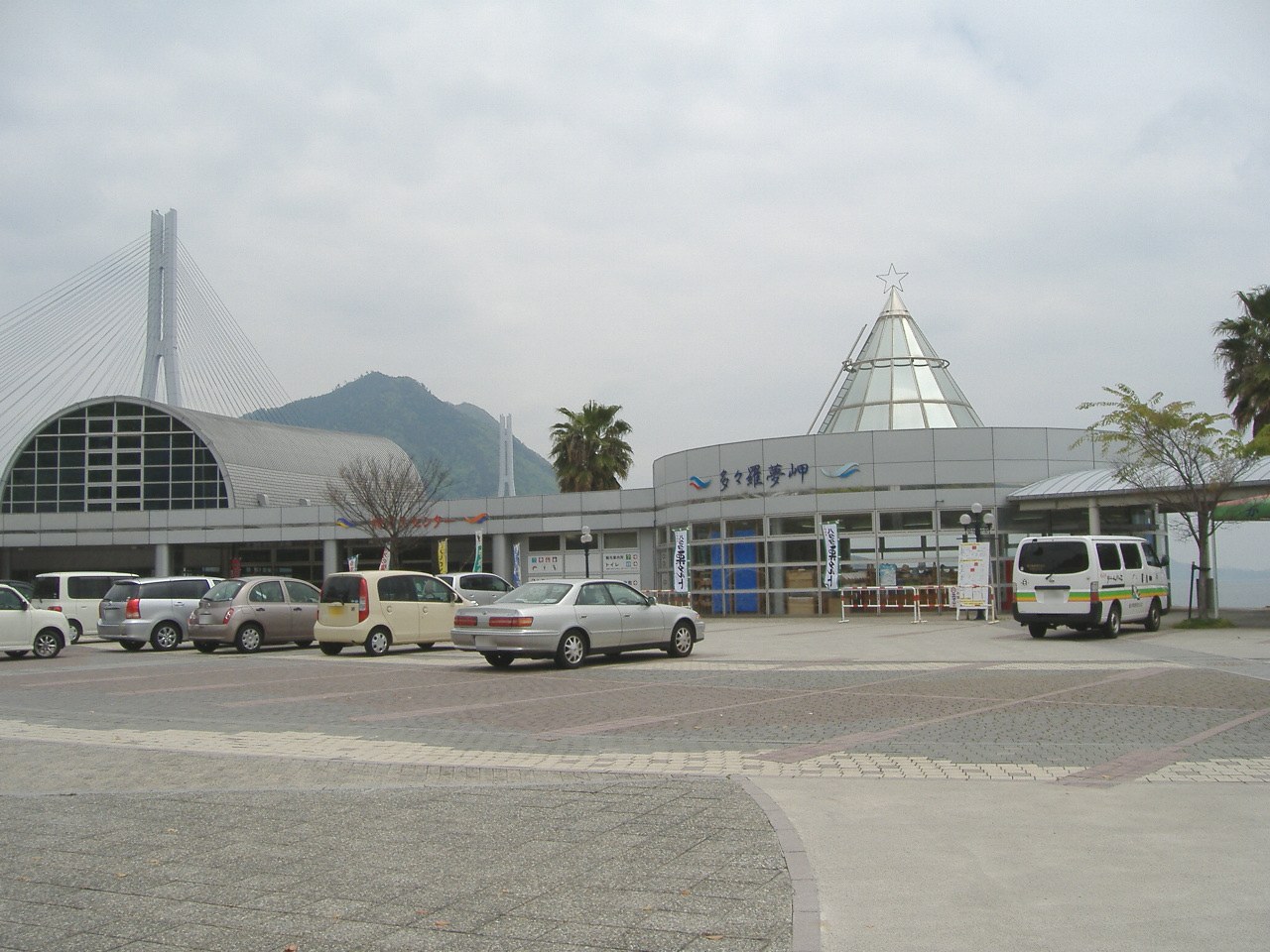
Because Imabari includes islands, boats are a genuine part of getting around rather than a novelty. Ferries connect Imabari to the islands along the Shimanami Kaidō, and there are also ferries from Takehara. The Kurushima-Kaikyō Bridge, part of the Shimanami Kaidō, links Imabari across a chain of islands to Hiroshima Prefecture; it carries an expressway for road vehicles plus dedicated pedestrian and cycle lanes, so cyclists and walkers can use it too. The Shimanami Kaidō expressway is accessible to cars and bicycles.
- Take a ferry to reach the islands in the Seto Inland Sea that are part of the city.
- Cyclists can cross the Kurushima-Kaikyō Bridge on its dedicated lanes.
- Drivers can use the Shimanami Kaidō and the Imabari-Komatsu Expressway, along with National Routes 196 and 317.
Taxis and Ride-Hailing
The source material does not describe taxi or ride-hailing services in Imabari, so plan on confirming locally what is available. In practice, taxis are most useful for short trips around the city center or for reaching spots that buses and trains do not serve directly.
Walking
The historic core of Imabari grew up as a castle town around Imabari Castle, built in 1604 and unusual for using seawater in its moat. That compact center is the most rewarding part of the city to explore on foot, and several of the Shikoku Pilgrimage temples associated with Imabari — Emmei-ji, Nankō-bō, Taisan-ji, Eifuku-ji, Sen’yū-ji and Iyo-Kokubun-ji — are among the sights visitors come for. Beyond the center, the city spreads across a large area, so walking works best for the central sights rather than as a way to cover the whole municipality.
Getting There from the Airport
The reference material does not specify an airport serving Imabari or describe airport transfers, so this guide cannot give you a grounded route from an airport into the city. What it does confirm is how the city connects to the wider region: by the JR Yosan Line to Matsuyama, Uwajima and Takamatsu; by the Shiokaze Express from Okayama; by bus from Hiroshima and Fukuyama; by ferry from Takehara and from the Shimanami Kaidō islands; and by road over the Shimanami Kaidō. If you are arriving by air, the most reliable approach is to connect through one of these rail or bus hubs and continue to Imabari from there.
Practical Tips
- Build your trip around the JR Yosan Line, then use buses and ferries for the gaps.
- If you are coming from Honshu, the Shiokaze Express from Okayama is a simple rail option.
- For the islands, check ferry connections rather than assuming a bridge or bus will get you there.
- Bring or rent a bicycle if you want to ride the Shimanami Kaidō, which has dedicated cycle lanes.
- Keep the castle-town center for walking, and switch to trains, buses or taxis for longer hops.