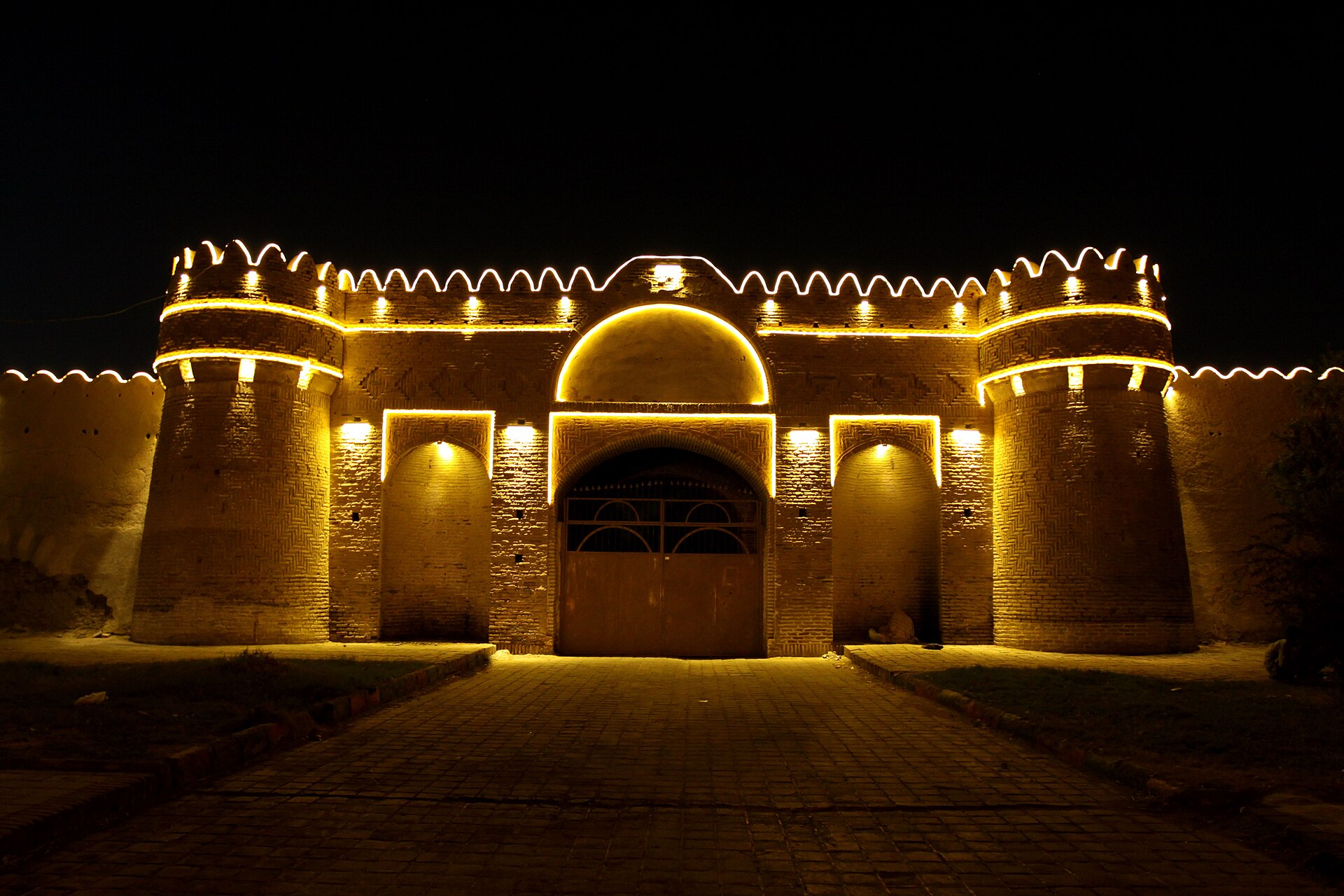
Understanding Your Options in Iranshahr
Iranshahr is a city in Sistan and Baluchestan Province, in Iran's far southeast. It is not one of the country's major metropolitan centres, so the transport picture here is simpler than in Tehran, Mashhad or Shiraz. The practical upshot for a visitor is that you should plan around taxis and intercity buses rather than expecting an extensive urban transit network.
Getting Around the City
As a smaller Iranian city, Iranshahr follows the general pattern of urban transport outside the biggest metropolises: taxis do most of the work of moving people around town. In Iran generally, smaller cities often have no intracity bus service at all, with taxis handling all local traffic. You should therefore treat taxis as your default way of getting from place to place within Iranshahr.
- Standard taxis are relatively cheap. They typically carry up to four passengers (one in front, three in the rear), and many are fitted with taximeters.
- Fixed-route taxis charge according to the tariff set by the taxi organisation, which makes them a predictable option for common trips.
- Solo rides — taking the whole car for yourself — cost more than sharing.
- Taxi vans, which carry around ten passengers, are a feature of big cities such as Tehran and are priced close to a regular taxi; they may or may not be available in a city of Iranshahr's size.
Ride-Hailing and Dial-a-Taxi
Iran's two largest ride-hailing apps are Snapp and Tapsi, and several cities also run their own e-taxi apps. App-based ride-hailing is most established in the larger urban centres, so you should not assume full coverage in Iranshahr — but it is worth checking the apps when you arrive, since they are the easiest way to avoid haggling over fares.
A useful fallback is the TBT (Bisim) metered taxi service, reached by dialling 133, though the number can vary from city to city. These metered taxis are cheaper than app taxis and, while they have become less popular where ride-hailing apps operate, they remain genuinely useful in smaller cities. Payment for intercity taxis is made in cash directly to the driver, with no tickets issued, and you should expect the same cash-based approach for local taxis.
Buses and Public Transport
Iran's large cities — Tabriz, Mashhad and Tehran among them — run two tiers of intracity bus: regular buses on lower-traffic routes and high-speed buses on dedicated lanes with semi-mechanised stations. That kind of network is a feature of the big metropolises, not of smaller cities, so do not count on a comparable system in Iranshahr.
Where intracity buses do run in Iran, a few practical points apply:
- Tickets normally must be purchased; larger cities use electronic tickets or debit cards with readers at station entrances.
- In Tehran, bus tickets are interchangeable with the subway, but that kind of integration is specific to the capital.
- Men and women board through separate doors — gender segregation is observed on Iranian buses.
- In big cities, buses are unreliable in timing because of heavy traffic.
Rail, Metro and Tram
Iranshahr has no metro or tram system. Metro networks in Iran are limited to Tehran, Isfahan, Tabriz, Mashhad, Karaj and Shiraz, so none of them serve this part of Sistan and Baluchestan. Likewise, there is no tram network to speak of in the city.
On the national rail side, most Iranian cities are connected by railway, and trains are generally described as the safest mode of travel — cheaper than flying and equipped with sleeper berths, bathrooms and restaurant facilities, though slower than other options. Tickets can be bought at railway stations or online, though online booking typically requires Persian-language help and an Iranian tourism credit card. The Raja (Islamic Republic of Iran Railway) website lists which cities have stations, so check there before planning a rail leg of your journey.
Walking
Walking is a reasonable way to cover short distances in the immediate area where you are staying, but it is not a practical way to cross the city as a whole. Iran's larger cities have bicycle rental schemes — Tehran, Kashan, Kish and Yazd among them — but these are unpopular because of the lack of cycling infrastructure, and no such scheme is described for Iranshahr. For anything beyond a short stroll, take a taxi.
Arriving by Air
Iranshahr Airport serves the city and is listed among the Iranian airports handling domestic air travel. Domestic flights are the most expensive way to travel within Iran, and ticket prices vary according to flight time, airline, distance, and national or religious occasions — so book early if your dates are fixed.
Because the airport is a domestic facility in a smaller city, do not expect an airport metro link or a formal express bus service. The realistic options for reaching the city from the airport are:
- A taxi — the simplest and most reliable choice. Agree the fare or confirm the meter before setting off, and pay in cash.
- A ride-hailing app — check Snapp or Tapsi on arrival; coverage may be limited outside the largest cities.
- A metered TBT taxi — dial 133 (the number may vary locally) if app coverage is unavailable.
Arriving by Bus from Elsewhere in Iran
If you are reaching Iranshahr overland, intercity buses are the main option. Buses run from each provincial centre to other provincial centres, and every province has buses connecting its cities and towns. Intercity buses come in two classes — ordinary and VIP — and large passenger terminals may also serve smaller cities beyond the provincial centres. Where no direct bus exists between your origin and destination, travelling between neighbouring provinces by bus is generally possible.
Minibuses cover shorter routes and smaller cities; they are cheaper than full-size buses but of a lower standard. Buy bus tickets at the bus cooperative offices inside passenger terminals, or through online booking sites, which are mostly in Farsi. Buying at the terminal is less risky during low-demand periods such as midweek and winter, but is not recommended at peak travel times, when seats fill up.
Intercity taxis are another option in most big cities. They are supervised by the Taxi Organization, cost more than buses, and are paid in cash to the driver with no ticket issued.
Practical Summary
- In town: use taxis — shared, fixed-route or solo — and carry cash.
- Apps: try Snapp or Tapsi; fall back on metered TBT taxis (dial 133) if coverage is thin.
- No metro or tram: Iran's metro systems are confined to Tehran, Isfahan, Tabriz, Mashhad, Karaj and Shiraz.
- Rail: check the Raja website for whether Iranshahr is served before building a rail leg into your plans.
- From the airport: take a taxi or an app car; there is no metro or dedicated express bus link.
- Long distance: intercity buses (ordinary or VIP) and minibuses for shorter hops, with tickets from terminal offices or Farsi-language online sites.