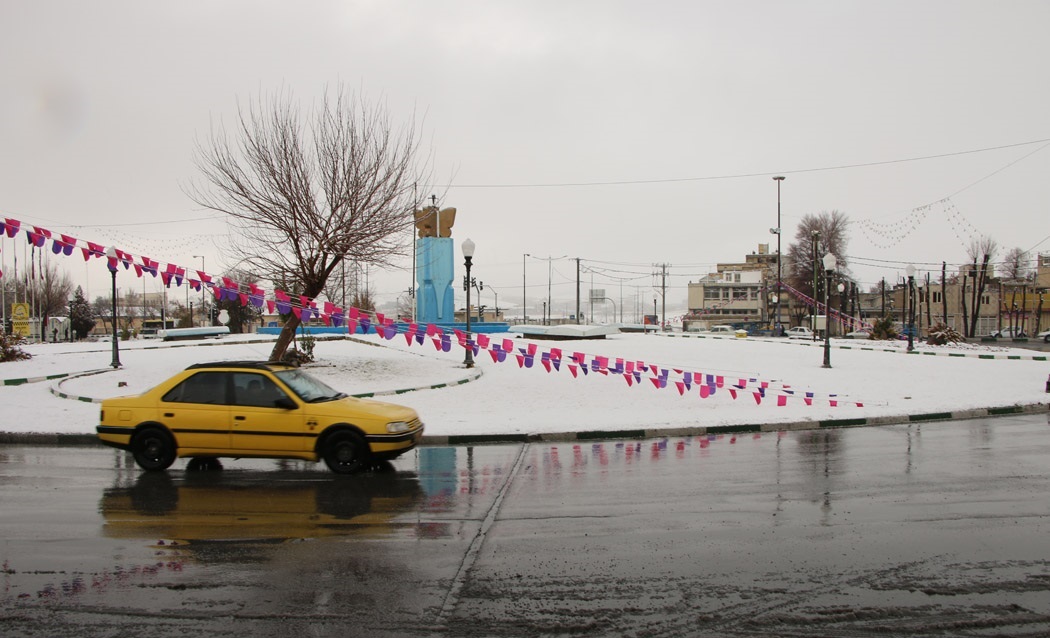
Getting Around Shahr-e Kord
Shahr-e Kord is the largest city in Chaharmahal and Bakhtiari province and sits high in the Zagros Mountains at roughly 2,070 metres above sea level — the most elevated provincial capital in Iran, which is why it is nicknamed the "Roof of Iran." It lies about 90 km southwest of Isfahan. For a visitor, the practical reality is that this is a compact, mid-sized Iranian city where getting around is mostly a matter of buses, taxis, and your own two feet. There is no metro or tram system here, and no passenger rail service within the city itself.
Rail, Metro and Tram
Shahr-e Kord has no metro, tram, or intracity rail network. Iran's subway systems operate only in a handful of much larger cities — Tehran, Isfahan, Tabriz, Mashhad, Karaj, and Shiraz — and Shahr-e Kord is not among them.
On the national level, Iran's intercity rail network connects most cities and is generally considered more comfortable, safer, and cheaper than flying, though slower. Tickets can be bought at stations or online, but online booking typically requires Persian-language help and an Iranian tourism credit card. If you are considering arriving or leaving by train, check the Raja (Islamic Republic of Iran Railways) website, which lists the cities that have stations.
Buses and Public Transport
Shahr-e Kord does have an intracity bus network: the Shahr-e Kord Bus Organization operates a fleet of buses running different routes throughout the city. This is your main public-transport option inside town.
Nationwide, Iranian city buses are very cheap by international standards. In larger cities, tickets are normally purchased and some systems use electronic tickets or debit cards with bus–metro interoperability; men and women board through separate doors. Buses can be unreliable in heavy traffic. Note that in many smaller Iranian cities there are no intracity buses at all and taxis cover demand — Shahr-e Kord is not in that category, since it does run its own bus fleet.
For travel beyond the city, Iran's intercity buses run from each provincial centre to other provincial centres, and within a province they connect its cities and towns. If no direct bus exists, you can often travel via neighbouring provinces. Intercity buses come in ordinary and VIP classes, and minibuses serve shorter routes and smaller cities — cheaper but lower standard. Bus tickets are sold at bus cooperative offices inside passenger terminals or through online booking sites (mostly in Farsi); buying at the terminal is risky at peak travel times, so book ahead if you can.
Taxis and Ride-Hailing
Taxis are the other main way to get around Shahr-e Kord and, across Iran, they are relatively cheap. Shared taxis typically carry four passengers — one in front, three in the back. Many use taximeters; route-based taxis charge according to an official tariff, and hiring a taxi exclusively costs more.
Taxi vans, which carry around ten passengers in larger cities, charge fares similar to regular taxis but wait until the van fills up before departing.
App-based ride-hailing is well established in Iran: Snapp and Tapsi are the largest providers, and some cities also have local e-taxi apps. There are also TBT (Bisim) taxis, which you can summon by dialling 133 (the number may vary by city); these are taximeter-based and usually cheaper than app taxis, though they are less common where app taxis operate and are most useful in smaller cities.
For intercity trips, taxis operate to and from most large cities under the supervision of the Taxi Organization. They cost more than buses, there are no tickets, and you pay the driver in cash.
Walking
Shahr-e Kord is a walkable city in the sense that its central areas are compact and easy to cover on foot, and walking costs nothing. Do keep the altitude in mind: at over 2,000 metres, the city is high enough that you may notice the elevation, especially on your first day or two.
The climate also shapes how pleasant walking is. Shahr-e Kord has a continental Mediterranean climate with hot summer days, cool summer nights, cold winter days, and freezing winter nights. January is the coldest month and July the hottest. Winters here can be genuinely severe — the record low is far below freezing — so pack and plan accordingly if you are visiting in the cold months.
Cycling is not a practical option: bicycle rental exists in a few Iranian cities such as Tehran, Kashan, Kish, and Yazd, but cycling is generally unpopular across the country because of the lack of cycling infrastructure.
Getting From the Airport Into the City
Shahrekord Airport is a domestic airport located to the south of the city. It currently has flights to and from two cities: Tehran and Mashhad. Because it is a domestic airport, you will not be arriving on an international flight here.
Since the airport sits just to the south of Shahr-e Kord, the onward journey into town is short. The practical options are the same ones that serve the rest of the city: taxis (including app-based ride-hailing such as Snapp or Tapsi, and TBT taxis by phone) and, depending on where your route falls, the local bus network. Air travel is the most expensive way to get around Iran, and domestic fares vary by time, airline, distance, and season or occasion — so book early if your dates are fixed.
Practical Tips
- Fares for buses and taxis in Iran are well below the global average, so getting around Shahr-e Kord is inexpensive.
- Buy intercity bus tickets at the terminal's bus cooperative office or online (mostly Farsi-language sites); avoid leaving it to peak travel times.
- Intercity taxis have no ticketing system — pay the driver in cash.
- For app taxis, Snapp and Tapsi are the main national providers; TBT taxis can be reached by dialling 133, though the number may vary by city.
- Remember the altitude and the cold winters when planning how much you will walk.