Getting Around Cap-Haïtien
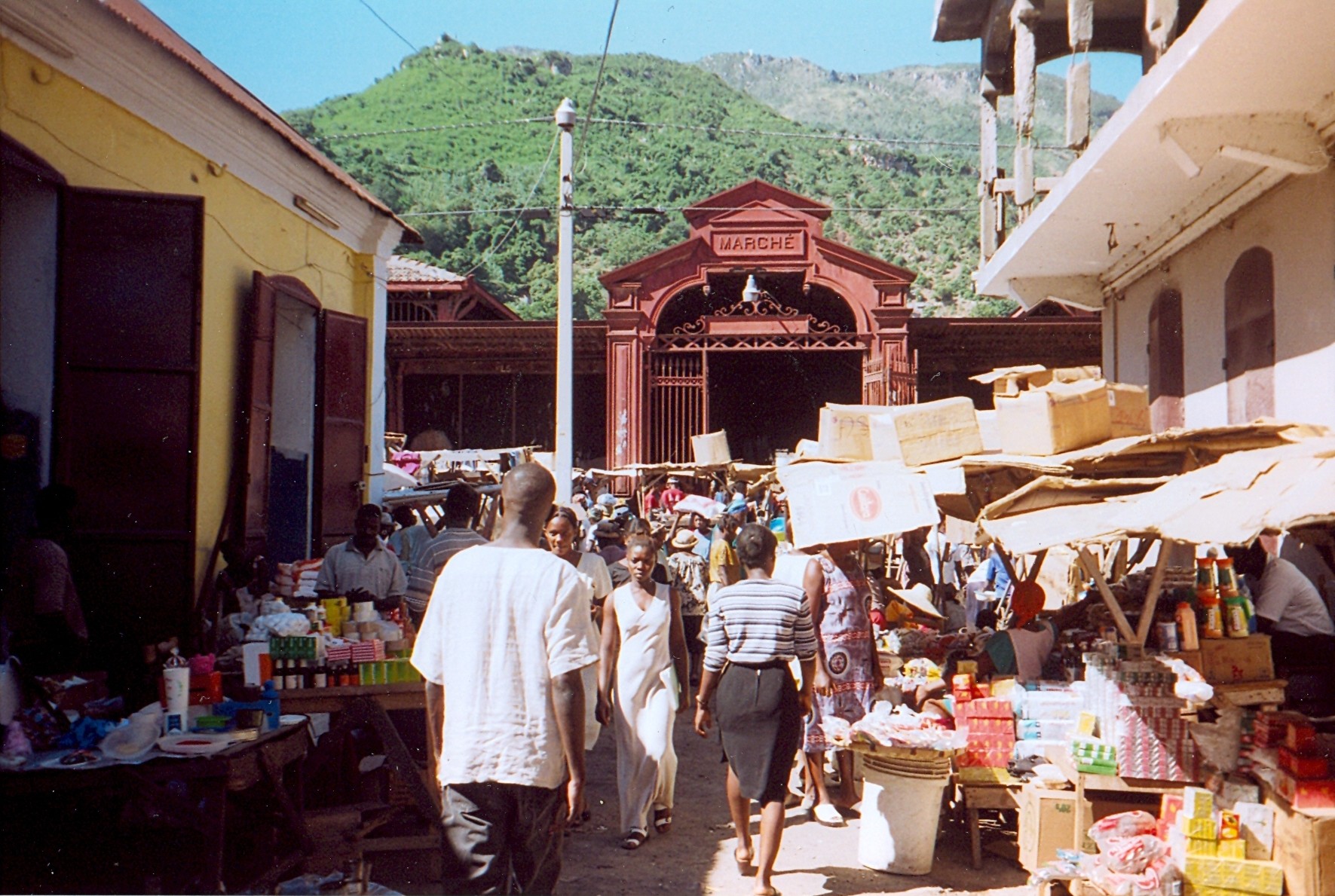
Cap-Haïtien is a compact city on Haiti's north coast, and its central area is small enough that a visitor can cover much of it on foot. The historic core sits between the Bay of Cap-Haïtien and the surrounding mountainsides, with streets laid out in narrow grids. As a legacy of the U.S. occupation, the north–south streets in the centre are named with single letters and the east–west streets with numbers; outside the central city, French street names take over. Most restaurants and bars are found in this central, gridded part of town, which makes it the natural base for exploring on foot.
Rail, Metro and Tram
Cap-Haïtien has no rail, metro or tram network. There is no public train, subway or tram service for visitors to use, so getting around relies entirely on road transport and walking.
Buses and Public Transport
The city does not have a formal, documented public bus or metro-style system that a visitor can plan around. In practice, movement around Cap-Haïtien is handled by taxis and motor-taxis, which are widely available. If you are arriving from elsewhere in Haiti, note that the airport is served by small domestic airlines, including flights from Port-au-Prince that take roughly half an hour to three-quarters of an hour.
Taxis and Motor-Taxis
Taxis and motor-taxis are the main motorised way to get around the city, and they are plentiful. There is no described ticketing or pass system, so you arrange and pay for each ride directly. Fares are a matter of negotiation: taxi drivers at the airport, for example, may open by asking for as much as US$20 to take you into town, while $10 or even $5 is a more reasonable price. Agree on the fare before you set off.
Walking
Walking is the most practical way to explore central Cap-Haïtien. The city is small and compact, and most of the places a visitor wants to reach — restaurants, bars and the historic grid of streets — are close together. Be aware that the streets are generally narrow, much of the infrastructure is in need of repair, and the central area is flanked by mountainsides and urban slums, so it is worth staying oriented within the gridded core.
Getting from the Airport into the City
Cap-Haïtien's airport — Hugo Chavez International Airport (CAP), renamed from Cap-Haïtien International Airport — sits a few miles southeast of the city on RN 6, on the southeast edge of town. It is a small airport with very few facilities; there is no ATM, for instance, so arrive with any cash you will need.
To reach the city from the airport, taxis are the available option. Drivers may ask for up to US$20 for the trip into town, but $10 or even $5 is more reasonable, so negotiate before you get in. Because the airport is only a few miles from downtown, the transfer is short.
- Airport: Hugo Chavez International Airport (CAP), a few miles southeast of the city on RN 6.
- Facilities: Very limited — no ATM, so bring cash.
- Into town: Taxi; expect an opening ask of up to US$20, with $10 or $5 a fairer price.
- Domestic connections: Small airlines serve the airport, including flights from Port-au-Prince of about 30–45 minutes.