Getting Your Bearings
Tsuen Wan sits on a bay in the western New Territories, facing Tsing Yi Island across Rambler Channel. The modern town is centred on Tsuen Wan station of the MTR, and the coastline has been extended over the years through land reclamation. For a visitor, the practical consequence is simple: the town core is compact and anchored by its rail stations, with the main shopping and hotel landmarks — Discovery Park, Tsuen Wan Plaza, Citywalk, the Panda Hotel and the Nina Towers — clustered in and around the town centre. Hills and country parkland rise on two sides, so most of your moving around will happen in a fairly tight urban band.
Rail: The Backbone of Local Movement
Tsuen Wan is served by three Mass Transit Railway (MTR) stations: Tsuen Wan station and Tai Wo Hau station on the Tsuen Wan line, and Tsuen Wan West station on the Tuen Ma line. In practice, these three stations are the anchors for almost every journey in and out of the district. Tsuen Wan station sits at the heart of the modern town, while Tsuen Wan West serves the western side of the town and its surrounding developments.
The MTR is the fastest and most predictable way to reach the rest of Hong Kong, and it is the mode most visitors will lean on. If you are arriving with heavy luggage, note that the stations are the natural interchange points for buses and taxis as well, which makes them useful fallbacks when you are tired or the weather turns.
Buses and Minibuses
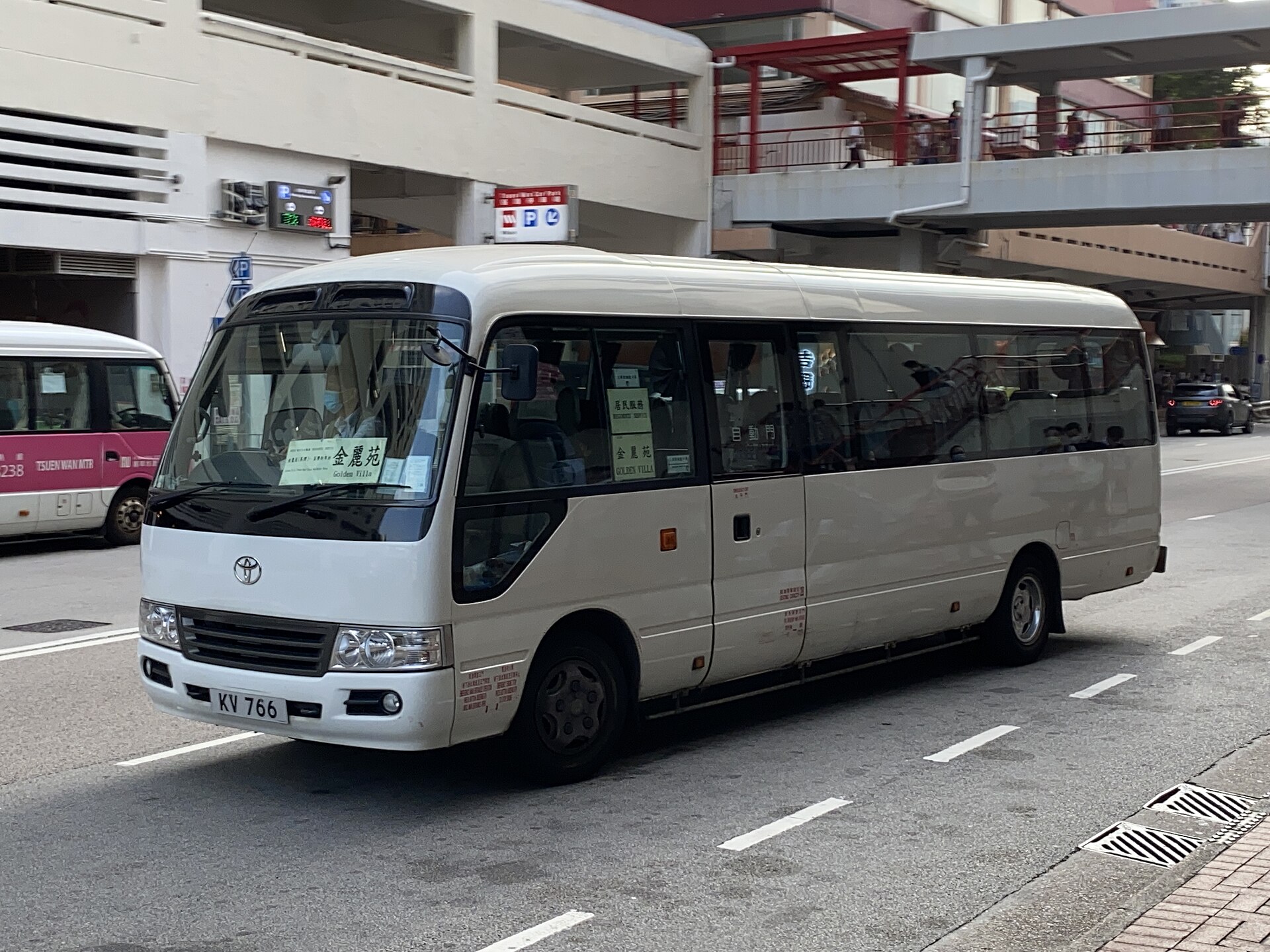
Tsuen Wan is well served by many bus routes. Major bus termini are located at Tsuen Wan and Tsuen Wan West railway stations, and at some private developments such as Nina Tower and Allway Gardens. There are also many minibuses running to major destinations around Hong Kong, which makes the town a genuinely useful base for exploring the wider New Territories and Kowloon.
The town's bus history is worth knowing for orientation: the Tsuen Wan Transport Complex was once a major interchange between ferries and buses, but it became obsolete when land reclamation moved the adjacent ferry pier and ferry services were scaled back after the MTR opened. Today the stations, not the old complex, are where you catch your connections.
Fares and payment methods vary by operator and route, so treat any single example as illustrative rather than universal. On Citybus routes, for instance, you pay the exact fare by cash or Octopus on boarding, and contactless bank cards and major mobile wallets are also accepted; children under 12 and seniors aged 65 and over pay half fare, and eligible seniors, JoyYou Card holders aged 60–64 and eligible persons with disabilities using a Personalised Octopus can benefit from the government concessionary fare scheme. Mobile-payment users forgo the fare subsidy scheme and the elderly and disability concessions, and interchange discounts apply only to Citybus-operated routes. Some routes are peak-hours only and run on weekdays but not at weekends or on public holidays, so check the timetable before you rely on a particular bus.
Ferries
The Tsuen Wan Pier connects Tsuen Wan to Park Island, a private housing estate in Ma Wan. This is a niche option rather than a general sightseeing service, but it is useful if your plans take you across to Ma Wan.
Taxis and Ride-Hailing
For most short hops within the town centre, walking or the MTR will be quicker and cheaper than hailing a car.
Walking
The town centre is walkable in the sense that the main stations, malls and hotels sit close together, and the reclaimed flat land around the centre makes for easy strolling. Be realistic about the edges, though: Tsuen Wan is surrounded on two sides by hills and woodland forming Shing Mun Country Park and Tai Mo Shan Country Park, and some private estates — Allway Gardens, for example — sit on hilltops such as Tsuen King Circuit. Those are climbs, not strolls. For country park access, treat walking as the start of a hike rather than a way to run errands.
Getting In From the Airport
The reference material does not cover the airport-to-Tsuen Wan journey specifically, so the reliable general guidance is this: Hong Kong International Airport is connected to the city by the Airport Express rail line and by airport buses, and both connect onward to the MTR network. From the airport, take the Airport Express to its Kowloon or Hong Kong stations and change onto the MTR for Tsuen Wan; alternatively, airport buses run to various parts of the city and can be combined with a taxi or the MTR for the final leg. Because Tsuen Wan has three stations, check which one is closest to your hotel before you set off — Tsuen Wan station for the town centre, Tsuen Wan West for the western side — and allow extra time if you are arriving with luggage during peak hours.
Practical Tips
- Use the three MTR stations as your mental map: Tsuen Wan and Tai Wo Hau on the Tsuen Wan line, Tsuen Wan West on the Tuen Ma line.
- Catch buses at the termini at Tsuen Wan and Tsuen Wan West stations, or at developments such as Nina Tower and Allway Gardens.
- Keep a stored-value card topped up for the MTR and for bus fares where accepted; some bus routes accept contactless cards and mobile wallets, but concessions differ by payment method.
- Check whether a bus route runs only at weekday peak hours before building a day around it.
- Wear comfortable shoes for the hilltop estates and country park trails; save the walking for the flat town centre otherwise.
- Use the Tsuen Wan Pier only if Ma Wan and Park Island are on your itinerary.