Getting your bearings
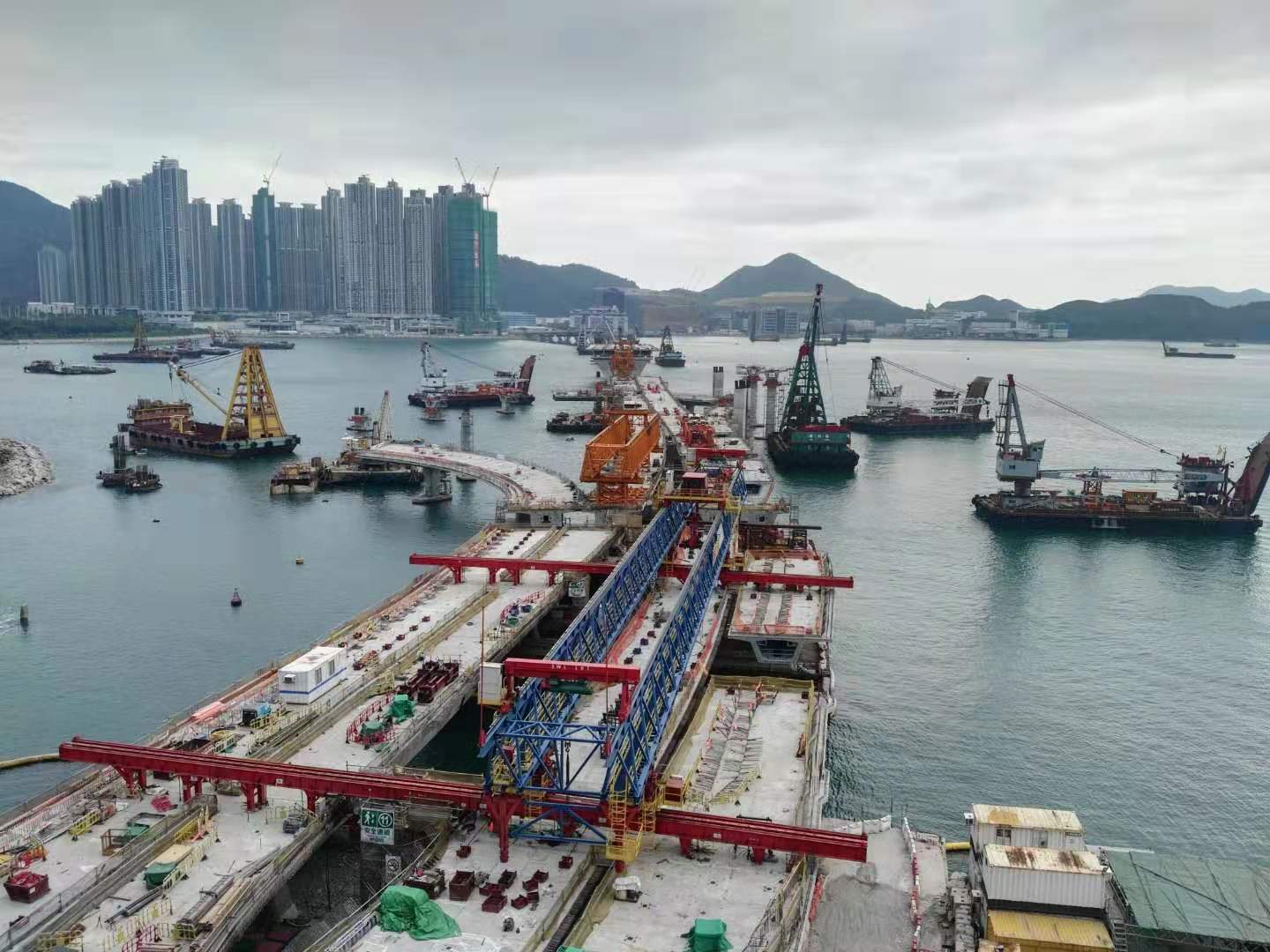
Tseung Kwan O is one of Hong Kong's nine new towns, built mainly on reclaimed land around Junk Bay in the southeastern New Territories. Administratively it belongs to Sai Kung District, but it sits right next to Kwun Tong in Kowloon, and you will often see it grouped with "Kowloon East" — even the local hotels carry the name. For a visitor this matters in a practical way: the town feels like an extension of urban Kowloon rather than a remote rural outpost, and it is connected to the rest of Hong Kong by a fast rail line.
The new town was designed around transit from the start. Development was concentrated along the rail corridor, with most residents living within a short walk of a station and large residential complexes clustered around them. That design is good news for visitors: once you are in Tseung Kwan O, the rail line is usually the simplest way to move between its neighbourhoods and out to the rest of the city.
The neighbourhoods you'll likely visit
The town's main districts each have their own station and their own character, and knowing which is which helps you plan:
- Po Lam — the earliest part of the new town, home to Metro City Plaza, described as the largest shopping mall in the new town, wrapped around the rail terminus.
- Hang Hau — once a small market town serving the Clear Water Bay Peninsula; the reclaimed area now holds residential blocks and community facilities including the district hospital.
- Tseung Kwan O Town Centre — the main growth area, centred on Tseung Kwan O station, with newer residential developments and shopping.
- Tiu Keng Leng — formerly Rennie's Mill, once a refugee village and now a mid-size high-rise neighbourhood.
- LOHAS Park — a large residential enclave in the south of the town, served by its own station and bus routes.
Rail: the backbone of the network
Tseung Kwan O is served by the MTR, Hong Kong's metro. The Tseung Kwan O Line runs through the town, and Tiu Keng Leng station also connects with the Kwun Tong Line, which is useful if you are heading toward Kowloon or want an alternative route into the city. Trains run from early morning until well past midnight — at Tseung Kwan O station, for example, the first trains stop nearby shortly after 6am and the last around 1:26am, so late dinners and evening events in the city are not a problem.
Because the town was built around the rail corridor, you can move between Po Lam, Hang Hau, Tseung Kwan O Town Centre, Tiu Keng Leng and LOHAS Park by train rather than by road, which avoids the area's road traffic entirely.
Fares and tickets
Hong Kong's public transport runs on a stored-value smart card that you tap on entry and exit for the MTR, and on boarding for buses and minibuses. For a visitor, the practical approach is to pick up a card at the airport or a station and top it up as you go; it works across the MTR, buses and green minibuses, so you don't need separate tickets for each mode. Fares are charged by distance on the rail network, so tapping out correctly at your destination station matters.
Buses and green minibuses
Buses and green minibuses fill in where the rail line does not go. They are the neighbourhood connectors — useful for reaching housing estates, the industrial estate, the hospital, beaches and the rural parts of Sai Kung District — while the rail handles the main trunk journeys. Operators in the area include Kowloon Motor Bus (KMB), Citybus and green minibus services, and some routes are jointly run by KMB and Citybus.
A few examples of what buses and minibuses open up from Tseung Kwan O:
- Local links from Tseung Kwan O station to Clear Water Bay, the industrial estate, Pak Shing Kok and the Chinese Medicine Hospital.
- Routes onward to Sai Kung town, Sha Tin, Kwun Tong, Kowloon City, Tsuen Wan and Yau Tsim Mong.
- Cross-harbour services, including a route between Po Ning Road and Central (Exchange Square).
- Airport-bound services, including the A28/A28X and E22A routes.
- Overnight "N" routes, such as one linking LOHAS Park with Tsim Sha Tsui and Mong Kok, and another connecting Tseung Kwan O with Mong Kok.
One caution worth repeating: road traffic in Hong Kong can turn a short-looking bus hop into a long one. Live bus arrival times are a helpful planning aid, but treat them as an estimate rather than a guarantee, and allow extra time if you are connecting to something fixed like a flight or a booking.
Interchanges: where the modes meet
The town's public transport interchanges are where rail, bus and minibus converge, and they are the easiest places to change between modes. The Tseung Kwan O Public Transport Interchange, on Tong Chun Street, sits right beside Tseung Kwan O station — roughly a five-minute walk — and has a bus terminus and a minibus terminus immediately next to it. Other interchanges and termini you may encounter include Po Lam Public Transport Interchange, Sheung Tak Bus Terminus, the Tseung Kwan O Industrial Estate bus terminus, and stops at Hang Hau Village and Ming Tak Estate.
If you are unsure how to reach a specific spot, heading for the nearest interchange and switching there is usually more reliable than trying to find a single door-to-door service.
Taxis and ride-hailing
Taxis are a straightforward option in Tseung Kwan O, and they are the most flexible way to reach places the rail and bus network does not serve well — outlying villages, the industrial estate, or a specific address late at night. They are metered, so you pay by the meter rather than negotiating. Ride-hailing apps operate in Hong Kong as well, and can be convenient when you want a fixed destination entered in advance, though availability varies by time and location. For short trips within a neighbourhood, a taxi is often the quickest choice; for longer journeys into Kowloon or across the harbour, weigh the fare against the rail alternative, which will usually be faster in traffic.
Walkability
Walking works well in Tseung Kwan O, but with a caveat. The town's layout puts residential complexes, malls and stations close together, so within a neighbourhood you can often walk from your hotel or the station to shops and restaurants without any transport at all. The flip side of this design is that open space was planned at the edges of each neighbourhood, so neighbourhoods are separated by parks rather than flowing seamlessly into one another. That means a walk between two districts can be longer and less direct than it looks on a map. As a rule, walk freely within a district, and take the train or a bus when crossing from one to the next.
Getting in from the airport
Hong Kong International Airport is on the far side of the territory from Tseung Kwan O, so this is the one journey where planning pays off. You have two broad approaches:
- Airport buses direct to Tseung Kwan O. Routes such as A28/A28X and E22A connect the airport with Tseung Kwan O, including LOHAS Park and Hong Sing Garden. These are the simplest option if you are staying in the eastern part of the town, since you avoid a transfer with luggage.
- Rail into the city, then the Tseung Kwan O Line. Take the airport rail link into central Hong Kong and change onto the metro network for the Tseung Kwan O Line. This is usually the faster and more predictable option, since it is not exposed to road traffic, but it involves at least one change with your bags.
If your flight lands late, note that the metro runs until after midnight and there are overnight bus routes serving the town, so a very late arrival does not necessarily mean an expensive taxi — but check the last connection times for your specific date before you travel.
Practical summary
- Use the MTR for journeys between Tseung Kwan O's neighbourhoods and into the rest of Hong Kong.
- Use buses and green minibuses for the last stretch to estates, the industrial estate, the hospital, beaches and Sai Kung.
- Load a stored-value smart card and tap it across rail, bus and minibus rather than buying individual tickets.
- Change modes at the public transport interchanges, especially the one beside Tseung Kwan O station.
- Walk within a district; take transport between districts, since parks separate them.
- From the airport, choose between a direct airport bus to Tseung Kwan O or the rail link into the city followed by the Tseung Kwan O Line.