Getting Around Malabo: An Overview
Malabo sits on the north coast of the island of Bioko, and for a visitor the city is compact and manageable. The good news is that you do not need to master a complex transport network to see the city: Malabo is quite walkable, and taxis are cheap and readily available. There is no rail, metro, or tram system to navigate, and no ride-hailing apps to download. Getting around is mostly a matter of your own two feet and the nearest taxi.
One practical note before you start: Spanish is the official language of the city and the country, but Pichinglis is also used as a language of wider communication across Bioko island, including in Malabo. If your Spanish is limited, you may still find Pichinglis useful in everyday exchanges.
Walking
Malabo is quite walkable, which makes it a good city for exploring on foot during the day. The city centre is compact enough that many of the places a visitor is likely to want to reach are within a reasonable stroll of one another. Given the climate, though, it pays to plan your walking around the weather: Malabo has a very long cloudy wet season that covers nine months of the year, with September and October the hardest hit by rain and showers. The short, sunnier dry season runs from December through February. Even outside the rainiest months, the city is one of the cloudiest, wettest and most lightning-prone capitals in the world, and experiences fog and haze even when it is not raining. Carry rain protection and expect to take shelter from time to time.
Rail, Metro and Tram
There is no rail, metro, or tram network in Malabo. Visitors should not expect to find one, and no tickets or passes for such services exist. Your practical options for moving around the city are walking, taxis, and whatever informal transport you arrange locally.
Buses and Public Transport
Practically speaking, you should not plan your visit around catching a scheduled public bus. If you need to cover a longer distance, a taxi is the straightforward option.
Taxis
Taxis are the main practical alternative to walking, and they are cheap. As a rough guide to fares, 500 FCFA during the day should get you anywhere within the city, and 3,000 FCFA should get you from the city to the Marathon Oil compound. Be prepared to pay more at night, or when the police are out enforcing traffic laws. It is worth having small notes on hand so you can pay the exact fare, and worth agreeing the price before you set off.
There is no mention of ride-hailing services such as Uber or Bolt operating in Malabo, so do not rely on an app to summon a car. Flag a taxi on the street or ask at your hotel.
Getting from the Airport into the City
Malabo International Airport (IATA code SSG) is the city's gateway, located about 9 km west of the centre of Malabo, near punta Europa. A range of international carriers serve it, including Ceiba, Turkish Airlines, Air France, Ethiopian Airlines, Lufthansa, Royal Air Maroc, and Etihad, along with a few regional airlines offering service to surrounding countries and to Bata on the mainland. Ethiopian Airlines, for example, flies several times per week with connections through cities such as Douala and its hub in Addis Ababa, and Aero Contractors serves Malabo from Lagos en route to Libreville.
Once you land, the simplest way into the city is by taxi. Because the airport sits only a short distance west of the centre, the ride is not long, and the same cheap-fare logic that applies within the city applies here. Agree the fare with your driver before departing, and expect to pay more at night. If you are arriving on a regional carrier, note that travel on internal carriers should be duly considered, as there is no capability of enforcing airworthiness standards in Equatorial Guinea and air traffic control is marginal at best.
Arriving by Boat
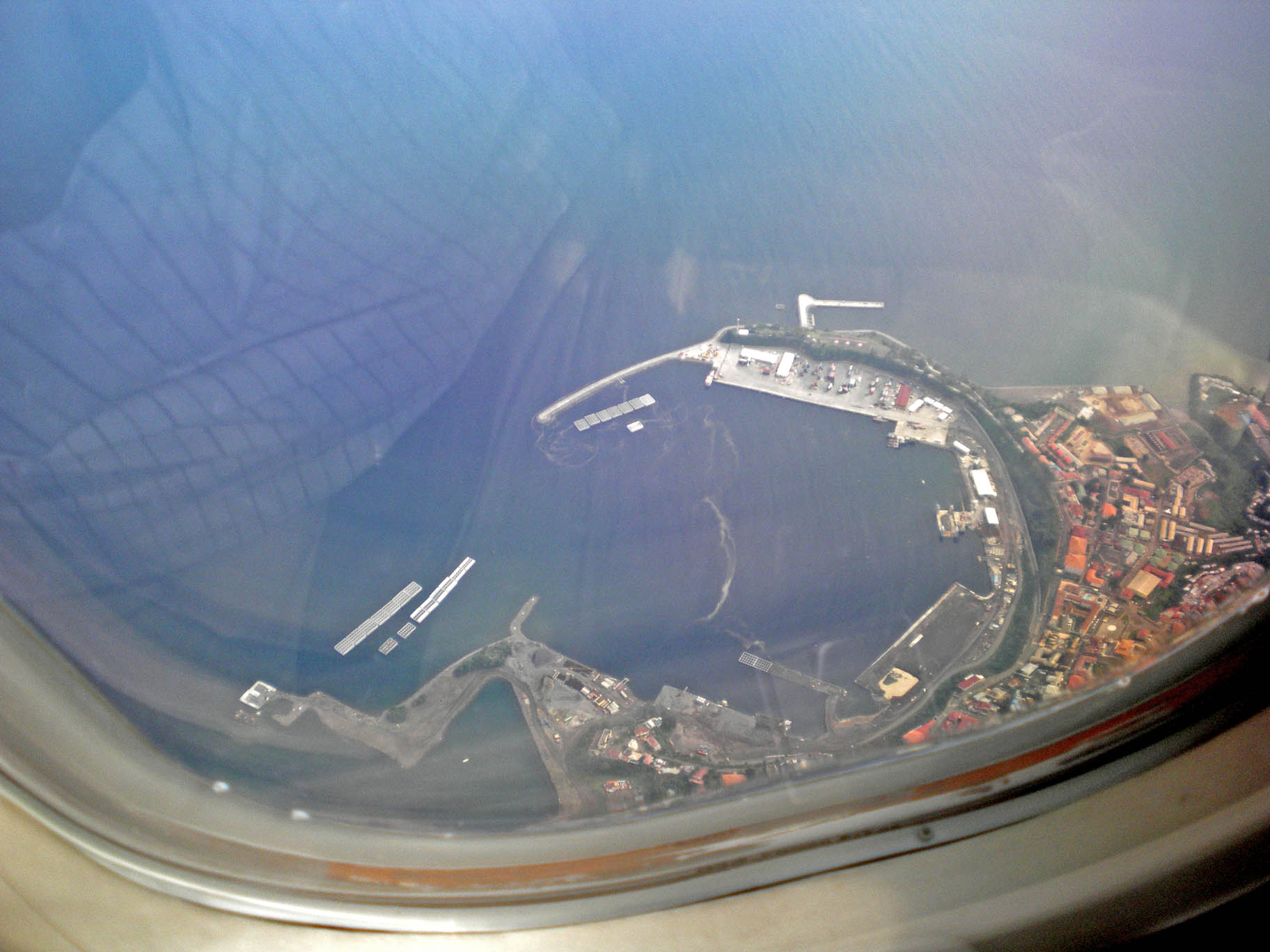
If you are reaching Malabo by sea rather than by air, ferries sail from Douala and Bata to Malabo port. From the port you are within reach of the city centre, and the same options apply: walk if your destination is close, or take a cheap taxi.
Practical Tips
- Plan on walking for short trips in the centre, but keep rain gear handy — the wet season is long and the city is among the cloudiest and wettest capitals in the world.
- Use taxis for longer hops or at night; 500 FCFA during the day should cover anywhere within the city, and 3,000 FCFA should get you to the Marathon Oil compound.
- Expect to pay more at night or when police are out enforcing traffic laws.
- Do not count on rail, metro, tram, or a formal city bus network — none is described for Malabo.
- Do not count on ride-hailing apps; arrange taxis on the street or through your hotel.
- From the airport, take a taxi into the city and agree the fare before you set off.