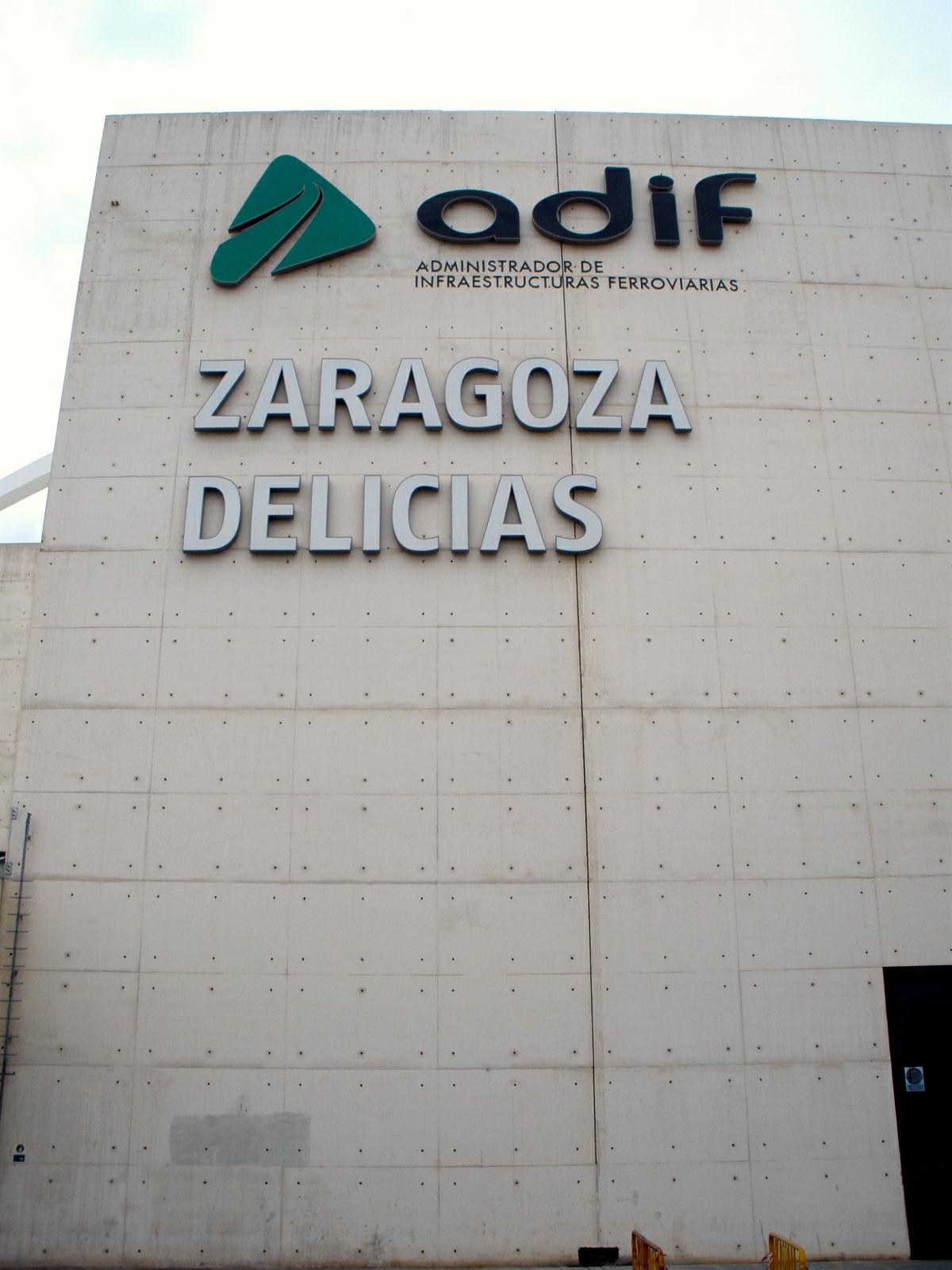
Understanding Delicias as a Transport Hub
Delicias is the name of Zaragoza's main railway and bus station complex, and for most visitors it is the gateway to the city rather than a destination in itself. The good news is that the station is genuinely intermodal: high-speed and regional trains, commuter rail, long-distance buses, city buses, taxis and car rental all come together in one building, so you can often change modes without stepping outside. The trade-off is that the complex is large, with separate entrances and zones for trains and buses, so it pays to read the signage carefully and allow a little extra time when connecting.
Rail: High-Speed, Regional and Commuter Services
Zaragoza-Delicias is the city's principal rail station, housed in a striking glass-and-concrete building with a broad column-free roof over the platforms. It handles high-speed AVE services as well as other long-distance and regional trains, which makes it the natural arrival point if you are coming from elsewhere in Spain.
- High-speed trains connect Delicias with Madrid, Barcelona and Seville, among other destinations.
- Cercanías commuter rail runs through the station on the C-1 line, crossing the city and useful for short hops.
- Ticket purchase is possible at staffed ticket offices and self-service machines inside the station.
- Security screening applies to AVE and Alvia trains, so arrive at least 30 minutes before departure.
- Keep your ticket until you exit at your destination station, as turnstiles may be in use.
- Station hours are broadly daily from early morning until around midnight, though these can vary on public holidays.
For information, the station's official website is run by Adif, and there is a general Renfe/Adif telephone line for enquiries. If you need mobility assistance, the Adif Acerca service is available and advance booking is recommended.
Buses and Long-Distance Coach Services
The city's central bus station is integrated into the same Delicias complex, sharing the building with the railway station and making it one of Spain's main intermodal hubs. All passenger services are centralised on a single open-plan floor, which keeps orientation simple once you are inside.
- National routes include Madrid, Barcelona, Bilbao, San Sebastián, Santander, Oviedo, Gijón and Valencia.
- Regional routes cover Huesca, Teruel, Jaca, Calatayud, Tarazona and Caspe, with connections onward to the Pyrenees.
- Tickets can be bought through the Alsa app, at ticket offices, or at self-service machines in the station.
- Payment options include credit and debit cards, cash at ticket offices and enabled machines, plus various digital wallets and vouchers depending on the channel.
- Check-in is generally recommended an hour before departure, and luggage allowances vary by fare type.
Getting Around the City by Public Transport
Urban buses are operated by Avanza Zaragoza and stop at outdoor bays and entrances on Avenida de Navarra, right by the Delicias complex. This makes the station a convenient place to pick up a city bus if you are staying elsewhere in Zaragoza.
- Line 34 runs direct to the city centre and toward the Torrero cemetery.
- Line 51 and the Ci1/Ci2 circular lines link the station area with the historic centre and the university district.
- Journey times from the station to the Plaza del Pilar area are roughly 20–25 minutes by bus.
- Real-time arrivals are available through the Avanza Zaragoza app, which is worth downloading on arrival.
If you prefer to walk, the historic centre is about a 40-minute walk from the station — pleasant on a mild day, less so with luggage.
Taxis and Ride-Hailing
Taxis are straightforward at Delicias: there is a high-capacity official rank at the arrivals level, so you should not have to hunt for one. A taxi from the station into the city centre typically takes around 10–15 minutes and costs roughly €10–15, depending on traffic and your exact destination. For arrivals by air, the official taxi rank is at the main arrivals exit of Zaragoza Airport, with a journey of about 15 minutes via the A-120 highway.
Walkability and Orientation
The station complex itself is large, so expect a fair amount of walking between the train platforms, the bus terminal and the various entrances. Signage distinguishes departure and arrival zones, and the bus and train entrances are separate even though they sit within the same building. The station is fully accessible, with elevators, escalators and ramps, plus dedicated washrooms and the Adif Acerca assistance service. Beyond the station, the surrounding area is not the city's historic core — that lies a bus ride or a long walk away — so most visitors will use a bus or taxi for the final leg into the centre.
Arriving from Zaragoza Airport
Zaragoza Airport (ZAZ) is served by a dedicated Airport Line, Line 505, which runs directly to the airport terminal with a regular frequency. The journey takes roughly 20–30 minutes. If you would rather not take the bus, taxis are available at the official rank by the main arrivals exit and cover the distance in about 15 minutes via the A-120 highway.
Practical Tips for Visitors
- Allow time for connections. The complex is big and security screening applies to high-speed trains, so build in a buffer.
- Use the apps. Avanza Zaragoza gives real-time bus arrivals, and the Alsa app handles coach tickets and payment.
- Know your ticket channel. Some payment methods, such as certain digital wallets, are only available through apps rather than at counters.
- Store luggage if needed. Automatic lockers are available in the complex, with varying sizes.
- Plan for comfort. The building can feel cold in winter due to drafts, and most dining outlets close around 22:00, so eat earlier if you arrive late.
- Keep an eye on belongings during long layovers, and note that free Wi-Fi is available in waiting areas.
- Car rental desks for major companies are located inside the intermodal complex, with a direct exit toward the A-23 highway if you are heading for the Pyrenees.