Getting Around Magangué
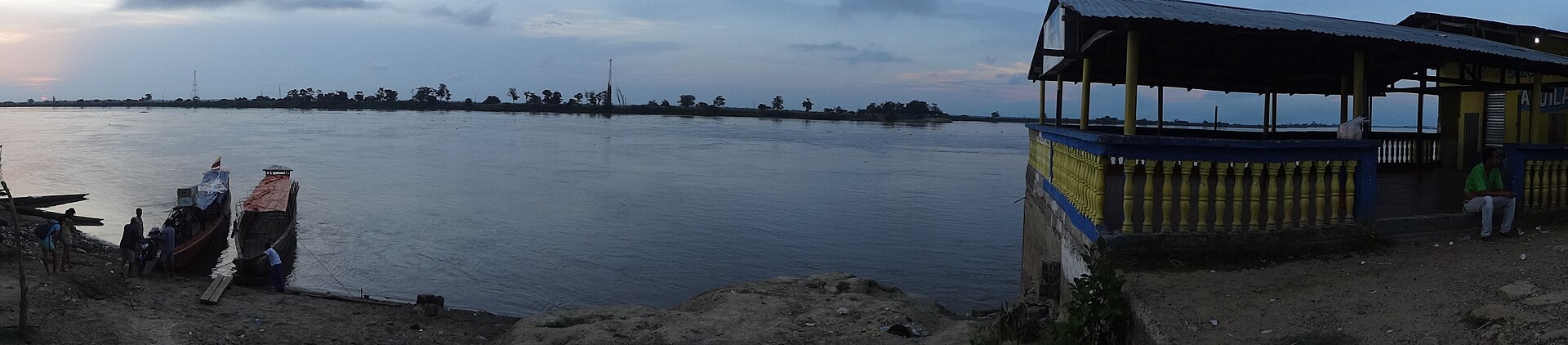
Magangué sits on the Magdalena River in the Department of Bolívar, a river city whose historic role as a port shaped how people and goods move through it. For a visitor, the practical reality is simple: this is a city of streets, buses and taxis rather than trains, and the river and the bus terminal are the two anchors of any journey in or out.
Rail, Metro and Tram
There is no rail, metro or tram network serving Magangué. Nothing in the available information describes any urban rail service, so visitors should not plan on trains or trams as a way to move around the city or to reach it. Ground transport by road, plus the river, is how Magangué is connected.
Buses and Public Transport
Local public transport in Magangué is by bus, and the street layout makes the main corridors easy to remember. Buses run along Carrera 39 and Calle 16, and these same corridors are the ones to use if you are heading to the bus terminal by public transport.
For longer journeys, Terminal de Magangue is the city's bus terminal, located at Calle 16 # 39-82. Most routes from the terminal stay within Bolívar Department, but it also serves destinations elsewhere in Colombia. Operators based there include Rápido Ochoa, Expreso Brasilia and Unitransco. Departures from the terminal are spread across the day, with sample times running from roughly the early morning to late afternoon depending on the operator, and arrivals extending from early morning into the late evening.
Buying tickets is straightforward. You can purchase at the operator counters inside the terminal, or online through platforms such as redBus. If you buy an e-ticket, note that it must be exchanged at the operator's counter for a boarding ticket before you travel. The terminal itself is modest but functional, with a waiting room and bathroom services.
Another option for intercity travel is Premium Plus, a Colombian bus company offering shared services that include Magangué among its destinations, alongside cities such as Bogotá, Lorica, Cereté, Bucaramanga and Aguachica. Premium Plus runs a single travel class, Luxury, with toilets and Wi-Fi on board, and it accepts e-tickets without requiring a printout. Its longer routes, such as those linking Bogotá with Lorica or Cereté, depart in the afternoon and run overnight, so plan for a long ride if you are coming from the capital.
Taxis and Ride-Hailing
Beyond that, no specific ride-hailing apps or taxi companies are documented for Magangué, so it is best to arrange taxis locally, ask at your accommodation, or use taxis you flag on the street rather than relying on an app you have not confirmed works in the city.
Walkability
Magangué is a compact river city, and its central streets, including the Calle 16 and Carrera 39 corridors, are the kind of grid you can reasonably navigate on foot for short trips. Walking works well for getting between nearby shops, lodgings and the riverside, but for anything involving luggage, the terminal, or longer cross-city trips, a taxi or a bus along the main corridors will be more practical.
Getting from the Airport into the City
The available information does not describe an airport serving Magangué or any airport-to-city transfer service. Visitors should therefore treat arrival by air as something to confirm locally in advance, and plan on the documented ground options: intercity buses into Terminal de Magangue, followed by a taxi or a local bus along Carrera 39 or Calle 16 to reach your final destination in the city.
Practical Tips
- Use Carrera 39 and Calle 16 as your reference corridors for local buses and for reaching the terminal.
- Terminal de Magangue is at Calle 16 # 39-82; taxis will take you there from anywhere in the city.
- Buy intercity tickets at operator counters in the terminal or online; if you buy online, exchange your e-ticket for a boarding ticket at the counter.
- Operators to look for include Rápido Ochoa, Expreso Brasilia and Unitransco, with Premium Plus also serving Magangué on its intercity routes.
- Allow for long overnight journeys on routes to and from distant cities such as Bogotá.
- Do not count on trains, trams or a metro — none are documented here.