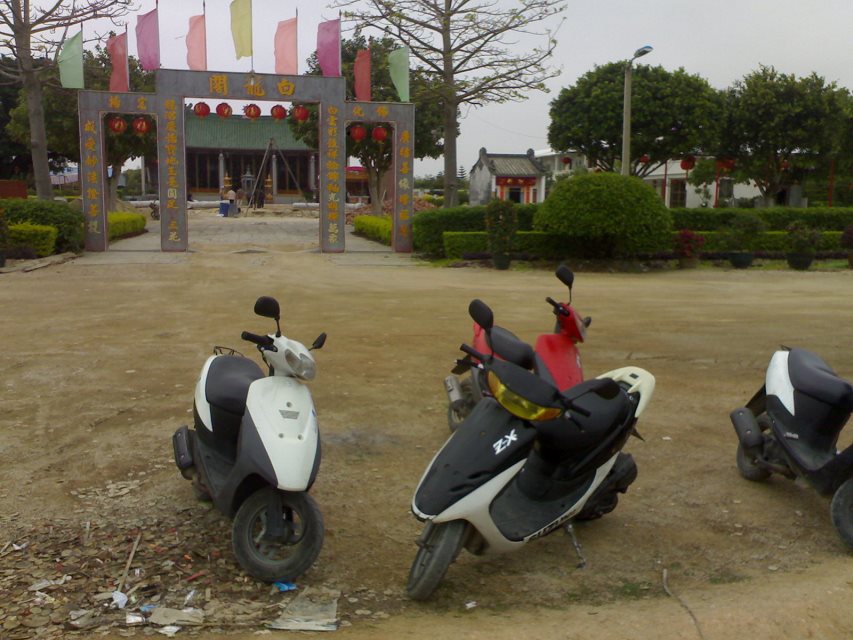
Understanding Jieshi
"Jieshi" is a name that refers to more than one place, so the first practical step for a visitor is to confirm which Jieshi you are heading to. The best-known candidates are Jieshi, a town in Lufeng, Guangdong, and Jieshi, a town in Shandong. The name also appears in other contexts, including as a street name in China's cities. Because these places are far apart and served by entirely different transport networks, check your destination carefully before you plan any onward travel.
How Visitors Get Around
In Chinese towns of this kind, day-to-day movement for a visitor typically relies on a mix of local buses, taxis and ride-hailing, and walking for short trips within the town center. Public transport in Chinese cities is generally organized around two main modes: buses and metro. These are run by a range of operating agencies rather than a single company, so ticketing and payment practices can vary from one route or system to the next.
Rail, Metro and Trams
Metro systems exist in China's larger cities, and where a metro is present it is usually the fastest way to cover longer distances across an urban area. Not every place called Jieshi sits on a metro network, however, so do not assume a metro or tram option until you have confirmed it for your specific destination. Where a metro does serve your area, it connects with local bus routes, which makes combining the two a sensible strategy for reaching neighborhoods that are not directly on a rail line.
Buses and Other Public Transport
Buses are the workhorse of local public transport and are the mode most likely to serve a smaller town or a specific street directly. As an illustration of how bus service is organized, consider Jieshi Road in Banan District, Chongqing: it is served by several numbered bus routes, and the nearest stop is only a short walk from the street itself, with another stop a longer walk away. Buses on these routes start early in the morning and some run until late in the evening, so service can extend well into the night. When you arrive, ask at your accommodation or check local signage for the routes nearest you, and note the first and last departure times so you are not stranded after the final bus.
- Identify the bus stop closest to where you are staying and learn which routes serve it.
- Note both the first and last bus times for your route, since evening service ends at different hours on different routes.
- Expect buses and metro to be operated by several different agencies, so a single ticket or pass may not cover every service.
- Use buses to fill the gaps that rail and metro lines do not reach.
Taxis and Ride-Hailing
Taxis and ride-hailing apps are a convenient fallback, especially late at night, when carrying luggage, or when your destination is not on a bus or metro line. Because public transport in Chinese cities is split among many operators, a taxi or ride-hailing trip can also be simpler than working out which agency's ticket you need for a multi-leg journey. Have your destination written in Chinese characters to show your driver, since place names like Jieshi can be ambiguous.
Walkability
Walking is practical for short hops within a town center or along a single street, and bus stops are often just a few minutes on foot from the places they serve. For longer cross-town trips, though, plan to combine walking with a bus, metro, or taxi rather than relying on foot alone. Comfortable shoes and a willingness to ask for directions will serve you well.
Getting In from the Airport
If you are flying in, the practical route into the city is usually to take the airport's rail or metro link where one exists, or otherwise a taxi or ride-hailing car, and then connect to local buses or metro for the final leg to your specific neighborhood. Confirm in advance which airport serves your Jieshi, since the two main towns of that name are in different provinces and are reached through different airports and rail lines. Once you have landed, treat the airport-to-city leg and the city-to-destination leg as two separate connections, and check the last departure times for the local buses so you do not arrive too late to complete the journey.