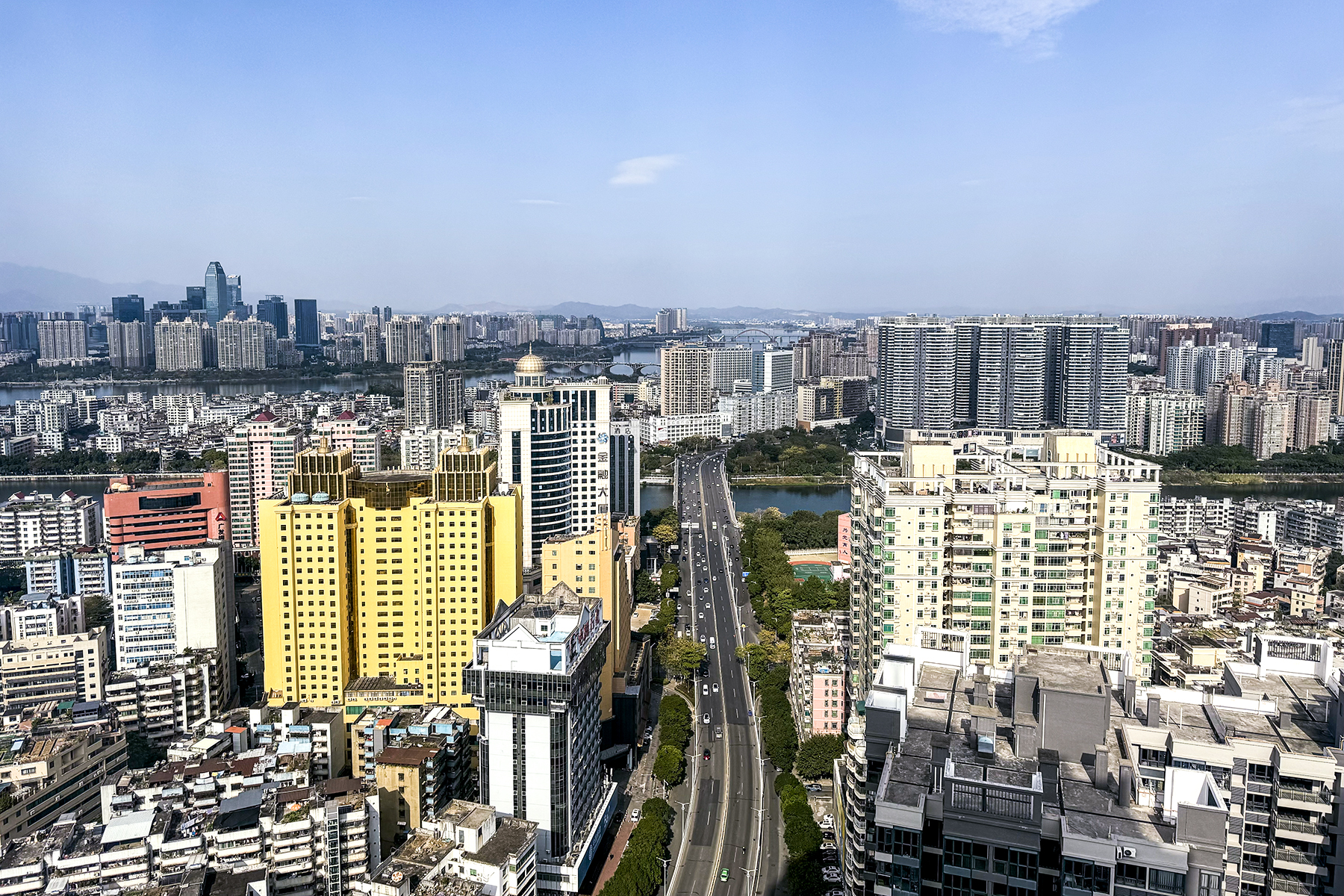
Understanding Huicheng
"Huicheng" is a name that appears in several parts of China, so the first practical step for a visitor is to confirm which one you are heading to. The best-documented destination under this name is Huicheng District in Huizhou City, Guangdong Province, and the guidance below focuses on getting around there. The same name also refers to Huicheng Town in She County, Anhui; Huicheng Subdistrict, the central subdistrict of Xinhui District, Guangdong; and Huicheng Township in Hami, Xinjiang. If your trip involves one of those places, check locally, as the transport options differ.
How Visitors Get Around
In Huicheng District, visitors typically move around using a mix of high-speed rail for longer regional hops, local buses for everyday trips, and taxis or ride-hailing for direct, door-to-door journeys. The high-speed rail stations sit outside the downtown core, so most trips begin or end with a bus or taxi connection into the city itself.
Rail: High-Speed Stations Serving Huicheng
Huizhou South Railway Station is the main high-speed rail gateway for the district. It lies in Sandong Town within Huicheng District, south of the downtown area, and serves the Guangzhou–Shanwei High-Speed Rail. The station is arranged over two floors: the first floor holds the entrance, ticket offices, arrivals and exits, plus the station square where taxis pick up and drop off, buses stop, and parking is available. The second floor is for departures.
Two other high-speed stations are worth knowing for context. Huizhou North Station also sits in Huicheng District, northwest of downtown, while Huiyang Station is further south in Huiyang District.
For ticketing, electronic tickets have been available on most high-speed and bullet train routes to and from Huizhou South since late 2019. International travellers can generally check in and board directly by showing a passport, without collecting a paper ticket first; paper tickets can still be picked up at the ticket offices if you prefer to have one.
Departure and arrival procedures are straightforward but worth planning around. On departure, you arrive by taxi, bus or car, pass through security and a real-name ID check with your passport to enter the departure hall, then find your boarding gate. The gate opens a short window before departure and closes a few minutes before the train leaves, so allow time for the checks. On arrival, follow the signs to the exits and show your passport and confirmation number, or a paper ticket, to staff before leaving by bus, taxi or car.
Buses and Other Public Transport
Buses are the workhorse of local travel in Huicheng. Huizhou South Railway Station is served by a number of bus routes, including services that connect to Huizhou downtown and intercity buses, as well as routes heading toward Daya Bay. Buses stop at the station square, making the transfer between rail and bus simple.
Beyond the standard network, Huicheng has seen tailored bus services introduced for specific areas. In the Huicheng Hi-Tech Zone, dedicated routes connect the Dongjiang Bay Industrial Park with downtown Huizhou, stopping at Ganghui Xintiandi and Huamao Place. These services run on a commuter-friendly pattern on weekdays, with arrivals before the morning rush and departures in the early evening, and switch to a longer daytime span on holidays. Rides on these tailored routes have been free. They are aimed at park employees and nearby residents, and are a good example of how the city fills "last-mile" gaps between transport hubs and destinations.
Taxis and Ride-Hailing
Taxis are readily available at the station square of Huizhou South Railway Station, where there is a designated pick-up and drop-off area. Fares are metered, with a higher rate applied at night, and the cost rises with distance travelled, so a trip from the station into downtown Huizhou is a substantial fare and takes roughly an hour or more depending on conditions. Because the station sits well outside the city centre, it is worth deciding in advance whether a taxi or a bus better suits your budget and schedule. Ride-hailing works in the same way as elsewhere in China: book through an app, meet your driver at the designated pick-up point, and pay through the app.
Walkability
Walking is best suited to the downtown core and to specific destinations such as the station square, where the bus stops, taxi ranks and parking are all within easy reach of the terminal buildings. Because the high-speed stations are located outside the central city, walking between the station and downtown is not practical; plan on a bus or taxi for that leg. Once you are in the city centre, expect to cover short local trips on foot and use buses or taxis for anything longer.
Getting from the Airport into the City
The reference material for Huicheng does not describe an airport serving the district or a direct airport-to-city transfer. In practice, visitors arriving by air should expect to reach Huicheng via the high-speed rail network or by road, then connect into the city using the bus and taxi options described above. Confirm your arrival airport and onward connections before you travel, since the best route will depend on where you land.
Practical Tips
- Confirm which "Huicheng" you are visiting before you book transport, as the name covers several places in different provinces.
- Build extra time into rail departures: security and passport checks come before you reach the boarding gate, and gates close shortly before the train leaves.
- Keep your passport handy for both rail travel and hotel check-in; it doubles as your ticket on most high-speed routes.
- Use the station square at Huizhou South for buses and taxis rather than trying to walk into town.
- If you are heading to the Hi-Tech Zone, ask locally about the tailored bus routes, which have operated free of charge and connect the industrial park with downtown landmarks.
- For late-night arrivals, note that taxi rates are higher after 11:00 PM, so budget accordingly or check whether a bus still runs.