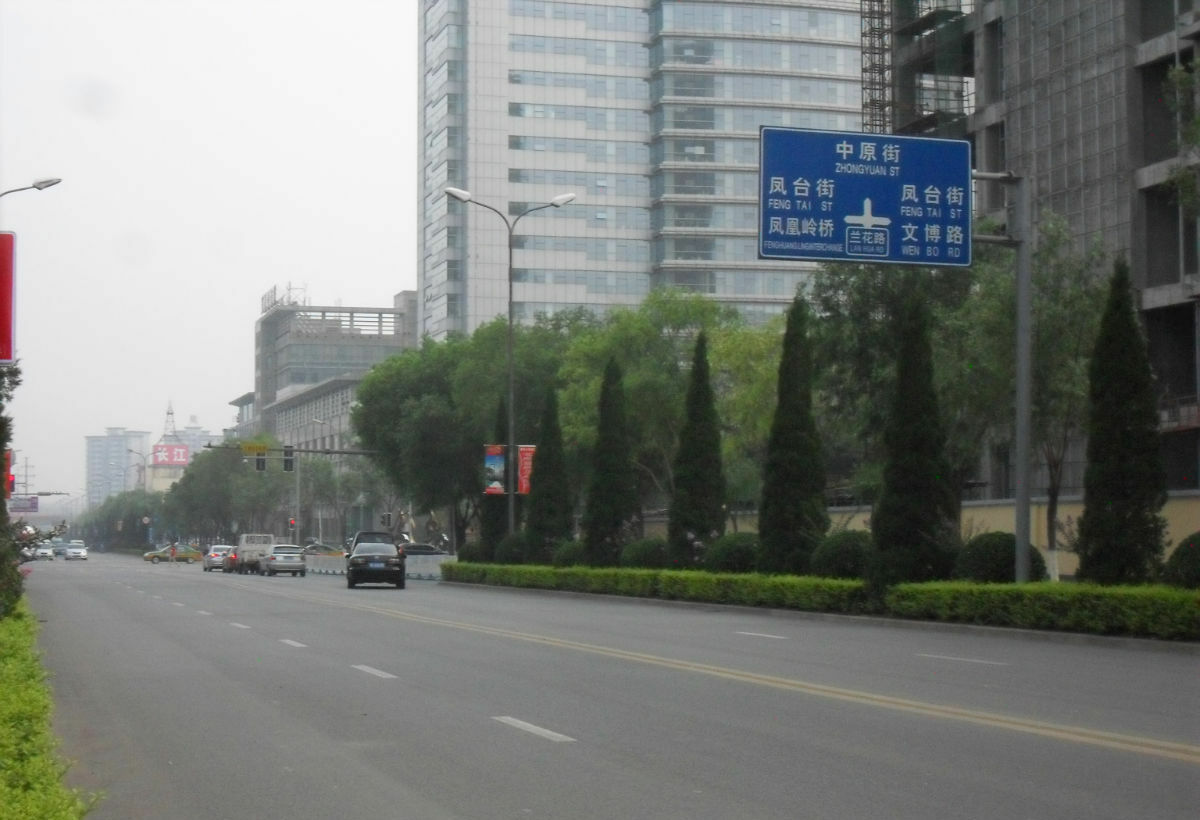
Orientation
Jincheng is a prefecture-level city in the southeast of Shanxi province, close to the border with Henan. The main urban area sits in the centre of the Zezhou basin, and the terrain is generally flat enough that getting around on foot or by bike is realistic. The city has two major railway stations serving different kinds of trains, plus a long-distance bus station, and the surrounding counties and towns are linked by intercity buses.
Rail: Two Stations, Two Roles
Jincheng's rail network centres on two stations, and which one you use depends entirely on the type of train you are taking.
- Jincheng Railway Station (98 Yingbin Street, Cheng District) handles regular-speed trains only. It is reached by city bus routes 2, 13, 19 and 31.
- Jincheng East Railway Station (Danhe Expressway, Zezhou County) handles high-speed trains only. It is reached by bus routes 110, 111, 112 and 319. Most trains heading to Jincheng these days are high-speed services, making this the busier of the two stations.
For practical planning, high-speed trains from Taiyuan, the provincial capital, take roughly one and a half to two hours, while trains from Zhengzhou take about one to one and a half hours — a little longer if you board at the airport station. Jincheng East Station is the one to aim for if you are arriving from either of those cities.
Buses and Intercity Services
Jincheng has an extensive local bus network, and it is cheap and straightforward to use.
- Most city buses cost ¥1. Longer-distance city buses running to and from the suburbs and neighbouring towns and villages typically cost ¥2.
- Jincheng East Bus Station (opposite Baishun Logistics Information Center, 207 National Road, Zezhou County) is the hub for intercity services. The network connects Jincheng with many cities and towns across Shanxi, with common destinations including Changzhi, Yangcheng and Taiyuan.
- Intercity buses are known for punctuality and good value, and are an important mode of transport for both commuters and tourists. Some buses have air conditioning and onboard Wi-Fi.
- Tickets can be bought at the station or booked through a mobile app.
Taxis and Ride-Hailing
Taxis in Jincheng usually run on the meter, so there is no need to negotiate a fare with the driver. The meter starts at ¥5. One practical caveat: do not expect taxi drivers to speak English or standard Chinese, so it helps to have your destination written down in Chinese characters.
Cycling
Cycling is a viable way to get around. The city is relatively flat, which makes it easy, and bicycles remain common even as electric bicycles and scooters increasingly replace them.
- On large streets, bicycles ride in a separated one-way road running parallel to the main road.
- On some streets, cyclists have been pushed into smaller bike lanes paved into the sidewalk.
- If you use those sidewalk bike lanes, be aware that sidewalks are used for parking and cars frequently come and go across the lane.
- Bicycles do not have the right of way. It is also common to see motorcycles driving the wrong way down the bike path, sometimes at high speed.
Walking
The city is small enough that a confident walker can cross it on foot in a reasonable amount of time. That said, pedestrians face real hazards and should stay alert.
- A green pedestrian signal is not a guarantee that it is safe to cross.
- Cars turning right rarely slow down.
- Cars parked on the sidewalk and other obstacles often force pedestrians out onto the street. Drivers are used to this, but pedestrians should not expect to have the right of way.
- As in many Chinese cities, manhole covers are sometimes missing, so watch carefully where you step.
Getting There from the Airport
Jincheng does not have a commercial airport. The nearest ones are in nearby cities, including Zhengzhou, Changzhi and Luoyang. If you fly into Zhengzhou Airport, you can continue to Jincheng by high-speed train from there — the journey takes a little longer than the roughly one to one and a half hours a direct Zhengzhou-to-Jincheng train would take. Flights are also available to nearby Changzhi and Zhengzhou as alternative arrival points.
Practical Summary
- Arriving by high-speed rail: use Jincheng East Railway Station; arriving by regular-speed rail: use Jincheng Railway Station.
- Local buses are the cheapest option at ¥1 for most routes, ¥2 for longer suburban services.
- Taxis are metered from ¥5, with no haggling expected.
- Cycling is easy on flat ground, but watch for cars, wrong-way motorcycles and parking on bike lanes.
- Walking can cover the city, but treat crossings and sidewalks with caution.
- There is no commercial airport in Jincheng; plan to arrive via Zhengzhou, Changzhi or Luoyang and connect onward, with high-speed rail from Zhengzhou being a straightforward option.