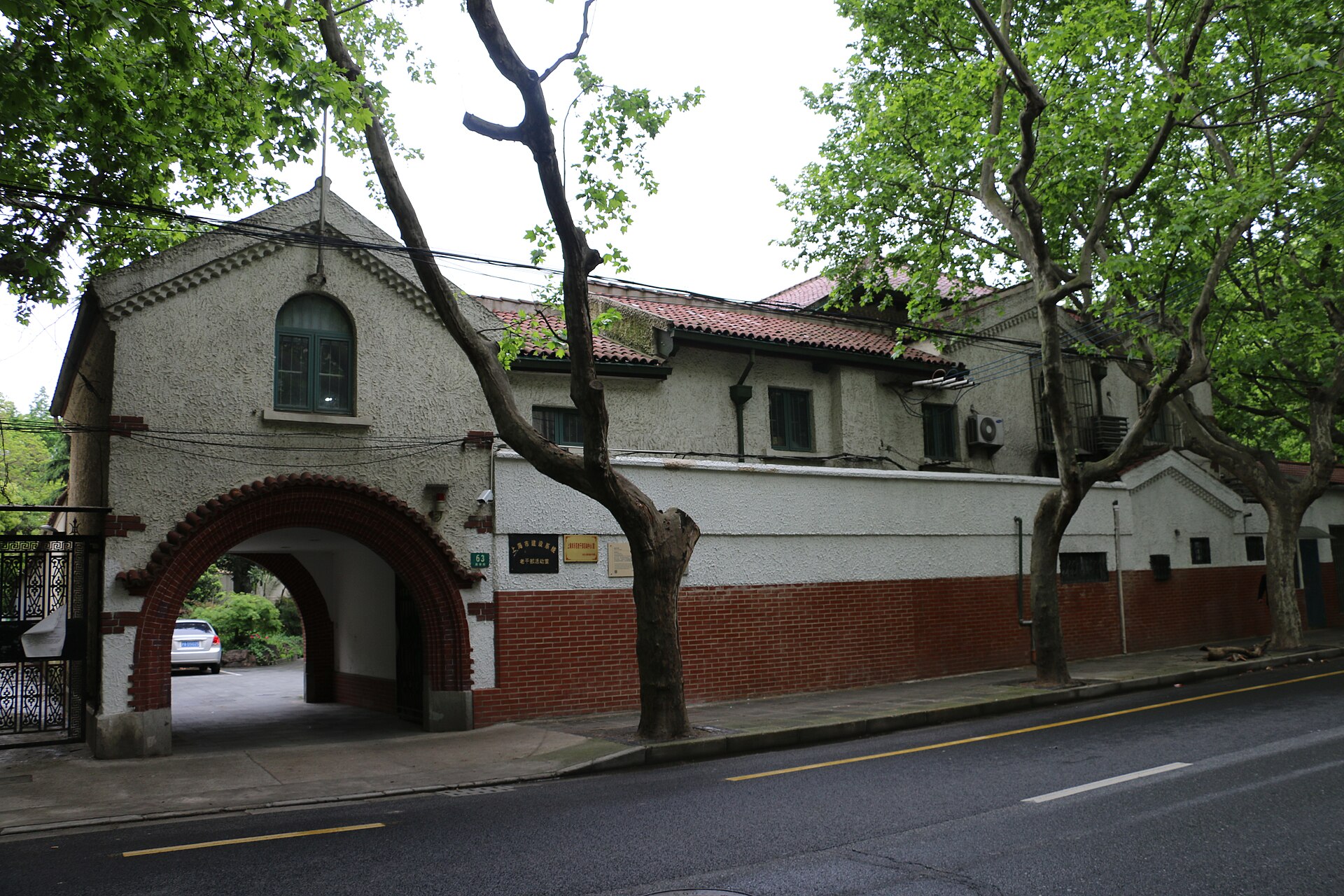
Getting Your Bearings in Xuhui
Xuhui is a core urban district of Shanghai, so getting around here means plugging into the city's wider transport network. The district is named after Xujiahui, the historic area that grew from land once owned by the Ming dynasty official and scientist Xu Guangqi and later donated to the Roman Catholic Church. Today Xujiahui has been redeveloped as a financial centre packed with large shopping centres and department stores, and it doubles as a major shopping destination for the whole city. For a visitor, that matters practically: Xujiahui is a natural hub from which to explore the rest of Xuhui and the wider city.
The Metro: Your Default Choice
The metro is the primary recommended way to get around Shanghai. It avoids street traffic, which makes it far more predictable than road transport, though it does get crowded at rush hour. Signs, maps and station announcements are in both Chinese and English, so navigating is manageable even without any Chinese. Hours vary by line, but services generally run from around 5 a.m. to 11 p.m. daily.
Xuhui is well served by the metro, with several lines crossing the district. Interchange stations let you switch between lines without leaving the system, and some of these interchanges sit right in the district — useful if you are basing yourself in Xuhui and heading out to other parts of Shanghai.
- Fares: Calculated by distance, with a base fare of 3 yuan (roughly $0.45).
- Buying tickets: From station ticket offices or automated machines.
- For multi-day stays: Consider a three-day metro pass, or a rechargeable Public Transportation Card (known locally as a jiaotong ka). The card works on the metro, buses, ferries and the airport maglev.
- Official information: The Shanghai Metro website (service.shmetro.com/en/) is the place to check for current details.
Suburban Rail
Xuhui is also served by a suburban railway line, which connects at Shanghai South Railway Station. If your plans take you beyond the city proper, this is worth knowing about as an alternative to the metro for certain journeys.
Buses and Other Public Transport
Buses are the cheapest way to travel, with fares of 1–2 yuan (roughly $0.15–$0.30). The network is extensive, run by numerous different companies. The trade-off is usability: not all buses have English signage, some display only Chinese names with no route numbers, and operators may not speak English. If you are comfortable navigating with a translation app or a map, buses can be a good value option; if not, the metro is the safer bet.
The Public Transportation Card is the universal payment method for public transport, which makes it the single most useful thing to pick up if you plan to mix metro, bus and ferry journeys.
Taxis and Ride-Hailing
Taxis are widely available outside rush hour, but can be hard to find during it. Licensed cabs are identifiable by a logo on the roof, a transparent shield between driver and passenger, a meter, and an illuminated vacancy disk on the dashboard. The meter starts at 14 yuan (roughly $2.10) for the first 3 km (about 2 miles), then 2.5 yuan (roughly $0.30) per additional kilometre. Rates are higher between 11 p.m. and 5 a.m. Tipping is not expected.
Walking
Walking is a genuinely useful way to get familiar with individual neighbourhoods — and Xuhui rewards it, with remnants of French influence still visible in the St. Ignatius Cathedral, Xuhui College, the Xujiahui Observatory, and surviving boulevards and French-style districts. Parts of the former French neighbourhoods are now among the city's most popular café areas, including the pedestrian lanes of Tianzifang. That said, walking is impractical as your sole means of transport given the size of the city, so treat it as a way to explore a neighbourhood once you have arrived, not as a way to cross town.
Getting In From the Airport
Shanghai has two international airports, and which one you use shapes your arrival into the city.
- Shanghai Pudong International Airport (PVG): The main international hub, located northeast of the city centre. You can reach the city by taxi or by the Shanghai Maglev train.
- Shanghai Hongqiao International Airport (SHA): The main domestic hub, just west of downtown. It is served by metro line 10 into the city — convenient if your onward destination is Xuhui, since line 10 also runs through the district.
If you are arriving at Pudong and plan to use public transport during your stay, note that the maglev is one of the services covered by the rechargeable Public Transportation Card, so buying one at the airport can set you up for the rest of your trip.
Practical Summary
- Rely on the metro for most journeys — it is fast, English-friendly and avoids traffic.
- Buy a Public Transportation Card if you will be in Shanghai for several days; it covers metro, bus, ferry and maglev.
- Use buses for short, cheap hops if you can handle the limited English signage.
- Take taxis outside rush hour; expect metered fares and no tipping.
- Walk to explore Xuhui's neighbourhoods, cafés and historic streets rather than to cross the city.
- From Hongqiao, metro line 10 brings you toward the city and through Xuhui; from Pudong, choose between taxi and the maglev.