Getting Around Xinxiang
Xinxiang is a prefecture-level city in northern Henan, sitting just across the Yellow River from the provincial capital, Zhengzhou. For a visitor, the practical picture is straightforward: the city has a workable mix of buses and taxis, two railway stations that anchor most arrivals, and a fast high-speed rail link to Zhengzhou that also serves as your gateway to the region's main airport. This guide covers the modes you'll actually use.
Rail: Your Two Main Stations
Xinxiang has two railway stations, and knowing which one you need matters for planning.
- Xinxiang East Railway Station (新乡东站) — on the Beijing–Guangzhou–Shenzhen–Hong Kong High-Speed Railway, one stop north of Zhengzhou East. It has frequent service to Zhengzhou East and regular service to many other destinations across China. This is your station for high-speed travel.
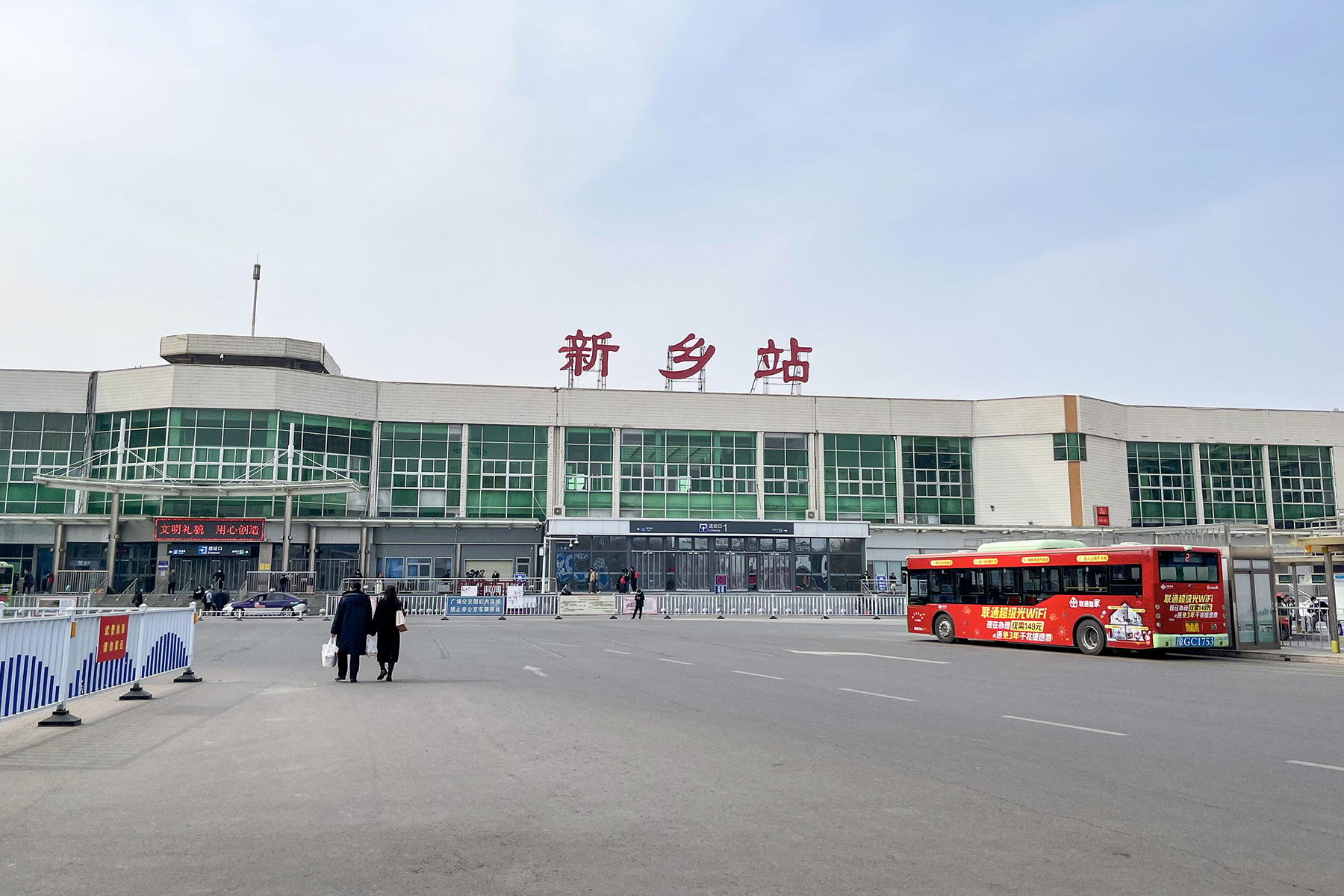
- Xinxiang Railway Station (新乡站) — north of Zhengzhou on the Beijing–Guangzhou railway, with regular sleeper service to many parts of China. This is the conventional-rail station.
The city sits on the Beijing–Guangzhou Railway and is an important node on it, so rail is a genuinely useful way in and out. If you're arriving by high-speed train, you'll likely come into Xinxiang East; if you're on a slower sleeper service, expect Xinxiang Station.
Buses and Public Transport
Like most Chinese cities, Xinxiang has a reasonable bus system. The most useful route for a visitor is the one connecting the two railway stations: bus 66 runs between them several times per hour, costs ¥1, and takes about 45 minutes. That's a cheap and simple way to move between the high-speed and conventional rail hubs if you need to transfer.
Beyond that, local buses are the main public-transport option for getting around the city. Fares are low and payment is typically in cash or by the local transit card or mobile payment, so keep small change handy.
Taxis and Ride-Hailing
Taxis are plentiful and are a practical choice for most trips around town. Fares are metered:
- Daytime: starting price of ¥6 for the first 2 kilometres, then ¥1.60 per kilometre after that.
- Night (22:00–05:00): starting price of ¥7 for the first 2 kilometres, then ¥1.60 per kilometre.
Ride-hailing apps work in Xinxiang as they do elsewhere in China, and are a convenient alternative if you'd rather not flag a cab or deal with a language barrier. Have your destination written in Chinese to show your driver.
Walking
Xinxiang is a compact, expanding city, and its urban districts — Weibin, Hongqi, Muye and Fengquan — form the built-up core where most visitor activity is concentrated. Central areas are walkable for short errands and meals, but the city is spread out enough that you'll want buses or taxis for anything beyond a neighbourhood stroll. Note that air quality can be poor, so check conditions before planning long walks.
Getting In from the Airport
Xinxiang has no major airport of its own. The nearest major airport is Zhengzhou's Xinzheng Airport, and the connection is easy:
- Take a high-speed C train from the airport to Zhengzhou East Railway Station — these run frequently.
- At Zhengzhou East, transfer to a train onward to Xinxiang (Xinxiang East is one stop north on the high-speed line).
This rail-to-rail transfer is the standard and most reliable way to reach Xinxiang from the airport. Allow time for the connection at Zhengzhou East, and book your onward ticket in advance if you're travelling at a busy period.
Arriving by Long-Distance Bus
If you come in by coach, the main arrival point is Xinxiang Bus Terminal (新乡客运总站), located just southeast of Xinxiang Railway Station — convenient if you're continuing by conventional rail. The city also has north and east bus stations serving other routes.
Practical Tips
- Keep small cash for bus fares; taxi meters start at ¥6 by day.
- Use bus 66 to shuttle between the two railway stations rather than paying for a taxi.
- For airport trips, plan around the C train to Zhengzhou East plus a transfer — it's the smoothest option.
- Write destinations in Chinese for taxi and ride-hailing drivers.
- Check air quality before long walks, as pollution levels in the region can be high.