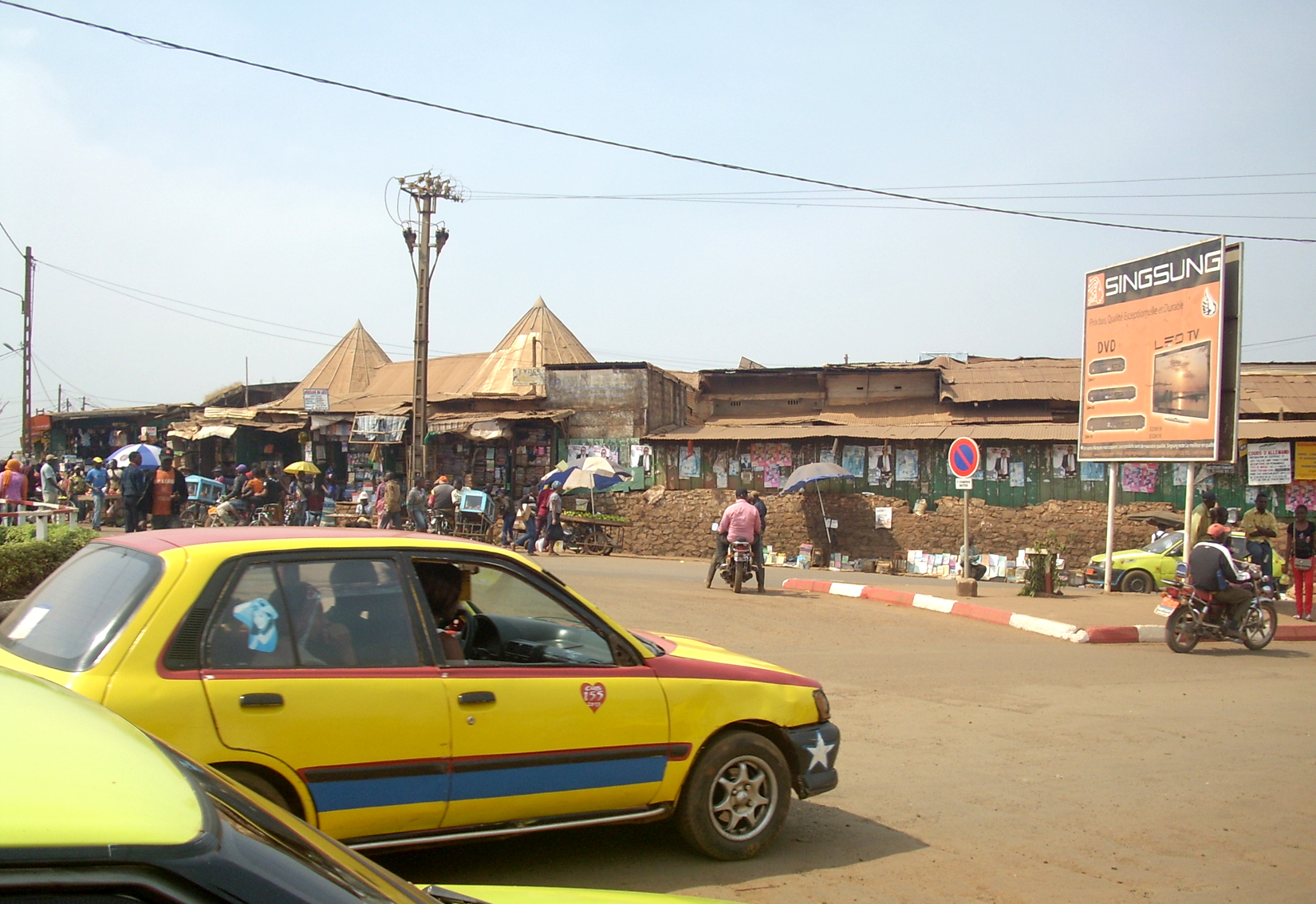
Getting Around Bafoussam
Bafoussam is the capital and largest city of Cameroon's West Region, set in the Bamboutos Mountains, and it serves as the region's centre of trade. For a visitor, the practical reality is simple: there is no train, metro, or tram network to rely on, and no local rail service within the city. Getting around is done by road, and the two options that matter are taxis and moto-taxis.
Taxis and Moto-Taxis
All travel within Bafoussam is provided by taxis or moto-taxis. This is the backbone of local transport, and it is both straightforward and inexpensive.
- Taxis are cheap — you can get halfway across Bafoussam for around 100 FCFA.
- Moto-taxis are the other main option and work in much the same way.
- Most destinations come with a script: locals will often tell you "what to say" to a taxi, meaning the name of the landmark or junction you should give as your destination. Asking your host or hotel what to say is the easiest way to get moving.
There is no mention of ride-hailing apps serving Bafoussam, so plan on flagging a taxi or moto-taxi in the street rather than booking through a phone app.
Buses and Intercity Transport
Bafoussam sits at the intersection of roads going to Douala, Yaoundé, Bamenda, and Foumban (and from there onward to the West Adamawa), with the road to Dschang only a short way off. That makes it a natural hub for longer-distance travel, and most cities have cars going to Bafoussam.
- From Yaoundé, the agency Binam ("the setting sun" in the local mother tongue) is well-reputed, but you can also try Merveilles, General, or any random car that seems to be going to Bafoussam.
- Within the city, the different departure points are tied to the direction you are heading: cars for the north (toward carrefour Dschang and Bamenda) leave from Marché B; cars for the south — where the road forks toward Bafang, Melong and Douala, or toward Bangangte, Bafia and Yaoundé — leave from the Gare Routière; and cars heading west, through Foumbot and Foumban toward the West Adamawa, are available at Carrefour Total.
- Watch your bags. Most agencies hire "loaders" to find passengers and load baggage, and these loaders can be very aggressive. Keep a firm grip on your bags and respond firmly with a polite "Non, merci" or just "Merci" to anyone who wants to tell you where to go.
Walking and Orientation
"Downtown" Bafoussam is centred on the Rond Point Biao, also known as Marché A. From this point three main roads radiate outward — one north, one south, and one west — which makes the roundabout a useful mental anchor for finding your bearings. The city is built on a series of levels in the foothills of the Banengo and Baleng hills, so expect some climbing as you move between neighbourhoods. The main neighbourhoods include Banengo, Djeleng, Famla (also called Akwa), Kamkop, Quartier Eveché, Quartier Haussa and Tamdja.
Walking is feasible for short hops and for exploring a single area, but the city's hilly, terraced layout means taxis and moto-taxis remain the practical choice for crossing town. For nightlife, most of it centres on the area called Akwa (named in honour of the neighbourhood in Douala), which features bars, stores, and a live music venue, along with customary vendors of soya (barbecue beef brochettes), poisson braisé (barbecue fish) and other foods.
Getting In from the Airport
The source material does not describe an airport serving Bafoussam or any airport-to-city transfer. What it does make clear is that Bafoussam is reached overland: it lies at the intersection of roads to Douala, Yaoundé, Bamenda and Foumban, and most cities have cars going there. In practice, visitors arriving by air typically land elsewhere and complete the journey to Bafoussam by road, using the intercity agencies described above.
Practical Summary
- No rail, metro or tram: there is no train, metro, or tram network for getting around Bafoussam.
- Taxis and moto-taxis handle all within-city travel, and are cheap.
- Know what to say: ask locally for the landmark name to give your driver.
- Intercity cars depart from Marché B (north), the Gare Routière (south), and Carrefour Total (west).
- Guard your bags at the agencies, where loaders can be aggressive.
- Orient yourself around Rond Point Biao / Marché A, the heart of downtown.