Getting Around Bamenda: An Overview
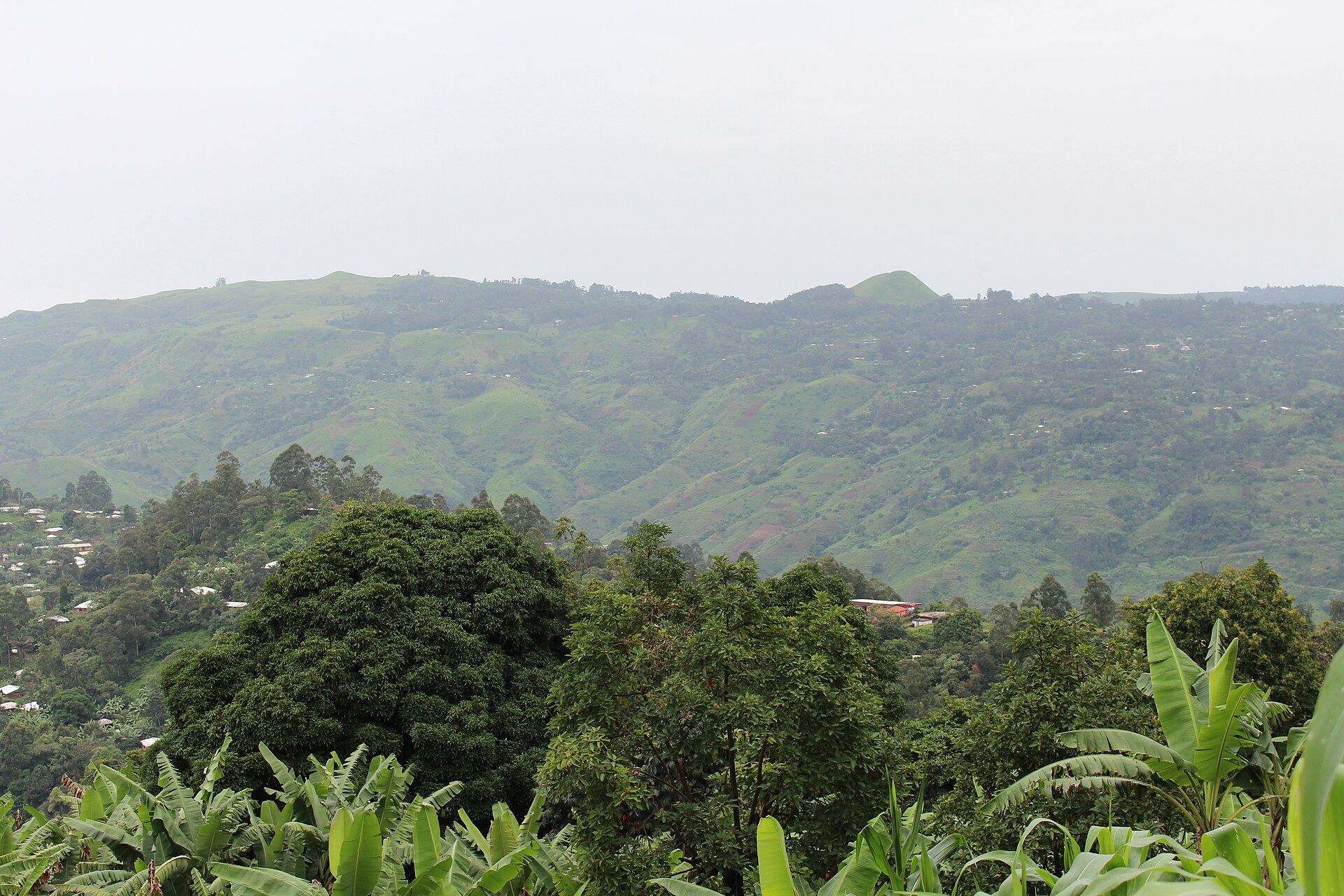
Bamenda is the capital of Cameroon's Northwest Region and the main city of the Grassfields. For the visitor, the single most important thing to understand is that Bamenda is a road city. It functions as a road hub for travel between the Grassfields, Bafassam, Douala and Yaoundé, and everyday movement here happens on wheels, not on rails. The city is hilly and scenic, and the central reference point you will keep coming back to is Bamenda City Main Market on Commercial Avenue, which serves as the main pickup area and the easiest way to orient yourself and your drivers.
The city is made up of Bamenda I, II and III sub-divisions, with neighbourhoods such as Nkwen, Mile 4 Nkwen and Sonac Street (in Ntamulung/Bamenda 3) that visitors commonly pass through or stay in. Nkwen and Mile 4 are major transport neighbourhoods, so if your hotel is out that way, plan for a slightly longer ride to and from the centre.
Rail, Metro and Trams
There is no practical passenger railway station in Bamenda, and the city has no metro or tram network. Bamenda is a road hub, not a rail hub. If you want to include a train journey in your trip, you will need to start it elsewhere: Camrail services begin from Douala Bessengué or from Yaoundé station, both of which are reached from Bamenda by long road legs. If you are combining road and rail, build in buffer time between your road arrival and your rail departure so a delayed bus does not cost you the train.
Buses and Other Public Transport
Intercity road travel to and from Bamenda is agency-driven, which means the specific company, its office and its pickup point matter far more than any generic "bus station." Vatican Express has a bus station mapped on Sonac Street, a short ride from the main market. Other operators, such as Amour Mezam, use Nkwen, central streets, Mile 4, roadside offices or their own company stands. Bus movement is not limited to one terminal, and buses do not all arrive at a single central terminal at the other end either.
Before you travel, record the following: the company name, the exact agency or bus-park name, the neighbourhood, the departure time and boarding deadline, the luggage rules and fees, the arrival point in your destination city, and the agency phone number. Ask the agency or your hotel to name the drop-off point in advance. Allow large buffers for Bamenda–Douala and Bamenda–Yaoundé journeys, since road conditions, security controls, loading delays and urban traffic all eat into the schedule. Bamenda–Bafoussam is shorter but still worth planning in daylight.
For everyday local movement, shared minibuses and bush taxis are the backbone of transport in Cameroon: cheap and crowded, they depart from central motor parks (gare routière) once full. Buy your ticket at the motor park counter, where seat numbers are included, and ignore touts outside and "VIP seat" offers, which are often just a regular minibus at double the price. On the Bamenda–Douala corridor there is also a night bus, which is cheaper than flying and stops at Nkongsamba for a break. Intercity coaches on the main corridors are more comfortable than shared options and cheaper than a private car.
Taxis and Ride-Hailing
Shared taxis are the standard way to move around town. As a fare reference, expect roughly 350 FCFA by day and 400 FCFA at night for a shared urban ride; this is a shared fare, not a private hire. If you want the car to yourself, a private city taxi runs considerably more, in the region of 2,000–5,000 FCFA or more depending on the route, and more again with luggage, hotel pickup or evening travel.
Moto-taxis are everywhere and cheap, around 300 FCFA for a short ride, but agree the price before you ride. They are not recommended with luggage or for late arrivals, and helmets are rarely provided, so bring one or insist on one.
Ride-hailing apps such as Yango and Allo Transport operate in Douala and Yaoundé, with preset fares and the driver's plate shown before pickup, but they are not established for Bamenda. Do not count on an app to get you across town; arrange your rides directly instead.
When giving directions or negotiating a fare, always state your final neighbourhood, for example Commercial Avenue, rather than just "Bamenda."
Walkability
Bamenda's hilly terrain and its layout as a road hub mean walking is best treated as a way to cover short local stretches, such as around the main market and Commercial Avenue, rather than as a way to cross the city. For anything beyond a short stroll, plan on a shared taxi, a private taxi or a moto-taxi. If you are carrying bags, a taxi is the sensible choice.
Getting from the Airport into the City
Bamenda Airport (IATA BPC), on Airport Road in the Bamenda 2 area, is a short local transfer rather than a major gateway. It handles charter flights, with no daily scheduled flights, so most visitors will not arrive here. A taxi from the airport to central Bamenda is a modest trip; expect roughly 3,000–8,000 FCFA, and a hotel pickup or a known driver is advised when you are arriving with bags.
The main flight gateways for the region are Douala International (DLA) and Yaoundé Nsimalen (NSI), both of which require long-distance road legs by bus or pre-arranged car rather than an ordinary airport taxi. By road, Douala is around six hours by car and eight by bus, and the highways to Douala and Yaoundé are generally good, though with some big potholes. For arrivals at Douala or Yaoundé Nsimalen, plan an overnight stop or a pre-arranged driver rather than an improvised transfer, and avoid tight same-day connections after late flights. At those airports, use the official taxi rank outside arrivals or a marked taxi, and be wary of freelance drivers inside the terminal who quote high.
The cleanest arrival in Bamenda is by road, in daylight, with a known drop-off point and either a hotel pickup or an agreed taxi. If you are arriving after dark, arrange the pickup before you depart, and avoid negotiating with random drivers while carrying luggage.