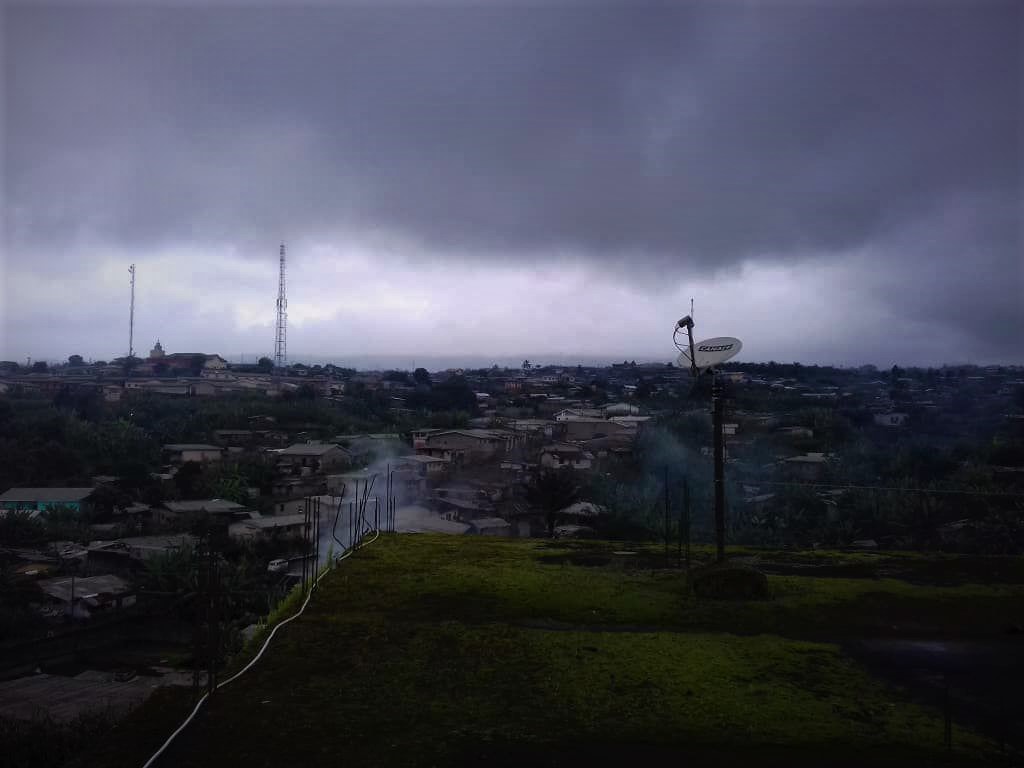
Orientation: how Nkongsamba is laid out
Nkongsamba sits in the Moungo department of Cameroon's Littoral Region, in the green hills between the Manengouba Massif and Mount Nlonako. For a visitor, the key thing to understand is that the city is organised around a central point called the "Ville," and other neighbourhoods and landmarks are described by their distance from it in kilometres — the "Kilo" areas. When someone gives you directions or a taxi driver quotes a destination, it will often be phrased this way, so it helps to learn the name of the area you're staying in and its "Kilo" reference.
Getting around the city
Within Nkongsamba itself, your practical options are taxis and walking. There is no metro, tram or light-rail system, and no urban rail service for moving around town.
Rail: history, not a way in
Nkongsamba was once the terminus of the western railway line from the port of Douala, and the line played a central role in shipping the region's coffee and other farm produce to the coast. That era is over: the town's economic fortunes declined with the closure of the final segment of the line from Mbanga, and the handsome art deco railway station survives only as housing. In short, do not plan on arriving or leaving by train — the historic station is worth a look for its architecture, but it is not a transport hub. National rail services in Cameroon are run by Camrail, but the Nkongsamba line is not a functioning option for visitors.
Buses and shared taxis for longer trips
For travel between Nkongsamba and other cities — above all Douala — buses and shared taxis are the standard choices. From Douala, several bus companies operate, with terminals in different parts of the city, and shared taxis are a slightly faster but more expensive alternative. Fares should be treated as negotiable and confirmed before you set off, and journey times vary with traffic and road conditions. On all coaches, bush-taxis and trains, petty theft is common, so keep valuables close and stay alert. Note that road conditions outside the main paved corridors can be poor and near-impassable in the rainy season, and night driving is not recommended.
Taxis and ride-hailing
Taxis are readily available in Nkongsamba, and both taxis and share-taxis generally run at reasonable fixed rates rather than on meters. Agree the fare with the driver before departure. Short rides within the city centre are inexpensive, while longer or out-of-town trips cost more, and you may be quoted an hourly rate if you want a driver to wait for you. Be aware that city taxis often lack seat belts and basic safety norms, and that assaults on passengers are not unheard of — choose licensed-looking vehicles, avoid travelling alone late at night, and keep your wits about you.
Walking
Walking is a convenient way to get around the city centre, especially for reaching markets and nearby sights, though sidewalks are limited in some areas, so expect to share the road with traffic. Distances in the centre are manageable on foot — a walk between Carrefour Portail and Eglise St Denise, for example, takes only around ten to fifteen minutes. Local markets are at their busiest and best stocked early in the morning, which is a good reason to plan a walking errand for the start of the day. Sudden rain showers are common, so check the forecast and carry rain protection before setting out on foot.
Arriving from the airport
Nkongsamba has an abandoned airstrip and no working airport of its own, so the practical gateway is Douala International Airport (DLA). From there, the most common route to Nkongsamba is by bus or shared taxi: several bus companies run from Douala, with terminals across the city, and shared taxis offer a slightly faster but more expensive ride. Fares and journey times vary with traffic and road conditions, so confirm the price before departure and allow for a long road journey. If you are flying onward within Cameroon, the national carrier Camair-Co serves Douala, Yaoundé, Garoua and Maroua, and private charter jets can be arranged.
Practical tips
- Negotiate every taxi fare before you get in; meters are not the norm.
- Learn your neighbourhood's "Kilo" reference to make directions and fares easier.
- Keep valuables secure on buses, shared taxis and in crowded areas — petty theft is common.
- Avoid night driving and be cautious on poorly maintained roads, especially in the rainy season.
- Shop the markets early in the morning, and carry a raincoat for sudden showers.
- For hikes up Mount Manengouba (with its twin crater lakes) or trips to the Ekom-Nkam Waterfalls, hire a local guide; the falls are slippery, so bring sturdy footwear.