Getting Around Tshikapa: An Orientation
Tshikapa sits at the confluence of the Tshikapa and Kasai rivers, where the R706 and N01 highways meet, in the heart of Kasaï Province. It is a diamond town founded in the early 1900s, and despite its size it remains poor, with few paved roads. That single fact shapes almost everything about how a visitor moves around: expect to rely on road-based transport, on foot, and on local knowledge rather than on formal transit systems. The city's core lies to the south of the river confluence, where some buildings rise above the single and two-storey mudbrick-and-metal-roof norm, and the airport sits on the southern edge of the city centre.
Rail, Metro and Tram
There is no rail, metro or tram network serving Tshikapa. No such system appears in the available information about the city, and visitors should not plan on any form of fixed-track urban transit. The only rail-related investment on the horizon is national in scope: the DR Congo's long-term urban planning and housing programme mentions an urban rail element, but that is tied to the Kinshasa transport master plan, not to Tshikapa. Tshikapa is named in that programme only as one of the secondary cities targeted for future urban investment, with no transport specifics attached.
Buses and Public Transport
There is no documented formal bus network, bus rapid transit system or scheduled public transport service in Tshikapa. The national urban investment plan does earmark funding for public-private partnerships that could include transport systems, and Tshikapa is among the secondary cities in line for such investment, but nothing has been described as operating yet. In practice, this means a visitor should not expect to find published routes, timetables or transit passes. Movement around the city happens through informal, road-based means, and you should arrange transport locally rather than relying on a transit authority.
Taxis and Ride-Hailing
Given the absence of documented formal transport, visitors should treat arranging a car or driver as something to organise through their hotel or local contacts rather than through an app. The city does have a hotel sector — hotels were recorded among its facilities — so your accommodation is the most reliable starting point for sorting out a vehicle and driver.
Walkability and Roads
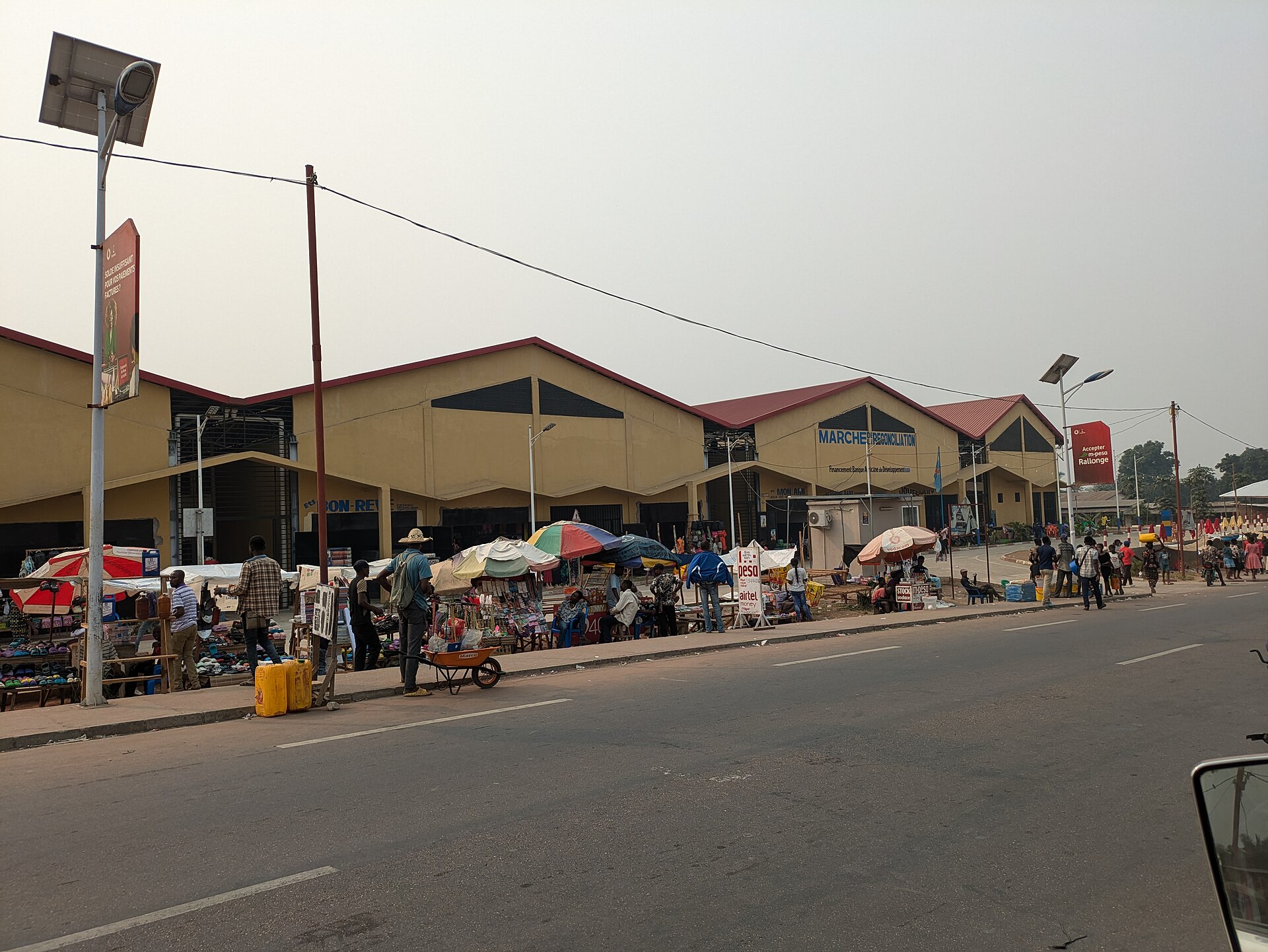
Walking is a realistic way to cover short distances, particularly in the denser core south of the river confluence, but the condition of the roads is the main constraint. Few of Tshikapa's roads are paved, and the city's markets mostly operate without basic business infrastructure, with goods displayed on the ground or in makeshift stalls — a sign of how informal the street environment is. Two road facts matter for anyone moving around or arriving by road: the N1 Highway Bridge over the Kasai River collapsed in 2020, causing significant interruptions to the regional transport network and economy, and a second bridge across the Kasai, north of the confluence, was built in 2014. The road between Batshamba and Tshikapa was reconstructed over a multi-year period ending in 2019, improving safer access to the city from that direction. If you are travelling onward by road, confirm the current state of river crossings and routes locally before setting out.
Arriving from Tshikapa Airport
Tshikapa is served by Tshikapa Airport, which is located on the southern edge of the city centre. Because the airport sits right against the urban core, the transfer into town is short and does not depend on any formal airport bus, shuttle or rail link — none is documented. Plan on arranging a pickup in advance through your hotel or a local contact, or on taking whatever local road transport is available at the airport on arrival. Given the limited paved road network, allow extra time and travel in daylight where possible.
Practical Tips
- Base your transport arrangements at your hotel; the city has a hotel sector, and staff are your best route to a car and driver.
- Do not count on apps, transit passes, timetables or fixed-route buses — none are documented in Tshikapa.
- Expect unpaved roads and plan journeys around daylight and local advice, especially after rain; the city has a lengthy wet season from September to May.
- If arriving by air, remember the airport is on the southern edge of the centre, so the onward trip is short but should still be pre-arranged.
- For onward road travel, check the status of the Kasai River crossings and regional routes locally, given the 2020 collapse of the N1 bridge and the later second bridge north of the confluence.
- Carry what you need for the day, as the city has limited access to electricity, gas and clean drinking water.