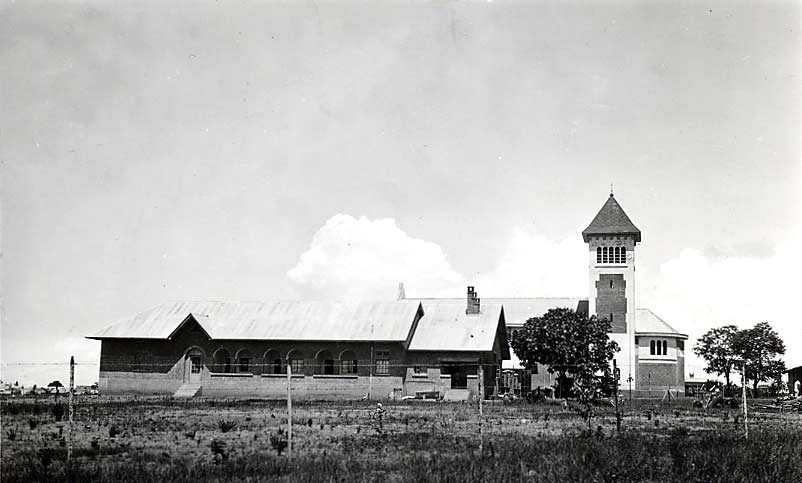
Getting Around Likasi
Likasi is a mining and industrial city in Haut-Katanga Province, in the south-east of the Democratic Republic of the Congo, and it functions as a transport hub for the surrounding region. For a visitor, that regional role matters: the city sits on the national railway system and on the road corridor linking it with Lubumbashi, which shapes both how you arrive and how you move around once you are there.
Rail: The National Network and Likasi Station
Likasi is served by a station on the national railway system, the Gare Centrale de Likasi on Avenue de la Gare. This is the anchor of rail travel in and out of the city.
- Cargo dominates. The trains on this network are mostly cargo trains rather than passenger trains, so rail should not be assumed to be a reliable everyday option for getting around.
- Passenger services do exist, but are limited. There are passenger trains from Lubumbashi and Kanaga a few times per week.
- Rail links. Likasi lies on the line connecting it with Lubumbashi and, further out, with Kamina, the distribution centre of the Congo railway network.
- Practical implication. Because passenger departures are infrequent, treat the train as a planned excursion rather than a turn-up-and-go service, and confirm schedules locally before committing to a journey.
There is no metro or tram network in Likasi. Rail here means the national railway system, not an urban transit system.
Buses and Other Public Transport
What it does make clear is that the road environment is difficult: roads are generally in bad condition. Visitors should therefore expect that any road-based public transport will be slow and subject to disruption, and should plan journeys with generous time margins rather than relying on fixed timetables.
Taxis and Ride-Hailing
No taxi operators, ride-hailing apps, or fare structures for Likasi are described in the available source material, so no specific guidance on booking or pricing can be given here. The general principle that follows from the condition of the roads is that short trips by road are likely to take longer than the distance alone would suggest.
Walkability
What it does tell you is that the city is a centre for industry, especially mining, with mines and refineries supplied by nearby copper and cobalt deposits, and that it is a transport hub for the region. That suggests a spread-out, working city rather than a compact tourist core, and the poor condition of roads is a further caution. Walking is best treated as a way to cover short, local distances rather than as a means of crossing the city.
Getting from the Airport into the City
No airport-to-city guidance can therefore be given on the basis of these sources. Visitors should confirm arrival arrangements in advance through their point of entry, and note that the documented intercity links into Likasi are by road and by rail from Lubumbashi, and by rail from Kamina.
Arriving from Lubumbashi and Beyond
Because Likasi is a regional transport hub, most visitors will arrive overland or by rail rather than by air.
- By road from Lubumbashi. Likasi is connected to Lubumbashi by road, but the roads are generally in bad condition, so allow more time than the route might suggest.
- By rail from Lubumbashi and Kanaga. Passenger trains run a few times per week. This is the more structured option, but its frequency is limited.
- Rail as a regional link. The line also connects onward toward Kamina, the distribution centre of the Congo railway network.
Summary for the Visitor
Likasi's transport picture is simple but constrained. Rail exists and is anchored at the Gare Centrale de Likasi, but it is predominantly a freight railway with only occasional passenger services. Roads connect the city to Lubumbashi and the wider region, but they are generally in bad condition. No metro, tram, documented bus network, or documented taxi and ride-hailing options appear in the available sources, and no airport transfer information is available. Plan around the railway timetable where it suits you, expect slow road travel, and confirm local arrangements on the ground before you rely on them.