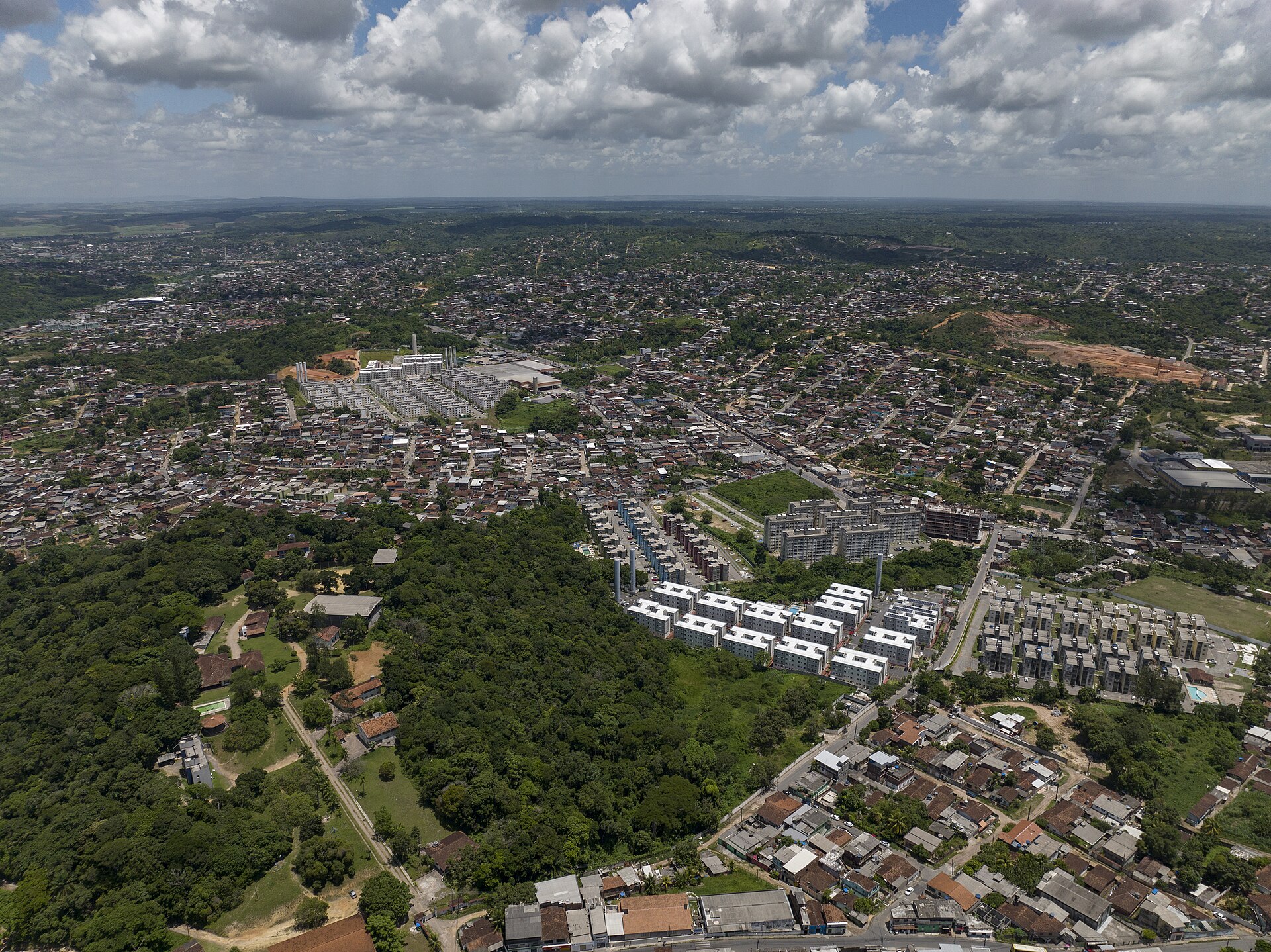
Orientation: Camaragibe in Greater Recife
Camaragibe is a city in the state of Pernambuco, in Brazil's Northeast, and it sits within the Greater Recife metropolitan area — the country's fifth-largest. It lies just to the west of Recife itself, bordered by Recife to the east, Paulista to the north, São Lourenço da Mata to the south, and Paudalho to the west. The main road through the area is the PE 005. For a visitor, the practical upshot is that Camaragibe works best as a base connected to Recife's wider transport web rather than as a self-contained walking destination.
How Tourists Get Around
Getting around Camaragibe and the surrounding metropolitan area relies on the same mix of modes that serves Greater Recife as a whole: the metro and light rail network, an extensive bus system, and taxis or ride-hailing for door-to-door trips. Because the city is a terminal point on the metropolitan rail system, with integration to local bus lanes, it is well placed for onward travel into Recife and other parts of the metro area.
Metro, Rail and Light Rail
The backbone of public transport in Greater Recife is the Recife Metro, known as Metrô do Recife or Metrorec. It serves the Grande Recife area and runs as far south as Cabo de Santo Agostinho. The system is complemented by light rail lines that extend the network further.
Camaragibe is a main and terminal stop on this metropolitan rail system, which makes it a useful anchor point for visitors. From here you can ride into the wider network and connect to other destinations across the metro area.
Buses and Integrated Ticketing
Buses fill in the gaps that the rail network does not cover, and Camaragibe has integration with local bus lanes at its rail terminal. The key concept to understand is the SEI — Sistema Estrutural Integrado, or "Integrated Structural System." This is a set of bus lines linked from the terminals where bus and metro meet, and it allows passengers to continue their travel on the same ticket. In practice, this means that if you start your journey on the metro and transfer to a participating bus at an integration terminal, you may not need to buy a separate fare for the bus leg.
- Look for SEI integration terminals when planning a trip that mixes rail and bus.
- Ask at the terminal whether your onward bus is part of the integrated system, so you can travel on a single ticket.
- Camaragibe's rail terminal connects to local bus lanes, making it a natural transfer point.
Taxis and Ride-Hailing
Taxis and ride-hailing services are a practical option for trips that are awkward by rail or bus, or for late-night travel.
Walkability
Camaragibe is described as among the most densely populated urban areas in the world, a result of very accelerated growth since it became a city. Treat walking as a way to cover short local distances — around a terminal, a commercial street, or your immediate neighbourhood — rather than as a primary way to cross the metropolitan area.
Getting In from the Airport
The main gateway for the region is Recife's Guararapes International Airport (airport code REC), which handles both domestic and international flights. It serves the whole of Grande Recife, including Camaragibe.
To reach Camaragibe from the airport, you have the same broad choices as for any trip in the metro area:
- Metro and rail: Use the Recife Metro network to travel toward Camaragibe, which is a terminal stop on the metropolitan rail system. You may need a bus connection to complete the journey, depending on your starting point.
- Bus: Buses serve the metro area, and where they connect at SEI integration terminals you can continue on the same ticket.
- Taxi or ride-hailing: The most direct option, useful if you are carrying luggage or arriving at an inconvenient hour.
Because Camaragibe sits within the Greater Recife transport system, the airport-to-city trip is really a matter of choosing your preferred combination of rail, bus, or road transport and following the network toward the Camaragibe terminal.
Practical Tips
- Plan around Camaragibe's role as a rail terminal — it is the easiest fixed point in the city's transport network.
- Use SEI integration to combine metro and bus legs on a single ticket where available.
- Keep taxi or ride-hailing as a backup for luggage-heavy trips and late nights.
- Expect a hot, humid tropical climate, which makes waiting outdoors for transport less comfortable — plan transfers with shade or indoor waiting in mind.