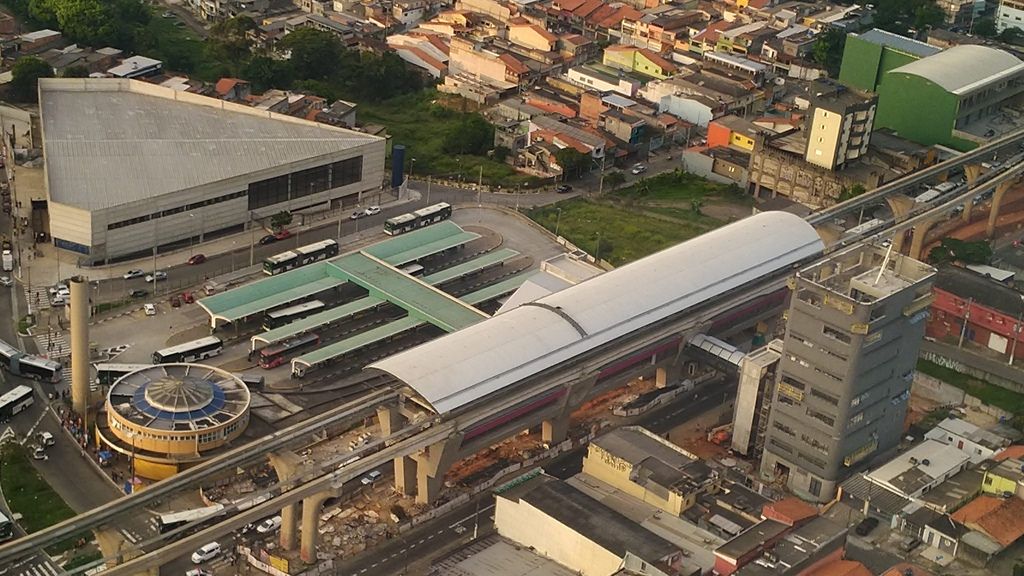
Orientation: Where Sapopemba Sits
Sapopemba is a district and subprefecture on the eastern side of São Paulo, Brazil, and it also gives its name to a station on the city's metro network. For a visitor, the practical takeaway is that Sapopemba is a residential, avenue-centred neighbourhood rather than a compact tourist core, so getting around means leaning on public transport and understanding how the different systems connect.
How Visitors Move Around São Paulo
The São Paulo region is served by a layered public transport network. The main pieces a visitor will encounter are:
- Bus — the workhorse of the system, with both city lines (SPTrans) and metropolitan lines (EMTU) reaching out beyond the city limits.
- Metro — the underground and elevated rail network, including the monorail line that serves the Sapopemba area.
- Train — the suburban rail network, operated by CPTM and ViaMobilidade.
- Light rail — a smaller rail option in the region.
- Ferry, gondola, cable car and funicular — niche modes that exist in the wider region but are not part of everyday Sapopemba travel.
Several operators and agencies run these services, including SPTrans, CPTM, ViaMobilidade, ViaQuatro, EMTU, Aquático SP, GRU Airport, and private bus companies such as Viação Cometa and Auto Viação Urubupungá. In practice, you do not need to memorise the operators — you need to know which mode and which line gets you where.
Metro and Monorail Around Sapopemba
The metro line that stops near Avenida Sapopemba is Linha 15 (São Mateus), which runs as a monorail. The Sapopemba metro station is the stop that carries the district's name, and Estação Fazenda da Juta is another monorail station in the vicinity.
Linha 15 keeps long hours, which is useful if you are arriving early or heading back late: the first metro runs at roughly 4:41 AM and the last at roughly 12:29 AM. Treat these as approximate — schedules can shift, so check on the day.
One thing to plan for is the walk. The Sapopemba station is not right on top of the avenue's main stretch; from the middle of Avenida Sapopemba it is a substantial walk of well over half an hour. If you are staying along the avenue, the bus is usually the smarter first leg, with the metro as your connection onward.
Buses: The Practical Backbone
Buses are what make Sapopemba navigable. Avenida Sapopemba is served by a dense set of SPTrans and EMTU lines, and the nearest bus stops are much closer to the avenue than the metro station is — the closest is only a few minutes' walk, with others a short stroll further along.
Lines near the avenue fan out in several useful directions:
- Into the centre and central terminals — for example services linking São Mateus and Terminal Sapopemba with Terminal Parque Dom Pedro II and Praça do Correio.
- To metro and rail interchanges — lines connecting to Metrô Belém, Metrô Bresser, Metrô Carrão, Terminal Sacomã and Terminal Vila Prudente, which is how you plug into the wider rail network.
- Local and cross-town routes — including services toward Shopping Aricanduva, Vila Califórnia, Itaquera and Jardim Itápolis.
- Metropolitan destinations — EMTU-style services reaching Santo André and the Terminal Metropolitano Santo André-Leste.
Lines that stop directly on or beside Avenida Sapopemba include 087, 262, 364A-10, 4029-10, 5141-10 and 574W-10. Others pass close by, including 373T-10, 414P-10, 514T-10, 574R-10, 3141-10, 4729-10, 5144-10, 513C-10, 513C-31, 574C-10, 3390-10 and 4029-10.
Night owls are covered too: night lines such as N503-11 (Terminal São Mateus – Terminal Parque Dom Pedro II), N536-11 and N501-11 run through the area. The N503-11, for instance, has services in the small hours of the morning, so late arrivals are not stranded.
Tickets and Passes
São Paulo's bus, metro and rail services are integrated through a common fare card system, which is the simplest way for a visitor to pay across modes. Load a card and tap in as you go; this avoids hunting for change on buses and lets you transfer between bus and metro without buying a separate paper ticket each time. Because the network is run by several operators and agencies, the card is what ties the journey together — buy one early and top it up as needed.
Taxis and Ride-Hailing
Taxis and ride-hailing apps are a straightforward fallback, particularly for the last stretch between a metro station and your accommodation, or for late-night trips when you would rather not wait at a stop. They are also the easiest option if you are carrying luggage. Given that some stations sit a long walk from the avenue, a short car trip can save a lot of time.
Walkability
Sapopemba is a long, avenue-oriented district, and walking distances between key points are considerable. The nearest bus stops to Avenida Sapopemba are a short walk away, but the Sapopemba metro station is a long hike from the avenue's central stretch, and Estação Fazenda da Juta is further still. The practical rule: walk to your nearest bus stop, ride to a station or terminal, and only walk the final short leg. Plan your day around the bus stop nearest your lodging rather than around the metro station.
Getting In From the Airport
São Paulo's main international gateway is served by GRU Airport, which appears among the region's transport operators — meaning airport-related transport is part of the same broader network you will use in the city. From the airport, your realistic options are:
- Airport bus services — coach-style transfers linking the airport with points in the city, useful if you are heading to a major terminal or hotel district.
- Metro and rail connections — once you reach the city's rail network, you can transfer onto lines heading east toward Sapopemba, finishing on Linha 15 or on a local bus.
- Taxi or ride-hailing — the most direct door-to-door option, and the simplest if you are arriving tired or with heavy bags.
For Sapopemba specifically, the smoothest pattern is to get into the city centre or a major terminal first, then continue east by metro or bus. If you would rather not navigate transfers on arrival, take a taxi or ride-hail straight to your accommodation and start using the bus and metro network the next day.
Quick Practical Summary
- Buy and load a transit card early — it works across bus, metro and rail.
- Use buses for local movement along Avenida Sapopemba; they stop far closer than the metro.
- Use Linha 15 (the monorail) and its Sapopemba and Fazenda da Juta stations for longer hops, noting the long walking distances to reach them.
- Keep night bus lines in mind if you are out late.
- Fall back on taxis or ride-hailing for luggage, late nights, and station-to-door legs.
- From the airport, choose between airport bus, taxi/ride-hailing, or rail into the city followed by an eastern connection.