Understanding the City's Layout
Pindamonhangaba is a wide-street city in the Paraíba Valley of São Paulo state, sitting roughly midway between Brazil's two biggest metropolitan areas, São Paulo and Rio de Janeiro. For a visitor, the most useful thing to grasp is how the town is divided: the railroad — the old Central do Brasil line — cuts through the city, and the downtown core lies in the strip between the railroad and the Paraíba do Sul river. That riverside downtown strip is where you'll find the main commerce area, the bank agencies, the Mother Church, the historic São José's Church, and a small wooded park called Bosque da Princesa. Knowing this helps you orient yourself: most of what a short-term visitor wants is concentrated in that central band.
The municipality also includes the district of Moreira Cesar, which sits apart from the main urban area and is reached either via the Rodovia Presidente Dutra or by the old Rio–São Paulo road.
Getting Around Town
Pindamonhangaba is not a city with a dense, tourist-oriented transit network, so getting around relies on a mix of local buses, taxis, and ride-hailing, with walking working well within the central area. The wide streets and the compact downtown make the core reasonably navigable on foot, but the city's overall footprint is large, and outlying districts like Moreira Cesar are not walkable from the center.
Rail, Metro and Trams
There is no metro or tram network serving visitors in Pindamonhangaba, and no passenger rail service you can use to move around the city. The railroad that divides the town — the old Central do Brasil line — is a defining geographic feature of the urban layout rather than a transport option for getting from place to place. Plan your movements around road-based transport instead.
Buses and Public Transport
Local bus service is the main form of public transport for residents and visitors without a car. Because the city is spread out and divided by the railroad and river, buses are the practical way to cover longer hops between the center and outlying neighborhoods. Ticketing arrangements are handled locally at the point of boarding or through the municipal system; as a visitor, the simplest approach is to carry cash or a rechargeable local transit card and confirm current fares and routes at your hotel or the bus terminal, since these details change over time. For reaching the Moreira Cesar district, public transport and road access both funnel along the same highway corridors described below.
Taxis and Ride-Hailing
Taxis are available in Pindamonhangaba and are a straightforward option for short trips around the center or for reaching places that buses don't serve conveniently. Ride-hailing apps also operate in the city, giving visitors a flexible alternative, particularly for evening trips or when heading to the Moreira Cesar district. Both are useful for the last stretch into town if you arrive by intercity bus or are dropped at the highway.
Walking
Walking is a genuinely practical way to explore the historic and commercial heart of Pindamonhangaba. The downtown between the railroad and the Paraíba do Sul river concentrates the main sights — the Mother Church, the historic São José's Church, the Bosque da Princesa, shops, and banks — within a walkable area. The city's wide streets make strolling comfortable. Outside this central band, however, distances grow and the railroad and river act as barriers, so you'll want a bus, taxi, or ride-hailing for anything beyond the core.
Getting Into the City from the Airport
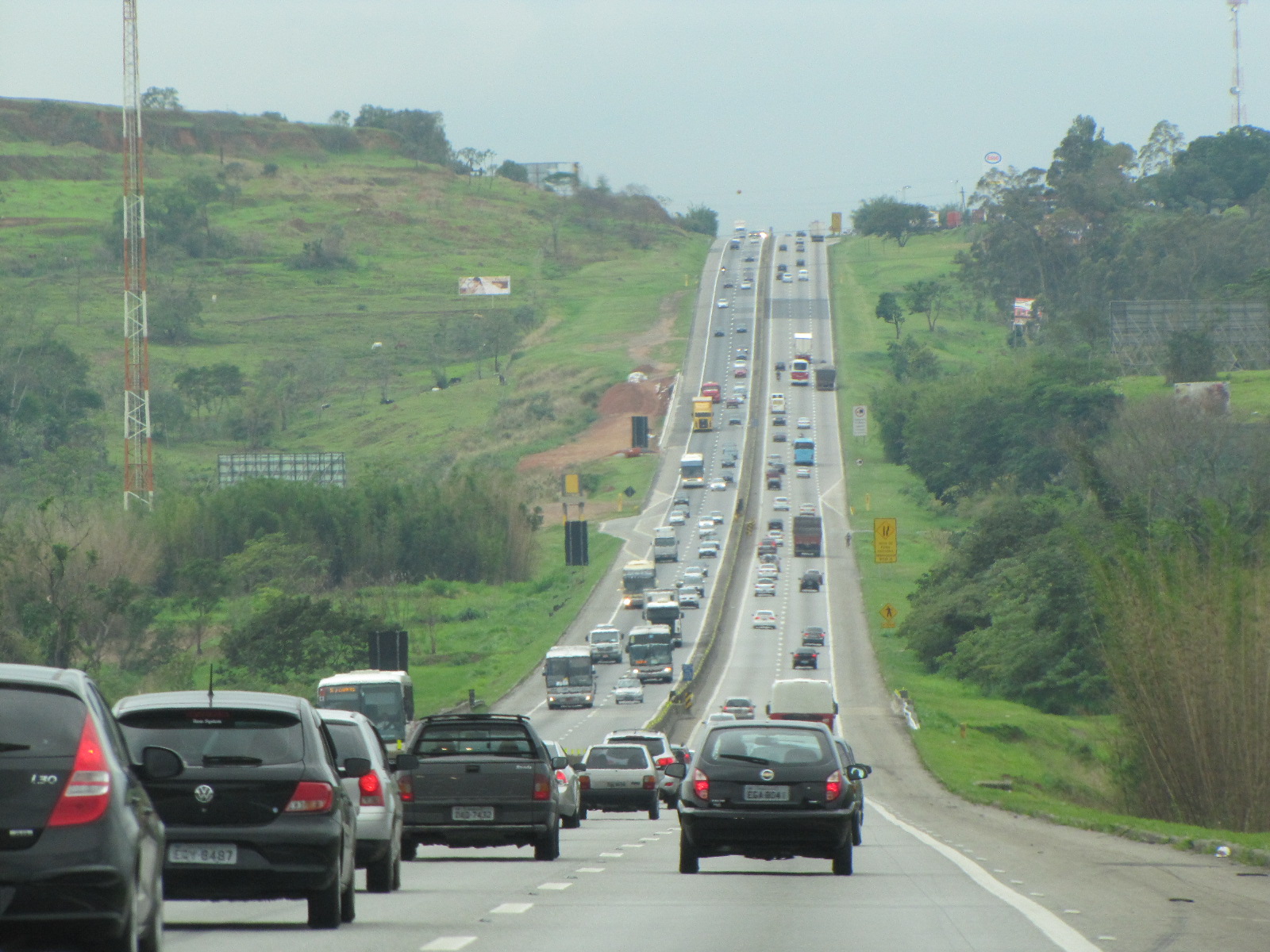
Pindamonhangaba has no major airport of its own, so visitors arrive via the region's larger airports and continue overland. The city's principal access route is the Rodovia Presidente Dutra (BR-116 / SP-60), which passes through the municipality; downtown lies a short drive from the highway. A secondary approach is the old Rio–São Paulo highway, now the SP-62.
In practice, reaching Pindamonhangaba from an airport means an intercity bus or a private car/taxi along the Dutra corridor, since the city sits on the main road link between São Paulo and Rio de Janeiro. If you're coming from São Paulo–Guarulhos or Rio–Galeão, the usual pattern is to take an intercity bus or arrange a transfer that runs along the Dutra and drops you in Pindamonhangaba; from the drop-off point, use a local taxi or ride-hailing app to reach your accommodation. Confirm schedules and pickup points in advance, as intercity services and airport transfers are the practical link rather than any direct rail connection.
Practical Tips
- Orient yourself by the railroad and the Paraíba do Sul river — downtown sits between them.
- Walk the central core for churches, commerce, and the Bosque da Princesa; use buses, taxis, or ride-hailing beyond it.
- There is no metro, tram, or usable passenger rail for local travel — plan around road transport.
- For the Moreira Cesar district, expect to travel by road via the Rodovia Presidente Dutra or the old Rio–São Paulo road (SP-62).
- Arriving by air means an overland connection along the Dutra corridor, then a local taxi or ride-hailing app into town.
- Check current bus fares, routes, and intercity schedules locally, as these change over time.