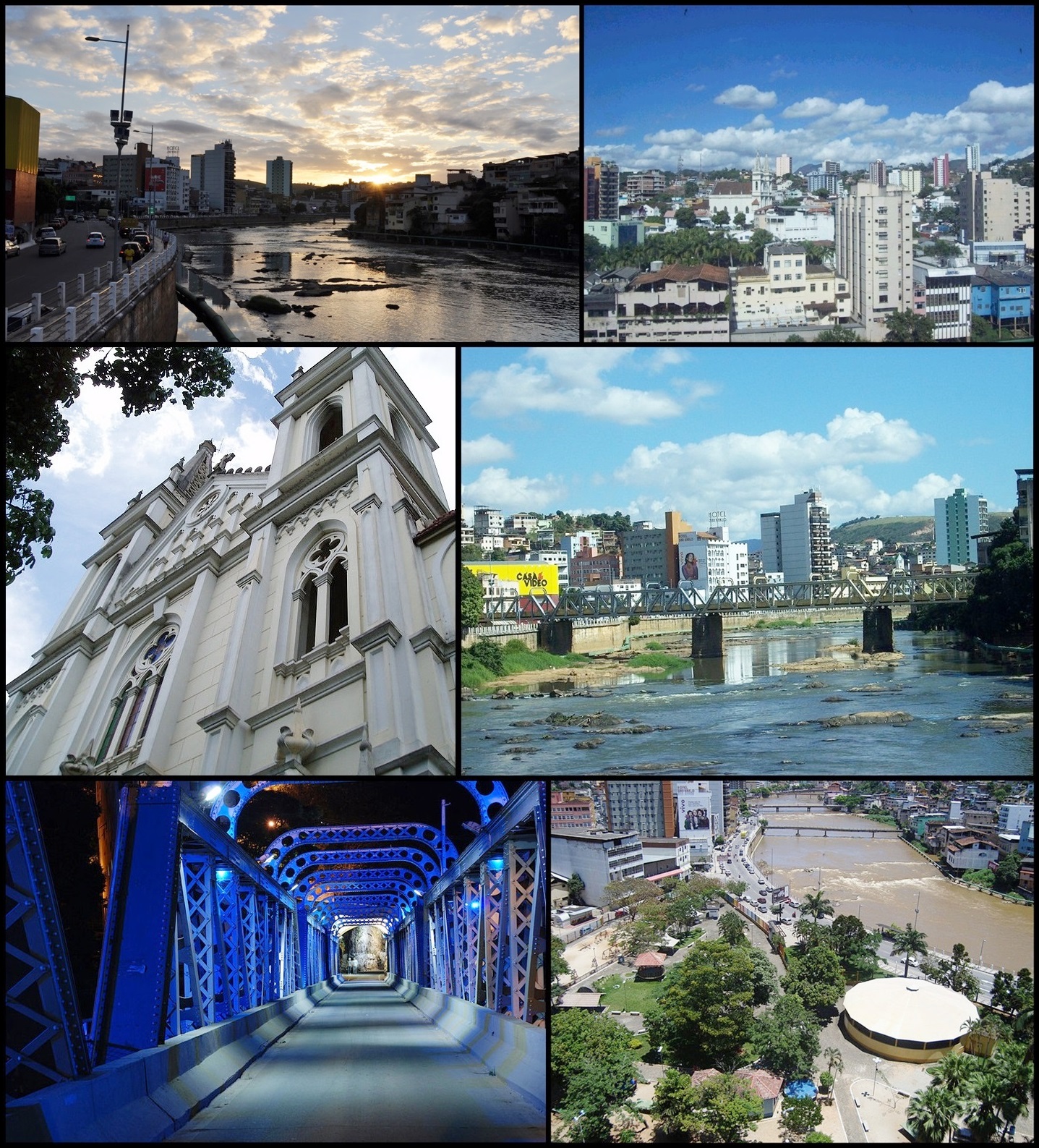
Getting Around Cachoeiro de Itapemirim
Cachoeiro de Itapemirim sits on the banks of the Itapemirim River in southern Espírito Santo and serves as the economic hub of the region. Its history as a transport town — it grew up as a stop for travellers who could go no further upriver — means it has long been a well-connected place, and today it is home to one of Brazil's biggest intercity bus companies. For a visitor, the practical picture is simple: this is a city you explore on foot, by bus, or by taxi and ride-hailing app, with no rail or metro system to rely on.
Rail, Metro and Trams
There is no rail, metro or tram network for visitors to use. Cachoeiro's railway history is just that — history. A line to Rio de Janeiro was completed in 1900 and a line to Vitória followed in 1911, and these links shaped the town's cultural and economic life, but they are not part of a current passenger network you can plan a trip around. Do not expect to arrive or move around by train.
Buses and Public Transport
Urban public transport in Cachoeiro is organised as an integrated system run by Consórcio Novo Trans. In practice, this means you can expect to transfer between services within the same system rather than buying a separate ticket for every leg of your journey.
Services are divided between the city itself and the surrounding districts, operated by different companies:
- Urban routes are operated by Flecha Branca, which also covers the Gruta district.
- District routes are split between Viação Costa Sul (Soturno, Gironda and Córrego dos Monos), Viação Santa Luzia (Itaoca, Coutinho and São Vicente) and Viação Real (Burarama, Pacotuba, Conduru).
One genuinely useful detail for a visitor: all public transport vehicles share the same design, and the two types are told apart by colour — urban buses are blue and district buses are green. If you are heading out to a district such as Pacotuba, look for the green vehicles; if you are staying within the city, blue is what you want.
Taxis and Ride-Hailing
Taxis are a straightforward option for short trips around town, and ride-hailing apps are widely used in Brazilian cities of this size, making them a convenient choice when you would rather not work out a bus route. They are particularly handy for reaching the airport or for evening journeys when you are unsure of bus timings.
Walking
The central area of Cachoeiro is compact enough that walking is a realistic way to cover the town centre, the riverside and nearby amenities. For anything beyond the centre — the outlying districts, the airport, or the region's natural attractions — you will want a bus, taxi or ride-hailing car.
Getting In: Airport and Highways
The city is served by Cachoeiro de Itapemirim Airport, also known as Raimundo de Andrade Airport. It handles short flights, so arrivals are modest in scale rather than a major international gateway. From the airport, the practical options into the city are a taxi or a ride-hailing car; there is no rail or metro link to fall back on.
By road, the municipality is reached via the BR-101 and the state highways ES-482, ES-393, ES-489 and ES-166. The BR-101 is the main north–south artery along this stretch of the Brazilian coast, connecting Cachoeiro with Vitória to the north and with Rio de Janeiro further south. Long-distance buses are a natural way to arrive, given the city's role as a base for one of Brazil's largest intercity bus companies.
Practical Tips
- Plan around buses, taxis and ride-hailing — there is no train or metro to use.
- Remember the colour code: blue buses for the city, green buses for the districts.
- Buy your ticket on board or through the integrated system; transfers within the Novo Trans network are part of how the system is designed to work.
- For the airport, arrange a taxi or ride-hailing car in advance if you are arriving on a short flight with limited ground transport on site.
- If you are heading to the Pacotuba National Forest or the quilombola community of Monte Alegre, look into the guided tours offered in partnership with the forest and the ministry of tourism rather than trying to reach these areas independently.