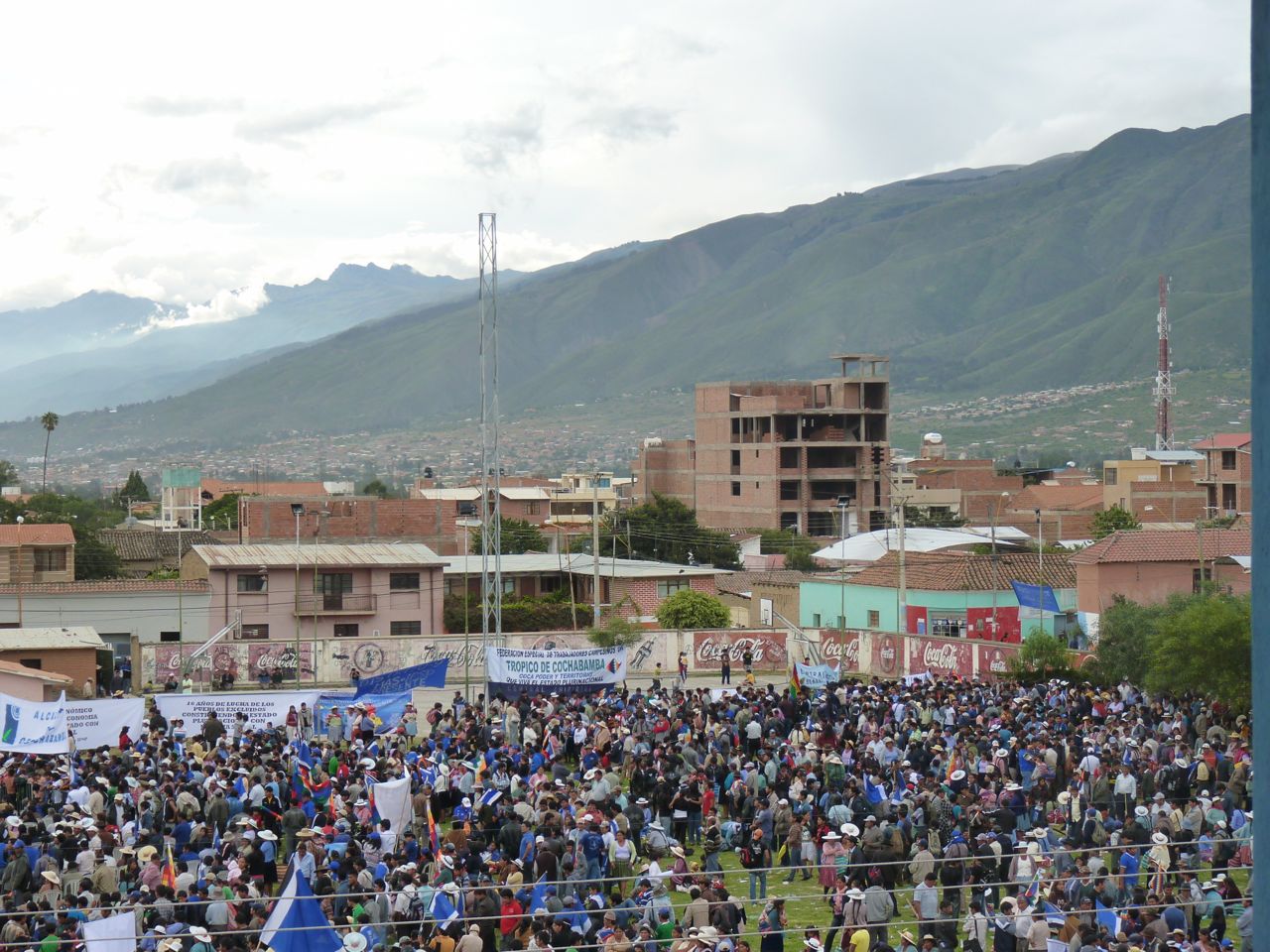
Getting Around Sacaba
Sacaba sits just east of Cochabamba and functions as the second city of the Cochabamba Department. Because so many residents commute into Cochabamba for work, movement between the two cities is a normal part of daily life here, and visitors will find that getting around Sacaba is really about plugging into that same local rhythm. The practical picture is straightforward: this is a city of streets, markets and nearby towns rather than one with a large rail or metro system of its own.
Rail, Metro and Trams
Sacaba has no metro, tram or passenger rail network of its own. Visitors should not plan on trains or trams as a way to move around the city or to reach Cochabamba; ground transport is the realistic option for every trip. If you are arriving from elsewhere in Bolivia, treat the bus or a taxi as your connection rather than expecting a rail link.
Buses and Public Transport
Public transport in and around Sacaba is road-based, and buses and minibuses are the workhorses of the region. There is no single unified ticketing system or travel card that a visitor needs to worry about; you pay your fare on board, in cash, as you would on most Bolivian urban transport. Fares are typically low and collected by the driver or an assistant, so it helps to carry small notes and coins.
- Buses and minibuses connect Sacaba with Cochabamba and with surrounding communities.
- Services generally run along the main roads linking the two cities, which is also where new residential complexes have grown up in the space between them.
- Expect to pay in cash on boarding; there is no tourist pass or day ticket to buy in advance.
- Because many Sacaba residents work in Cochabamba, services are busiest around commuting hours, so allow extra time then.
Taxis and Ride-Hailing
Taxis are a convenient option for short hops within Sacaba, for reaching a specific restaurant or market, and for the trip into Cochabamba when you would rather not wait for a bus. As with most Bolivian cities, it is sensible to agree on the fare before you set off, since metered pricing is not guaranteed. Ride-hailing apps are used in the wider Cochabamba area, but coverage in Sacaba can be thinner than in the centre of Cochabamba, so have a taxi as a fallback.
Walking
Walking is a good way to explore the heart of Sacaba. The inner part of the city retains post-colonial architecture, and the streets are also where you will find the restaurants and chicherias for which Sacaba is known. Be aware that some of the historic buildings have been lost through lack of municipal care, so the streetscape is a mix rather than a uniformly preserved colonial centre. The weather is temperate and similar to Cochabamba's, which makes walking pleasant for much of the year, but summer brings heavy rain and winter nights can be cold, so plan your walks accordingly.
Getting from the Airport into the City
Sacaba does not have its own commercial airport. International and domestic visitors arrive through the Cochabamba area's airport and then continue to Sacaba by road. The most practical options are a taxi for a direct door-to-door transfer or a bus or minibus along the main route between Cochabamba and Sacaba. Because Sacaba lies only a short distance east of Cochabamba, the onward leg is quick by regional standards, but traffic on the connecting roads can slow things down at peak times, so build in a buffer if you have a fixed onward commitment.
Practical Tips
- Carry cash in small denominations for bus and taxi fares.
- Agree taxi fares before departure rather than assuming a meter.
- Use buses and minibuses for the Cochabamba–Sacaba corridor; they are the standard local solution.
- Plan around the seasons: summer rain can disrupt walking and road travel, while winter nights are cold.
- Allow extra time during commuting hours, when services toward Cochabamba are at their fullest.