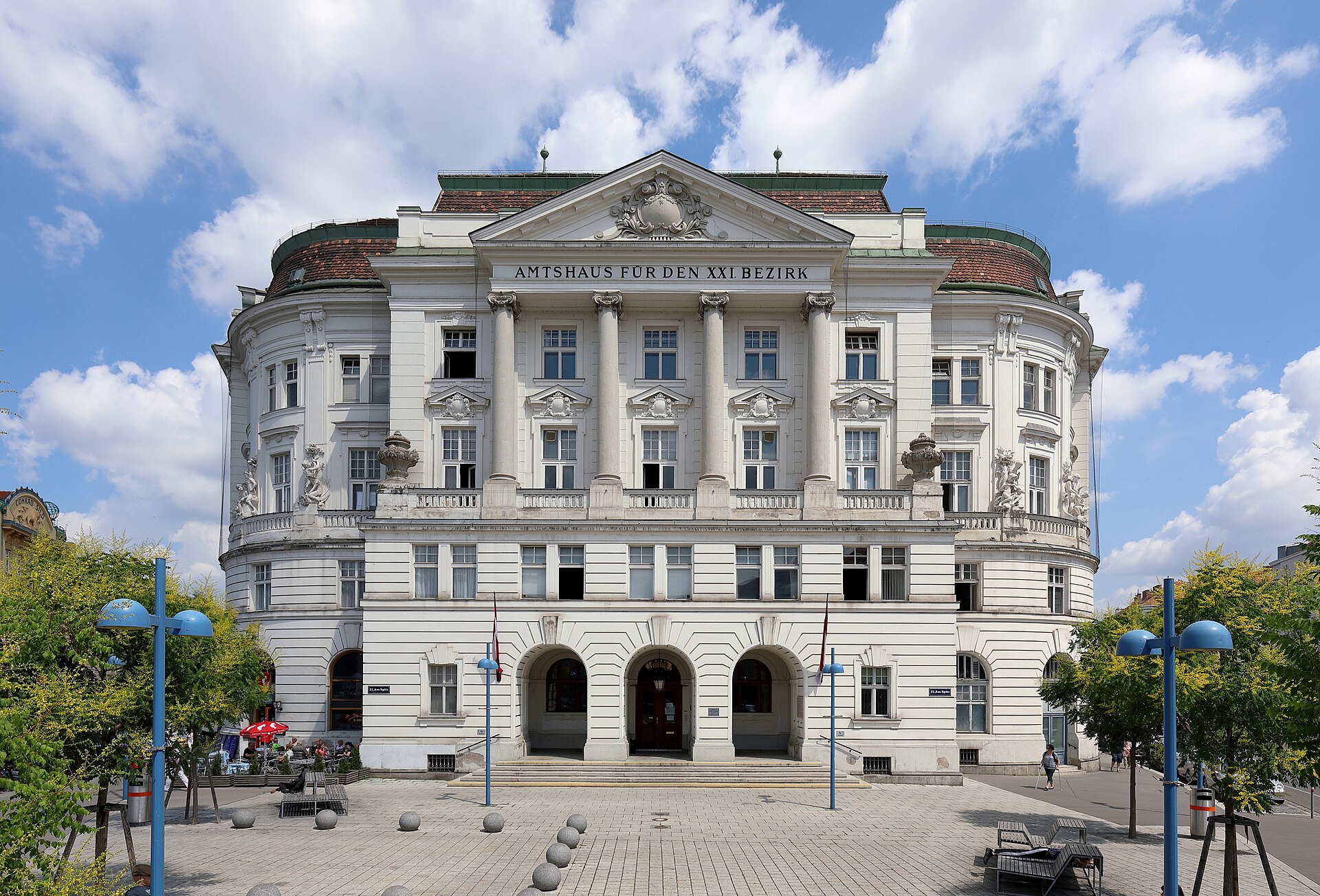
Getting Around Floridsdorf: A Visitor's Guide
Floridsdorf is Vienna's 21st district, sitting on the left bank of the Danube in the city's northeast. It grew out of a cluster of former villages — Floridsdorf itself, Donaufeld, Jedlesee, Leopoldau, Stammersdorf, Strebersdorf and Groß-Jedlersdorf — and today it blends busy urban nodes like Am Spitz with vineyards, parks and a lingering village atmosphere in places such as Stammersdorf. For a visitor, the good news is that this mix is easy to explore: the district is well served by Vienna's integrated public transport network, and its main transport hub doubles as a gateway to the rest of the city.
How Tourists Get Around Vienna
Vienna's public transport is run mainly by Wiener Linien (Vienna Lines) and is organised as one integrated network. That matters for visitors because a single ticket covers the U-Bahn (metro), S-Bahn (suburban rail), trams and buses within the city zones — you don't buy separate tickets for each mode. Tickets must be validated before boarding.
For getting around Floridsdorf and into the centre, the practical options are:
- U-Bahn (metro) — the fastest way to cover longer distances and cross the Danube into the inner districts.
- S-Bahn and regional trains — useful for reaching parts of the district and for trips into Lower Austria.
- Trams — good for shorter, more local journeys and for seeing the streets at ground level.
- Buses — fill in the gaps, especially in residential and outlying areas.
Rail, Metro and Trams
Floridsdorf's public transport is centred on the Floridsdorf station complex, which combines U-Bahn, S-Bahn and bus services in one place. The station is the northern terminus of the U6 (the brown line). From here the U6 runs directly toward the city centre, with interchanges at Spittelau (for the U4) and Westbahnhof (for the U3); the line continues south to its terminus at Siebenhirten. As a rough guide, the journey from Floridsdorf to the city centre takes around twenty to twenty-five minutes.
The same station complex is served by S-Bahn lines S1, S2, S3, S4, S7 and S8, along with regional trains heading into Lower Austria. If your plans stretch beyond the city, this is where you pick them up.
Tram 31 stops nearby, giving you a surface-level option for local trips. The U6 also serves other parts of the district, and the U1 reaches into neighbouring areas, so between metro, suburban rail and trams you can move around Floridsdorf and connect onward without needing a car.
Buses and Other Public Transport
Buses are the network's local workhorses in Floridsdorf. Several routes serve the station and the surrounding neighbourhoods, including the 20A, 25A, 26A, 28A, 29A, 30A and 31A, with additional services such as the 29B and 31A running in the district. These are the lines to look for when you're heading to a specific address away from the metro and tram corridors.
Late at night, trains give way to night buses — the N29 serves the Floridsdorf station area — so even after the metro stops running, you aren't stranded.
For short trips, Nextbike/Citybike sharing is available around the station, and there is bicycle parking there too. If you're arriving by car, note that parking at the station is limited and paid.
Tickets and Passes
Because the network is integrated, one ticket type covers U-Bahn, S-Bahn, tram and bus within the city zones. Options include:
- Single tickets — for one journey.
- 24-, 48- and 72-hour passes — convenient if you'll be riding frequently over a short visit.
- Weekly and monthly passes — better value for longer stays.
- Vienna City Card — includes transport plus discounts at museums and attractions.
Remember to validate your ticket before boarding. Tickets can be bought from machines at the station (which accept cash and card, and are accessible), and there is a Wiener Linien service centre at Floridsdorf station if you need help. Real-time departure displays make it easy to see when the next service is due.
One important exception: the airport is outside the standard city zones, so reaching it requires a separate ticket or a zone extension rather than a plain city fare.
Taxis and Ride-Hailing
There is a taxi stand at Floridsdorf station, which is the simplest place to pick one up, particularly if you're arriving with luggage or late at night. Ride-hailing apps work in Vienna as well, though the station taxi rank is the most straightforward option when you're already at the transport hub.
Walkability
Floridsdorf is a large district with distinct quarters, so walking works best for local exploring rather than crossing the whole district. Around the Floridsdorf centre at Am Spitz, the district administrative hub, you'll find shops and services within easy reach on foot — including the Floridsdorf Center shopping mall and the Brünner Straße shopping street, plus a weekly farmers' market and local cafés.
The district rewards walking in its greener corners. The Danube Island (Donauinsel) along the southern edge offers parks, beaches and cycling paths, and the Japanese Cherry Tree Park (Kirschenhain) near the Jedleseer Brücke footbridge is known for its annual cherry blossom festival. The Old Danube's shores have lidos and boating areas that are popular in summer. In the north, the slopes of the Bisamberg and the adjacent nature reserve are crisscrossed with hiking trails and dotted with Heuriger wine gardens — Stammersdorf in particular retains a village feel famous for its Heuriger taverns and vineyards. The Marchfeldkanal cuts across the district, its banks forming a green corridor for walking and cycling.
For anything beyond a neighbourhood stroll, though, you'll want to combine walking with the metro, tram or bus.
Getting from the Airport into the City
The airport sits outside Vienna's standard city zones, so your city ticket won't cover the whole trip — you'll need a separate ticket or a zone extension. From Floridsdorf, one practical routing is to take the U6 to Spittelau and connect from there to the City Airport Train (CAT). Alternatively, use the integrated network with the appropriate zone extension, or take a taxi if you'd rather travel door to door.
Practical Tips
- Avoid the crush: the network is busiest at peak times, roughly 7–9 AM and 4–6 PM. Mid-morning and early afternoon are noticeably quieter.
- Mind the hours: at Floridsdorf station, trains run from early morning until around midnight on most days, later on Friday and Saturday nights, and from early morning on Sundays. Night buses cover the late hours when trains stop.
- Accessibility: Floridsdorf station is fully wheelchair accessible, with elevators, ramps, tactile guidance for visually impaired travellers and accessible ticket machines.
- Facilities at the station: ticket machines, a Wiener Linien service centre, real-time departure displays, restrooms (some paid), bicycle parking, a taxi stand, kiosks and ATMs. Note that there is no luggage storage at the station.
- Where to stay: there are mid-range and budget hotels within walking distance of the station, which makes it a convenient base for exploring both Floridsdorf and the wider city.