Getting Around Favoriten: A Visitor's Guide
Favoriten is Vienna's 10th district, lying south of the central districts and home to the city's main railway station, Wien Hauptbahnhof, in its northeast corner. It is a densely built, largely residential district with parks and recreational areas, and it sits on the Südbahn rail line. The practical upshot for a visitor is that Favoriten is well tied into Vienna's wider transport system—but it is not a district where you can count on a metro station on every corner, so a little planning pays off.
How Visitors Get Around Vienna
Vienna's public transport is run by Wiener Linien and is the backbone of getting around the city. The network combines U-Bahn (metro), trams, buses and suburban rail, and the city has deliberately favoured transit over car traffic: it avoided building highways through its centre, and car use has been declining for years. Parking is tightly managed, with short-term parking zones in all districts and a two-hour limit in most places (shorter on main shopping streets), while park-and-ride garages outside the city offer cheaper all-day parking. For a visitor, the sensible default is to leave the car behind and use public transport, walking and, where needed, taxis.
Rail, Metro and Trams
The U-Bahn is the fastest way to cover distance, with trains running every few minutes during the day and roughly every quarter-hour on Friday and Saturday nights and public holidays. Note that service reliability has come under strain from ageing infrastructure and staff shortages, so allow a little slack on tight connections.
One important quirk for anyone staying in Favoriten: the district has no U-Bahn stations that connect to other train lines, and the U6—the only line that does not run through the city centre—serves the area. If your accommodation is deep in the district, expect to combine the U6 with trams or buses, or to use the main station as your rail gateway.
Wien Hauptbahnhof, in Favoriten's northeast, is Vienna's main railway station and the hub for the Südbahn line, which forms the district's northern border. For longer journeys within Austria or beyond, this is where you'll start or finish.
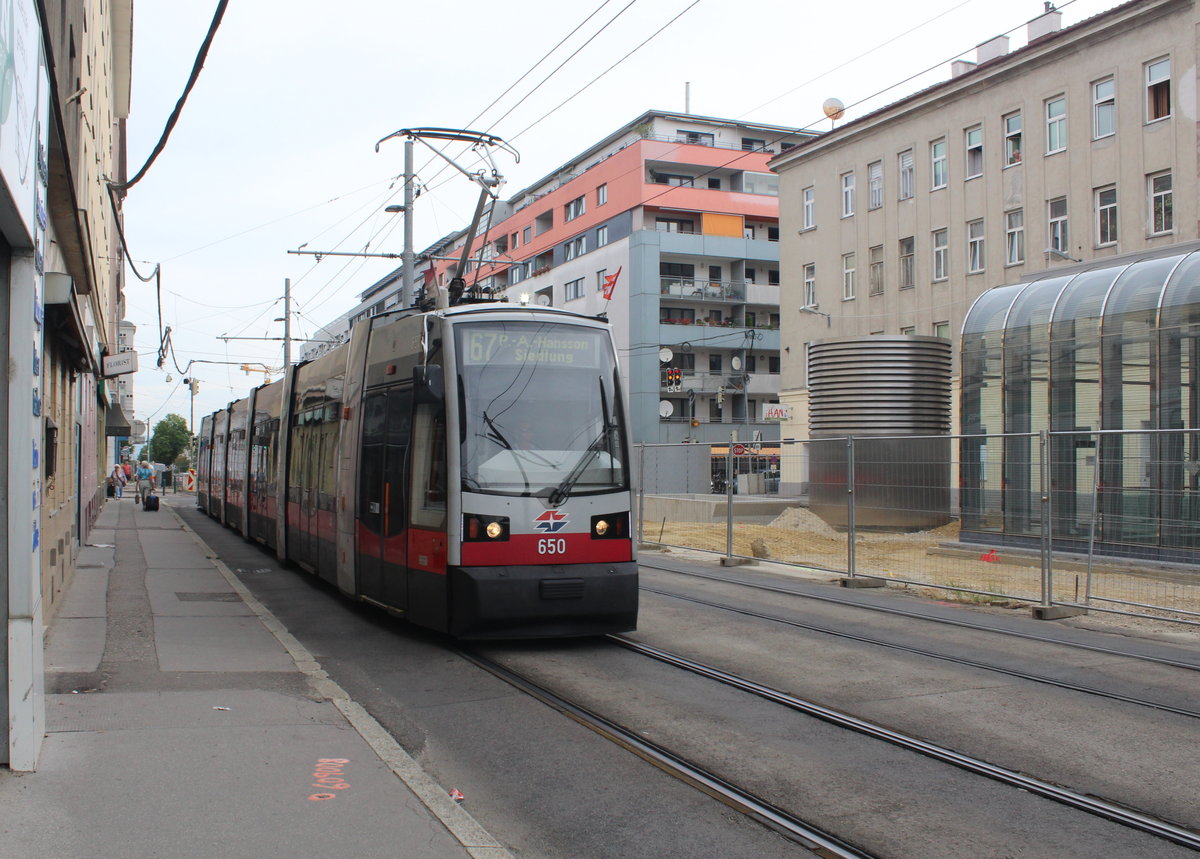
Trams fill in the gaps the metro leaves, particularly across the district's grid-patterned northern residential area. They are the workhorse for short hops and for reaching neighbourhoods without a nearby U-Bahn stop.
Buses and Other Public Transport
Buses complement the metro and trams, reaching areas that rail doesn't, and are useful for the district's southern and western edges. Suburban rail services on the Südbahn also pass through the district, giving another option alongside the U-Bahn.
On tickets: Vienna's fares are integrated across the network, and the city's signature offer is the annual pass, priced at about a euro a day—far cheaper than comparable passes in cities like London. Short-term visitors should buy single or multi-day tickets from machines or counters; be aware that ticket machines have been criticised for lacking Turkish and Arabic, so if you don't read German or English, it's worth buying through the app or at a staffed counter instead.
Taxis and Ride-Hailing
Taxis are available and useful for late nights, heavy luggage, or trips to parts of Favoriten poorly served by rail—especially given the district's lack of metro connections to other lines. Ride-hailing apps work in Vienna as an alternative, and are handy if you'd rather fix a price in advance. For most daytime trips, though, the transit network will be quicker and cheaper.
Walkability
Vienna is a very walkable city—more than three-quarters of residents walk for at least ten minutes on a typical day, and the old town has had car-free pedestrian zones since the 1970s. Favoriten itself is a mixed bag: the northern grid of older residential streets is pleasant to walk, and the district's parks and recreational areas in the south make good strolling destinations. But the district is large and spread out, so for longer cross-district trips, walking alone won't cut it—pair it with trams or the U6.
Getting from the Airport into the City
Vienna's airport lies outside the city to the southeast, and the rail line through Favoriten runs south past Laaer Berg toward the Liesing Valley and the Lower Austrian towns beyond, including Schwechat—the town where the airport is located. That means the main station in Favoriten is a natural arrival point for travellers coming from the airport by rail. From Wien Hauptbahnhof you can connect onward to the U-Bahn and trams to reach the rest of the city, including the central districts just north of Favoriten. If you're staying in Favoriten itself, arriving via the main station and continuing by tram or the U6 is the most straightforward route.
Practical Tips
- Buy an integrated ticket or pass—it covers U-Bahn, trams and buses across the network.
- If you'll be in Vienna for more than a few days, the annual pass is remarkably cheap per day.
- Plan around the U6 if you're staying in Favoriten; it's the district's metro line but doesn't cross the centre.
- Use Wien Hauptbahnhof as your rail hub for arrivals, departures and airport connections.
- Don't plan on driving: parking is restricted and costly, and transit is usually faster.
- Allow extra time for connections—service reliability has been affected by infrastructure and staffing issues.