Getting Your Bearings
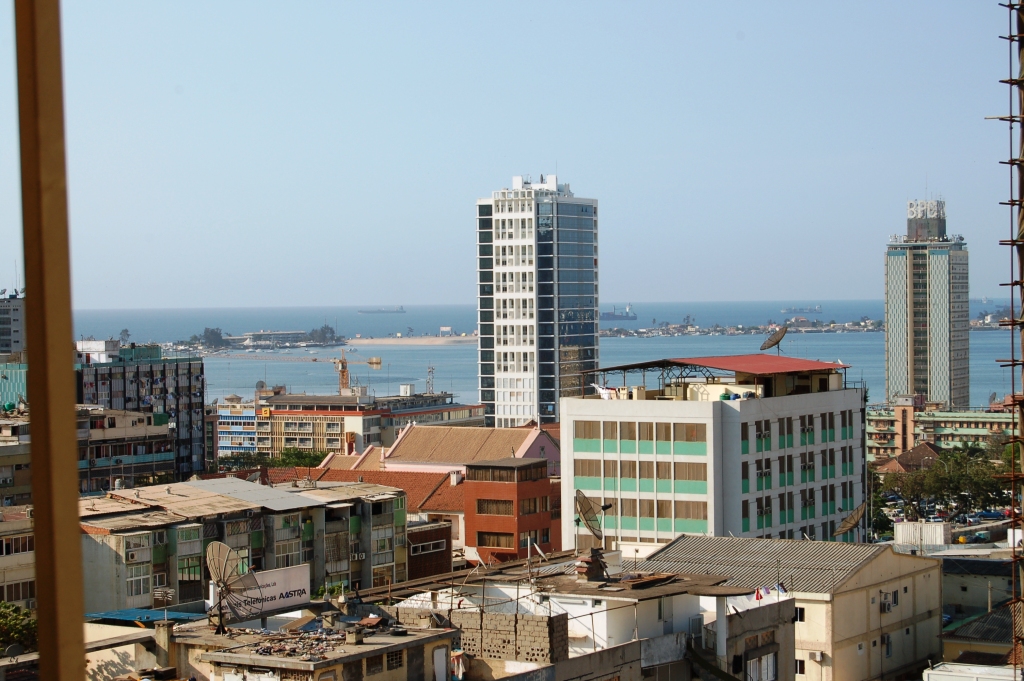
Ingombota is the historic and economic heart of Luanda, Angola's capital, and one of the six urban districts that make up the municipality of Luanda. It is the city's oldest district and its central business district, bordered by the Atlantic Ocean to the west, Sambizanga to the north, Rangel to the east, and Maianga to the south. For a visitor, this matters practically: most of what you will want to see and do sits within a compact, largely urbanized core, and the district is made up of seven neighborhoods — Luanda Island, Baixa, Cidade Alta, Ingombota, Maculusso, Kinanga, and Patrice Lumumba.
Because Ingombota is the political, economic, and symbolic center of the nation, it is also where the main hotels, office towers, ministries, and museums are concentrated. That concentration is good news for getting around: many trips on foot or by short rides will keep you inside the district.
How Tourists Move Around
The district's streets are primarily paved, and they carry a mix of motorbikes, bicycles, public buses, and informal vans. In practice, a visitor has four realistic options: walking within the core, the state-run bus network, informal shared transport, and taxis or ride-hailing. There is also a rail connection at the city's Central Train Station, and a light rail system under construction.
Which mode suits you depends on where you are going. The historic neighborhoods reward walking; longer hops across the city or to the airport are better handled by bus, taxi, or ride-hailing.
Rail and Light Rail
Ingombota is home to Luanda's Central Train Station, which provides service on the Luanda Railway. If your plans extend beyond the capital, this is the point of departure for rail travel into the wider province and beyond.
Construction of the Luanda Light Rail began in Ingombota in 2020. It is not something to plan a trip around yet — treat it as a project in progress rather than a service you can rely on during your visit.
Buses and Public Transport
The main public operator is TCUL (Transporte Colectivo Urbano de Luanda), the state-owned transit company of Luanda, which falls under the central government's Transport ministry. TCUL runs a substantial network of bus lines within Luanda province, so it is the backbone of public transport for anyone moving around the city on a budget.
TCUL also operates overland and intercity bus lines from Luanda to other Angolan cities, including Benguela, Sumbe, N'Dalatando, Malange, Uíge, and Huambo. If you are considering onward travel within Angola by road, these services are worth knowing about.
Alongside TCUL, there is TURA, a private bus operator, which gives you a second formal option on some routes. Note that published route information does not break down service by individual Luanda district, so the practical approach is to ask at your hotel or at a bus stop about which lines serve the specific places you want to reach, rather than assuming a route from a map.
Taxis and Informal Transport
Luanda's informal shared transport is known as candongueiros — shared taxis and vans that fill a large role in everyday mobility. They are a genuine part of how the city moves, and you will see them alongside the buses on Ingombota's streets.
For a visitor, candongueiros are best treated as a local, cash-based option rather than a pre-booked service. If you use one, agree on your destination and fare before setting off. Conventional taxis and ride-hailing apps are the more straightforward choice when you want a direct, private trip, particularly at night or when carrying luggage.
Walking
Walking is one of the most rewarding ways to experience Ingombota, because so much of the district's character is concentrated in its older, urbanized neighborhoods. Several areas are especially well suited to it:
- Baixa, the lower city, concentrates the financial and commercial life of the capital, with corporate headquarters mainly on and near Avenida 4 de Fevereiro. It is also where you find hotels, restaurants, clubs, bars, bakeries, kiosks, shops, and the ever-present street vendors known as zungueira.
- Cidade Alta, the upper town, sits on high ground and holds the Presidential Palace, several ministries, the National Assembly near the Fortaleza de São Miguel, and the Igreja de Jesus, where the founder of Luanda, Paulo Dias de Novais, is buried. It is popular with tourists and locals alike, but note that security is heavy because of the Presidential Palace's proximity.
- Maculusso, in the south of the district, is a formally planned residential quarter with paved streets, sidewalks, and trees, now an upper-middle-class area with luxury houses, leisure areas, historic sites, and international hotels and restaurants. Landmarks include the Holy Family Church, the Mutu Ya Kevela School, Dipanda Tower, the Tropical Cinema, and Largo da Independência.
- Luanda Island, the narrow strip between Baía de Luanda and the Atlantic, is home to the Igreja da Nossa Senhora do Cabo, the oldest church in Angola.
- The pedestrian corniche along Luanda Bay, built between 2008 and 2011, gives public access to the bay and is a popular spot for gathering and recreation among locals.
Be aware that redevelopment of the historic colonial core has replaced informal and low-income housing with higher-end commercial and residential structures — the Cuca Building and Kinaxixe Market are prominent examples. The district has changed, and continues to change, around you as you walk it.
Getting from the Airport into the City
Quatro de Fevereiro Airport lies to the south of Ingombota. However, the new Angola International Airport replaced it in 2026 and sits much farther to the southwest of the district. In other words, the airport serving Luanda is no longer the close-in one, and you should confirm which airport your flight uses before arranging your transfer, because the two are in very different locations relative to the city.
From either airport, your realistic options into Ingombota are a taxi or ride-hailing car for a direct trip, or public and informal transport if you are travelling light and on a budget. Given the distance involved from the new airport, a pre-arranged private transfer or a ride-hailing pickup is the least complicated way to reach your hotel in the district.
Practical Tips
- Base yourself in Ingombota if you want the museums, ministries, hotels, and waterfront within easy reach — the district holds the National Museum of Anthropology, the National Museum of Natural History of Angola, the Museum of the Armed Forces, the Museu da Moeda, the National Assembly, and the Fortress of São Miguel.
- Plan on cash for informal transport such as candongueiros, and confirm the fare before you depart.
- Use the corniche and the Baixa waterfront for orientation — the bay is a reliable reference point when navigating the district.
- Expect heavy security around Cidade Alta because of the Presidential Palace, and carry identification.
- Ask locally about current bus lines rather than relying on published route lists, since district-level route detail is not readily available.
- If you plan to travel onward within Angola, the Central Train Station and TCUL's intercity buses both depart from within or near the district.