Stand on the corner of Comercio St. and Independencia St. and you are looking at the Casa de Bolivar, an 18th-century armory that became the home of General Miguel Gerrero and now holds a public library and the municipality's cultural offices. A few blocks away, the Apure River runs past the point where the María Nieves bridge was opened on February 1, 1961, and the flat plain stretches out to a horizon you can follow for kilometres.
San Fernando de Apure suits travellers who are passing through the Llanos and want a base, or who are willing to trade a long list of urban sights for a handful of historic buildings, a riverside, and access to savanna wildlife. The city is a plain settlement on humid ground, so the skyline stays low and the heat and humidity are part of the day.
This guide covers the specific places worth your time in the city, followed by a one-day plan that strings them together and answers to the questions travellers ask most often.
Top things to do in San Fernando de Apure
1. Casa de Bolivar
This National Historical Monument sits at the intersection of Comercio St. and Independencia St. It is the 18th-century armory and was the dwelling of General Miguel Gerrero; it was restored in 1983. Today it contains a public library as well as the cultural offices of the municipality.
Go inside for the library and the cultural offices rather than for a museum display, and pair it with a walk along Comercio St. and Independencia St. while you are in the historic centre.
2. Plaza Bolívar
Plaza Bolívar is the city's leafy central square. It was demarcated at the founding of the city as the Plaza Mayor, and a cross was placed on the site where the church would be erected.
Use it as your orientation point in the centre. The historic streets around it — Calle Comercio, Calle Bolívar, Calle Sucre, Calle Páez and Calle Muñoz — are the old first-to-fifth streets of the town, so the square is a natural place to start a walk.
3. Barbarito Palace
In Plaza Camejo, this early 20th-century building was a wealthy trade centre that was attacked by bandits trying to steal its merchandise on more than one occasion. After years of neglect, the building has now been restored and houses a museum with original mosaics and frescoes.
Combine it with Plaza Camejo itself, and look for the mosaics and frescoes rather than treating it as a quick photo stop.
4. San Fernando Cathedral
This 1960s construction was designed by German architect Robert Klein and is notable for its bell-shaped roof.
The roof is the reason to go, so step back far enough to see the whole profile of the building before you move on.
5. María Nieves bridge
The María Nieves bridge across the Apure River at San Fernando commenced construction in 1959 under the direction of President Rómulo Betancourt, and was opened on February 1, 1961.
The Apure River diversion canal, inaugurated on June 12, 1917, is currently located on the north bank of the bridge, so you can take in both the bridge and the canal in one stop.
6. The Apure River and the old port area
San Fernando was once a port on the banks of the Apure River, with the main area of the port about 400 metres long, extended a little further west when the Barbarito Palace was built. Today the port only appears in historical records, and much of it is now dry land with urban development.
Walk the riverbank knowing that you are looking at ground the river once occupied, and note that the river itself is 300 metres wide here.
7. The historic centre streets
By 1908 the streets of San Fernando started from a north-south line 100 metres from the east side of the old cemetery and were usually called first, second, third, fourth and fifth. Today they are part of the central or historic centre with the names Calle Comercio, Calle Bolívar, Calle Sucre, Calle Páez and Calle Muñoz.
Walk them in order if you want the old layout to make sense, and treat the sequence as your route between the Casa de Bolivar and Plaza Bolívar.
8. Savanna wildlife in the Llanos
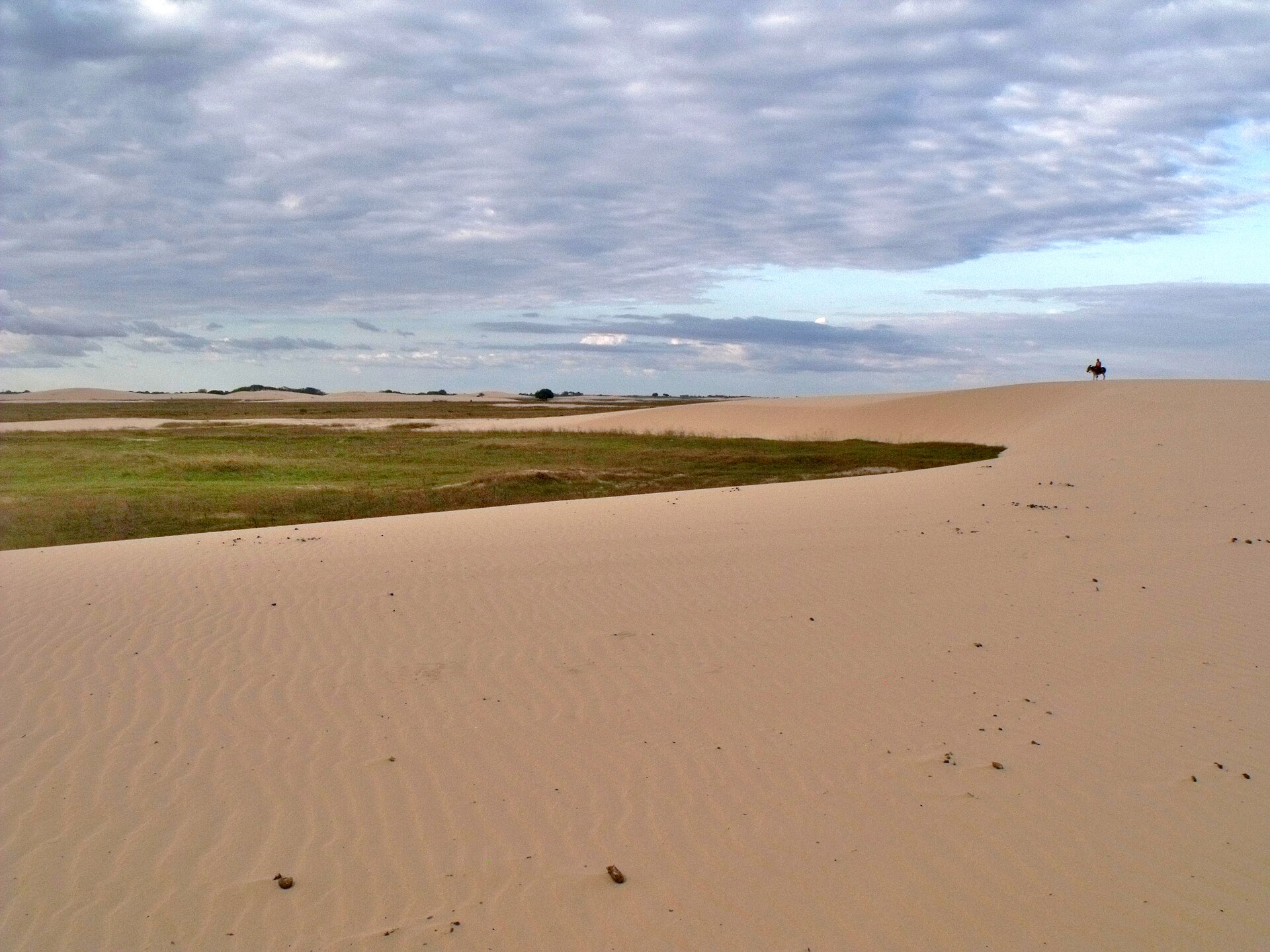
The impressive savanna wildlife is the main reason to be in this part of Venezuela. There is little reason to stay in San Fernando de Apure unless as a base for exploring the Llanos.
Stay at one of the hatos and go on safari, which is how the Wikivoyage guide suggests you see the wildlife rather than trying to reach it from the city on your own.
If you only have one day
Morning. Start at Plaza Bolívar, the city's leafy central square, and walk the historic centre streets — Calle Comercio, Calle Bolívar, Calle Sucre, Calle Páez and Calle Muñoz — which follow the old first-to-fifth street layout. Stop at the Casa de Bolivar at the intersection of Comercio St. and Independencia St., the 18th-century armory that now holds a public library and the municipality's cultural offices.
Afternoon. Continue to Plaza Camejo for the Barbarito Palace, the restored early 20th-century trade building with its museum of original mosaics and frescoes. Then visit San Fernando Cathedral, the 1960s building designed by Robert Klein with its bell-shaped roof.
Evening. Finish at the María Nieves bridge over the Apure River, opened on February 1, 1961, and look for the Apure River diversion canal on the north bank. If you have arranged a stay at one of the hatos, keep the savanna wildlife for the following day rather than trying to fit it into this one.
Frequently asked questions
Is San Fernando de Apure worth staying in?
There is little reason to stay in San Fernando de Apure unless as a base for exploring the Llanos. If you are passing through, the city's central square, the Barbarito Palace and the cathedral are the places named as worth your time.
How do I see the savanna wildlife?
Stay at one of the hatos and go on safari. The wildlife is the impressive part of the region, and the hatos are the base the Wikivoyage guide points to.
What is there to see around Plaza Camejo?
The Barbarito Palace is in Plaza Camejo. This early 20th-century building was a wealthy trade centre attacked by bandits trying to steal its merchandise on more than one occasion, and after years of neglect it has been restored and houses a museum with original mosaics and frescoes.
What happened to the old port?
San Fernando was once a port on the banks of the Apure River, with the main port area about 400 metres long. Today the port only appears in historical records, and much of it is now dry land with urban development.
Decide whether you are coming for the city's historic centre or for the Llanos, then plan your days around the hatos and the streets between Plaza Bolívar and the María Nieves bridge.